Bauhinia vahlii
Wight & Arn.
Malu Creeper, Camel's foot climber
iNaturalist· cc-by-nc
(c) SONU KUMAR, some rights reserved (CC BY-NC)
iNaturalist· cc-by-nc
(c) Shiwalee Samant, some rights reserved (CC BY-NC)
iNaturalist· cc-by-nc
(c) Shiwalee Samant, some rights reserved (CC BY-NC)
Summary
Source: WikipediaBauhinia vahlii is an evergreen climbing vine reaching 20 m long and 1 m wide with fast growth. Insect-pollinated and capable of nitrogen fixation. Grows in light sandy, medium loamy, and heavy clay soils with well-drained preference. Tolerates mildly acid to mildly alkaline pH. Requires full sun and prefers moist soil. Hardy to UK zone 8.
Description
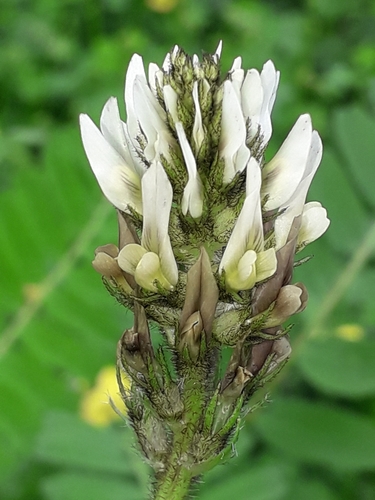
A shrub or very large climber. The branches end in a pair of tendrils. The leaves vary in size but are as broad and they are long. They are divided for about one third of their length. They can be 8-25 cm long. The flowers are white and fading to yellow. The fruit is a woody pod. It is flat, rusty and velvety. Pods can be 20-30 cm long.
Edible Uses
Edible Parts: Flowers Leaves Seed Seedpod Edible Uses: Gum Edible portion: Seeds, Pods, Leaves, Flower. The seeds are eaten raw or fried. Cooked as a pulse. The tender young pods and leaves are cooked as vegetables. The flower buds are eaten as a vegetable. The seeds are eaten raw, roasted, or dried and fried.
Traditional Uses
The tender young pods and leaves are cooked as vegetables. They are stir-fried. The flower buds are eaten as a vegetable. The seeds are eaten raw, roasted, or dried and fried.
Medicinal Uses
Aphrodisiac Demulcent The seeds are tonic and aphrodisiac. The leaves are demulcent and mucilaginous.
Distribution
It is a tropical plant. In Nepal it grows between 200-1500 m altitude. It needs well-drained soil. It suits a protected sunny position. It is resistant to frost but damaged by drought. It can grow in arid places. In Cairns Botanical Garden.
Where It Grows
Africa, Asia, Australia, Bangladesh, Bhutan, Central Africa, Congo, Europe, France, Himalayas*, India, Mauritius, Myanmar, Nepal, Northeastern India, NW India, Pakistan, SE Asia, Sikkim, USA,
Cultivation
Grows best in a sunny position. Prefers a fertile, well-drained but moisture-retentive soil. The plant grows back quickly from the base when it is cut down, and has been known to produce new growth of 15 metres within 12 months. This species has a symbiotic relationship with certain soil bacteria; these bacteria form nodules on the roots and fix atmospheric nitrogen. Some of this nitrogen is utilized by the growing plant but some can also be used by other plants growing nearby.
Propagation
Seed
Other Uses
Basketry Containers Fibre Gum Soil stabilization String Tannin Thatching Other uses rating: High (4/5). Agroforestry Uses: The plant is considered to be a formidable enemy of trees in India, where it has been known to completely smother the tree into which it has grown for support. It is of use on rocky or disturbed and bare slopes, where its can quickly clothe the ground and its large leaves protect the soil from erosion. Other Uses A good quality fibre is obtained from the inner bark. It can be made into very strong ropes. It is used for sewing straw mats with the fresh bark. It can be cut in all seasons; the outer bark is stripped off and thrown away, the inner coating being used for ropes, as wanted, by being previously soaked in water and twisted when wet. Before being used, the bark is boiled and beaten with mallets, which renders it soft and pliable for being made into ropes and string for charpoys. The stems are used for matting, basketry and wickerwork. The leaves are utilized for thatching and making umbrellas. The large flat leaves are sewn together and used as plates, cups, rough tablecloths, umbrellas, cloaks, and rain capes. A gum exudes copiously from the tree. Of little value. The bark contains up to 17% tannins. The tannin cannot be extracted easily, but is of very good quality. Special Uses Food Forest Nitrogen Fixer
Production
In southern India plants fruit December to March.
Other Information
The roasted seeds are an important food for some people. They are sold in markets.
Notes
There are about 250-350 Bauhinia species. Most are in the tropics. Also as Caesalpinaceae.
Nutrition
| Part | Moisture | kJ | kcal | Protein | Vit A | Vit C | Iron | Zinc |
|---|---|---|---|---|---|---|---|---|
| Seeds | — | — | 24.2 | — | — | — | — | — |
| Leaves | — | — | — | — | — | — | — | — |
| Pods | — | — | — | — | — | — | — | — |
Synonyms
Also Known As
Aavalvel, Adda, Bharlo, Bherla lahara, Bhorla, Bhorlo, Bhosai, Bir rurung nanri, Bwegyin, Chambul, Chamul, Dhondri, Jallaur, Jallur, Lamaklor, Lata-kanchan, Mahulan, Mahu-raen, Mahur, Mai-sio, Maljan, Maljhan, Malu, Malungarh, Mee, Moharain, Mohline bela, Mrak, Namarain, Paorimala, Pawur, Siadilata, Siali, Sialipatra, Sihar, Swedaw, Taur, Tiklopsyang-rik, Torre, Wut
References (52)
- Acharya K. P. and Acharya, R., 2010, Eating from the Wild: Indigenous knowledge on wild edible plants in Parroha VDC of Rupandehi District, Central Nepal. International Journal of Social Forestry. 3(1):28-48
- Agarwal, R. & Chandra, V., 2019, Diversity of wild edible plants in the Mandal-Chopta forest, Uttarakhand. Journal of Medicinal Plants Studies 2019; 7(1): 89-92
- Ambasta S.P. (Ed.), 2000, The Useful Plants of India. CSIR India. p 69
- Aryal, K. P. et al, 2009, Uncultivated Plants and Livehood Support - A case study from the Chepang people of Nepal. Ethnobotany Research and Applications. 7:409-422
- BARC, 2016, State of Biodiversity for Food and Agriculture in Bangladesh. Bangladesh Agricultural Research Council.
Show all 52 references Hide references
- Behera, K. K. et al, 2008, Wild Edible Plants of Mayurbhanj District, Orissa, India. J. Econ. Taxon. Bot. Vol. 32 (Suppl,) pp 305-314
- Bhatia, H., et al, 2018, Traditionally used wild edible plants of district Udhampur, J&K, India. Journal of Ethnobiology and Ethnomedicine (2018) 14:73
- Bhogaonkar, P. Y. & Devarkar, V. D., 2018. Inventory for ethnovegetable knowledge of the tribals of Satpura hill area-Melghat, Dist. Amravati (India), Plantae Scientia, 2018; Vol. 01 Issue 01: 01-08
- Bircher, A. G. & Bircher, W. H., 2000, Encyclopedia of Fruit Trees and Edible Flowering Plants in Egypt and the Subtropics. AUC Press. p 55
- Bodkin, F., 1991, Encyclopedia Botanica. Cornstalk publishing, p 135
- Bohra, N., et al, 2017, Ethnobotany of wild edible plants traditionally used by the local people in the Ramnagar regions from Nainital District, Uttarakhand, India. Biolife 5(1): 12-19
- Chandrakumar, P., et al, 2015, Ethnobotanical studies of wild edible plants of Gond, Halba and Kawar tribes of Salekasa Taluka, Gondia District, Maharashtra State, India. International Research Journal of Pharmacy 6(8)
- Chauhan, S. H., et al, 2018, Consumption patterns of wild edibles by the Vasavas: a case study from Gujarat, India. Journal of Ethnobiology and Ethnomedicine (2018) 14:57
- Dangol, D. R., 2002, Economic uses of forest plant resources in western Chitwan, Nepal. Banko Janakari, 12(2): 56-64
- Dey, A. & Mukhererjee, A., 2015, Living and Survival Amidst Hunger: Wild Edible Botanicals as a Prime Forest Productivity in the Rural Purulia District, West Bengal, India from Colonial to Present. Research Journal of Forestry 9(3): 71-86
- Dobriyal, M. J. R. & Dobriyal, R., 2014, Non Wood Forest Produce an Option for Ethnic Food and Nutritional Security in India. Int. J. of Usuf. Mngt. 15(1):17-37
- Flora of Pakistan.
- Gautam, R. S., et al, 2020, Wild Edible Fruits of Nepal. Int. J. Appl. Sci. Biotechnol. Vol 8(3): 289-304
- Ghimeray, A. K., Lamsal, K., et al, 2010, Wild edible angiospermic plants of the Illam Hills (Eastern Nepal) and their mode of use by local community. Korean J. Pl. Taxon. 40(1)
- Gunjatkar, N., & Vartak, V.D., 1982, Enumeration of wild edible legumes from Pune District, Maharashtra State. J.Econ. Tax. Bot. Vol 3 pp 1-9
- GUPTA
- Hedrick, U.P., 1919, (Ed.), Sturtevant's edible plants of the world. p 95
- Joshi, N., et al, 2007, Traditional neglected vegetables of Nepal: Their sustainable utilization for meeting human needs. Tropentag 2007. Conference on International Agricultural Research for Development.
- Kahlon, L. K. & Singh, R., 2019, Traditional knowledge & Dynamics of edible plants of primitive tribal group ‘Paudi Bhuyan’ with changing demography migration patterns in Northern Odisha. Indian Journal of Traditional Knowledge Vol 18(1), pp 7-15
- Khan, M. & Hussain, S., 2014, Diversity of wild edible plants and flowering phenology of district Poonch (J & K) in the northwest Himalaya. Indian Journal of Sci, Res. 9(1): 032-038 (As Phanera vahlii)
- Kiran, K. C., et al, 2019, Diversity and Seasonal Availability of Potential Wild Edible Plants from Vidarbha Region of Maharashtra State, India. Int.J.Curr.Microbiol.App.Sci (2019) 8(2): 1434-1446
- Kumar, R., et al, 2013, Ethnoboptany of Tharus or Dudhwa National Park, India. Mintage journal of Pharmaceutical & Medical Science 6-11
- Llamas, K.A., 2003, Tropical Flowering Plants. Timber Press. p 199
- Lord, E.E., & Willis, J.H., 1999, Shrubs and Trees for Australian gardens. Lothian. p 328
- Manandhar, N.P., 2002, Plants and People of Nepal. Timber Press. Portland, Oregon. p 106
- Masoodi, H. U. R. & Sundriyal, R. C., 2020, Richness of non-timber forest products in Himalayan communities—diversity, distribution, use pattern and conservation status. Journal of Ethnobiology and Ethnomedicine 16:56
- Mehta, P. S. et al, 2010, Native plant genetic resources and traditional foods of Uttarakhand Himalaya for sustainable food security and livelihood. Indian Journal or Natural products and Resources. Vol 1(1), March 2010 pp 89-96
- Misra S. & Misra M., 2016, Ethnobotanical and Nutritional Evaluation of Some Edible Fruit Plants of Southern Odisha, India. International Journal of Advances in Agricultural Science and Technology, Vol.3 Issue.1, March- 2016, pg. 1-30
- Pandy, R. K. & Saini, S. K., 2007, Edible plants of tropical forests among tribal communities of Madhya Pradesh. Indian Journal of Traditional Knowledge. 6(1), pp 185-190
- Pasha, M. K. & Uddin, S. B., 2019, Minor Edible Fruits of Bangladesh. Bangladesh J. Plant Taxon. 26(2): 299–313
- Prabha, Y. P., et al, 2010, Documentation of Wild Edible Plants of Melghat Forest, Dist. Amravati, Maharashtra State, India. Ethnobotanical Leaflets 14: 751-58, 2010.
- Prodr. fl. Ind. orient. 297. 1834
- Radha, B., et al, 2013, Wild Edible Plant Resources of the Lohba Range of Kedarnath Forest Division (KFD), Garhwal Himalaya, India. Int. Res J. Biological Sci. Vol. 2 (11), 65-73
- Rao, M. L. S., et al, 2014, Indigenous Plant Foods which are commonly consumed by the tribal communities in Dumbriguda Area of Visakhapatnam District, Andhra Pradesh, India. Biolife. Vol 2, Issue 3
- Rijal, A., 2011, Surviving on Knowledge: Ethnobotany of Chepang community from mid-hills of Nepal. Ethnobotany Research & Applications 9:181-215
- Royal Botanic Gardens, Kew (1999). Survey of Economic Plants for Arid and Semi-Arid Lands (SEPASAL) database. Published on the Internet; http://www.rbgkew.org.uk/ceb/sepasal/internet [Accessed 21st April 2011]
- Savita, et al, 2006, Studies on wild edible plants of ethnic people in east Sikkim. Asian J. of Bio Sci. (2006) Vol. 1 No. 2 : 117-125
- Setiya, A. V., et al, 2016, Exploration and documentation of some wild edible plants used by the aboriginals from Gadchiroli District (M.S.) India. International Advanced Research Journal in Science, Engineering and Technology. 3(7)
- Shrestha, S., 2021, Wild Edible Plants of Dhankuta, Eastern Nepal. Rupantaran : A Multidisciplinary Journal Vol. V : pp 100-109, September, 2021 p 102
- Singh, H.B., Arora R.K.,1978, Wild edible Plants of India. Indian Council of Agricultural Research, New Delhi. p 81
- Sundriyal, M., et al, 2004, Dietary Use of Wild Plant Resources in the Sikkim Himalaya, India. Economic Botany 58(4) pp 626-638
- Sundriyal, M., et al, 1998, Wild edibles and other useful plants from the Sikkim Himalaya, India. Oecologia Montana 7:43-54
- Thapa, L. B., et al, 2014, Wild Edible Plants used by endangered and Indigenous Raji Tribe in Western Nepal. International Journal of Applied Sciences and Biotechnology. Vol 2(3):243-252
- Tiwari, J. K., et al, 2010, Some Promising Wild Edible Plants of Srinagar and its Adjacent Area in Alaknanda Valley of Garhwal Himalaya, India. Journal of American Science 6(4) p 167ff
- Uprety, Y., et al, 2011, Plant biodiversity and ethnobotany inside the projected impact area of the Upper Seti Hydropower Project, Western Nepal. Environ. Dev. Sustain. (2011) 13:463-492
- Uprety, Y., et al, 2012, Diversity of use and local knowledge of wild edible plant resources in Nepal. Journal of Ethnobotany and Ethnomedicine 8:16
- Wild edible plants of Himachal Pradesh