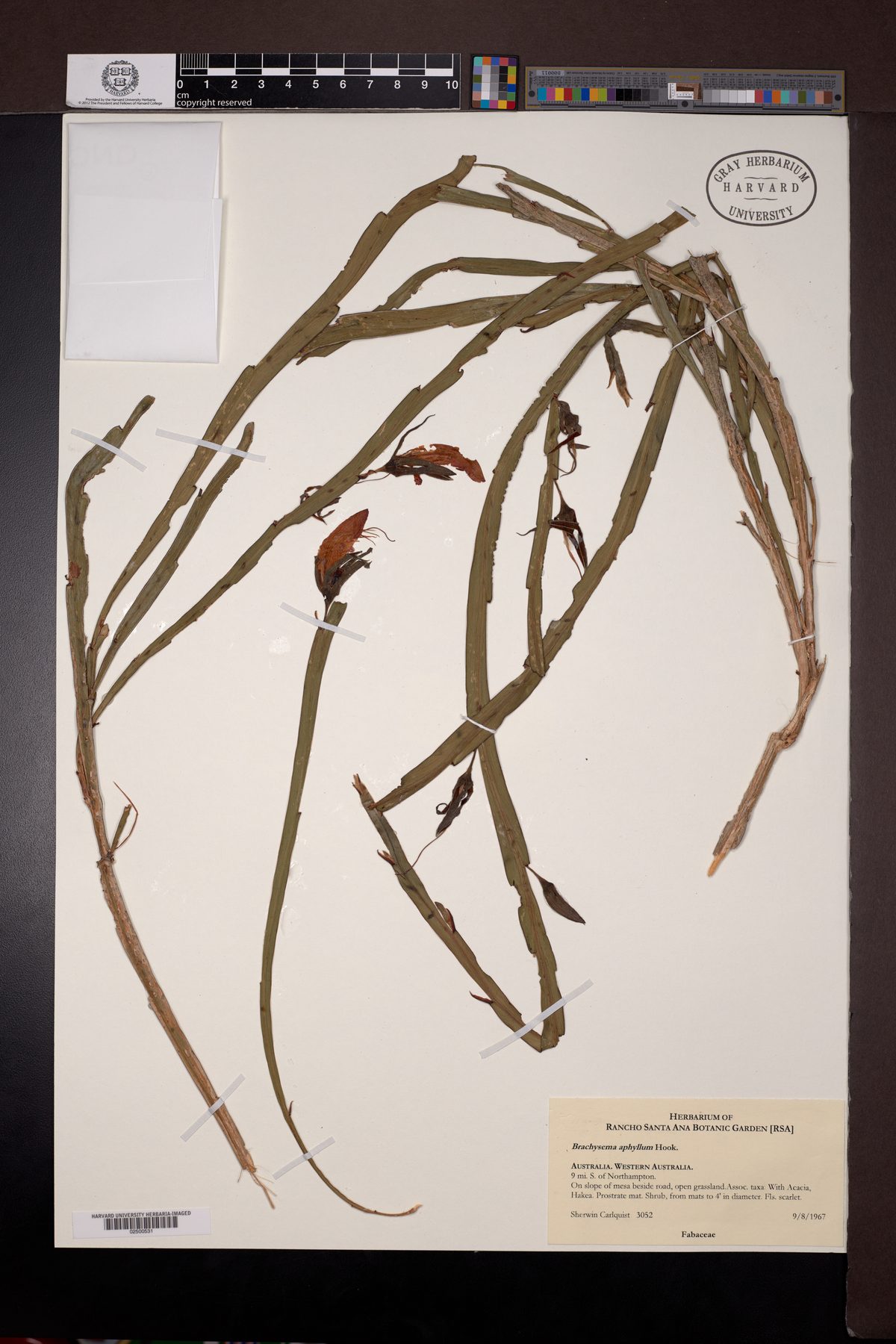
Afzelia quanzensis
Welw.
Lucky bean, Pod mahogany
iNaturalist· cc-by-nc
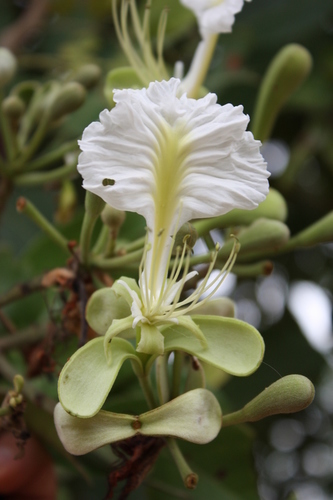
(c) Graeme White, some rights reserved (CC BY-NC), uploaded by Graeme White
iNaturalist· cc-by
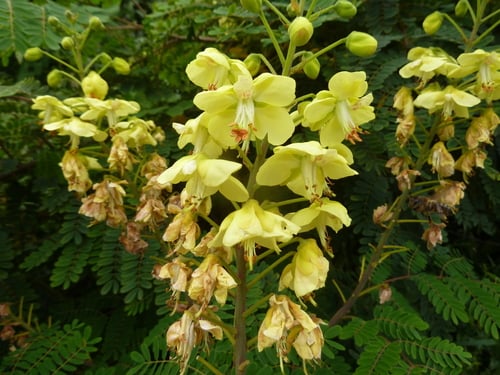
(c) Robert Taylor, some rights reserved (CC BY), uploaded by Robert Taylor
iNaturalist· cc-by
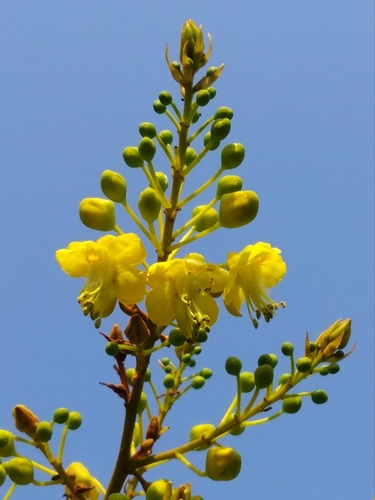
(c) i_c_riddell, some rights reserved (CC BY), uploaded by i_c_riddell
Summary
Source: WikipediaAfzelia quanzensis (pod mahogany, Afrikaans: peulmahonie, Venda: mutokota, Zulu: inkehli) is a species of tree native to sub-Saharan Africa. It ranges from Somalia and Democratic Republic of the Congo to South Africa. It is a protected tree in South Africa. It belongs to the subfamily Caesalpinioideae of the bean family Fabaceae.
Description
A large spreading tree. It is deciduous. It grows 12-15 m high but can reach 35 m high. The bark is greyish-brown and flakes off in round woody scales. This leaves pale patches. The leaves are alternate and compound. There are 4-6 pairs of almost opposite leaflets. The leaflets are oblong and 2.3-9 cm long by 1.5-6 cm wide. They are shiny and dark green above and paler underneath. They taper towards the ends and the edges are wavy. The flowers are in simple sprays. The stalks are jointed. The fruit are large, flat, thickly wooded pods. They are 10-17 cm long. Inside the pod is a white pith. There are 6-10 dark brown seeds up to 3 cm long and 1.2 cm wide. They have a scarlet aril.
Edible Uses
Leaves - cooked and eaten as a vegetable. Used when young and still purple, they are pounded then cooked with native potashes. They form a mucilaginous product, known as 'thelele', which is well liked.
Traditional Uses
The young leaves are pounded and cooked. They are slimy. The bark is used to provide potash.
This uses section is brief — help expand it
Medicinal Uses
The seeds are sometimes made into native necklaces and the timber is an ornamental hardwood, used in furniture, parquet flooring and railway sleepers. This plant may be used in traditional medicine.
Known Hazards
A basic poison has been found in the root of this plant. It has been reported that people have been killed by ingesting the roots.
Distribution
It is a tropical plant. It grows in lowland woodland and dry forest. It is usually on deep sandy soils. It is very drought resistant but sensitive to frost. It grows in the savannah. In Brisbane Botanical gardens.
Where It Grows
Africa, Angola, Asia, Australia, Botswana, Central Africa, East Africa, Egypt, Eswatini, Indonesia, Kenya, Malawi, Mozambique, Namibia, North Africa, SE Asia, Somalia, South Africa, Southern Africa, Swaziland, Tanzania, Zambia, Zimbabwe,
Cultivation
Plants can be grown by seeds or cuttings.
Propagation
Seed - pre-treatment is not normally necessary, but scarifying the seed by making a small scratch in the outer black layer of the seed coat can speed up germination. The seeds are sown in flat seedling trays with a 5:1 mixture of river sand and compost and kept moist. Germination is usually good, reaching 90% after 28 days. Trees quickly produce a deep taproot and so should be planted out into their permanent positions whilst still small. When the seedlings have reached the 2-leaf stage, they are ready for outplanting. They must be protected from cold wind for the first 2 seasons. Mature and properly dried seeds can be stored in airtight containers at 3°c in a cold store for several years. Seeds 10 years old may germinate, but their viability will have decreased to at most 30%.
Other Uses
The black seeds, and the orange arils surrounding them, are often sold as curios or made into necklaces. The pods are 15 centimetres long, containing six or more hard, shiny black beans with an orange aril. The bark of most species in this genus is a source of tannins. Some pores of the wood contain a yellow dyestuff which, under moist conditions, can discolour textiles, paper, or other cellulosic materials. No records have been seen that it has been used as a dye. The light red-brown heartwood is clearly demarcated from the pale straw to whitish sapwood. The texture is moderate to coarse; the grain straight to interlocked; medium lustre; without characteristic odour or taste.The wood is hard, heavy, very durable. It is rather difficult to saw and machine because of rapid dulling of saw teeth and cutters, but it works well and takes a fine polish. It is used for heavy construction, flooring, exterior joinery, furniture and carvings. A good shade tree due to its short bole and large leaves. A taprooted plant, but its ability to mix with crops is unclear[392. It is said to have potential for agroforestry in Miombo woodlands.
Notes
There are 15 Afzelia species. They occur in the tropics. Also as Caesalpinaceae. It is important for timber and carvings.
Synonyms
Also Known As
Abaal, Chanfuta, Ihlene, Makola, Mkongowa, Mouco, Mpapa, Mpapadede, Msambamfumu, Mugogoma, Mugoriondo, Mujarakamba, Mukamba, Mungwingwi, Mutokota, Mwanda, Mwande, Peulmahonie, Pohon mahoni polong, Umkamba
References (26)
- Ann. Cons. Ultramar. (Portugal), Parte Não Off. ser. 1, 55:586. 1859 ("1858") (Apont.)
- Baidu-Forson, J.J., et al ,2014,. Assessment of agrobiodiversity resources in the Borotse flood plain, Zambia. CGIAR Research Program on Aquatic Agricultural Systems. Penang, Malaysia. Working Paper: AAS-2014-12.
- Bircher, A. G. & Bircher, W. H., 2000, Encyclopedia of Fruit Trees and Edible Flowering Plants in Egypt and the Subtropics. AUC Press. p 12
- Bunderson, W. T. et al, 2002, Common Agroforestry Species in Malawi. Malawi Agroforestry Extension Project, Pubication No. 46, Lilongwe. p 22
- Ecocrop.fao.org/ecocrop Code 2881
Show all 26 references Hide references
- Fowler, D. G., 2007, Zambian Plants: Their Vernacular Names and Uses. Kew. p 28
- Grubben, G. J. H. and Denton, O. A. (eds), 2004, Plant Resources of Tropical Africa 2. Vegetables. PROTA, Wageningen, Netherlands. p 559
- Hedrick, U.P., 1919, (Ed.), Sturtevant's edible plants of the world. p 28
- Jardin, C., 1970, List of Foods Used In Africa, FAO Nutrition Information Document Series No 2.p 51
- Le Houerou, H. N., (Ed.), 1980, Browse in Africa. The current state of knowledge. International Livestock Centre for Africa, Ethiopia. p 162
- Magwede, K., van Wyk, B.-E., & van Wyk, A. E., 2019, An inventory of Vhavenḓa useful plants. South African Journal of Botany 122 (2019) 57–89
- Martin, F.W. & Ruberte, R.M., 1979, Edible Leaves of the Tropics. Antillian College Press, Mayaguez, Puerto Rico. p 197
- Mbuya, L.P., Msanga, H.P., Ruffo, C.K., Birnie, A & Tengnas, B., 1994, Useful Trees and Shrubs for Tanzania. Regional Soil Conservation Unit. Technical Handbook No 6. p 82
- Morley, B. & Everard, B., 1970, Wild Flowers of the World. Ebury press. Plate 54
- Palgrave, K.C., 1996, Trees of Southern Africa. Struik Publishers. p 279
- Peters, C. R., O'Brien, E. M., and Drummond, R.B., 1992, Edible Wild plants of Sub-saharan Africa. Kew. p 120
- Ruiters-Welcome, A. K., 2019, Food plants of southern Africa. Ph.D. thesis. Univ. of Johannesburg p 55
- Sukarya, D. G., (Ed.) 2013, 3,500 Plant Species of the Botanic Gardens of Indonesia. LIPI p 107
- Swaziland's Flora Database http://www.sntc.org.sz/flora
- Williamson, J., 2005, Useful Plants of Malawi. 3rd. Edition. Mdadzi Book Trust. p 15
- van Wyk, B, van Wyk, P, and van Wyk B., 2000, Photographic guide to Trees of Southern Africa. Briza. p 47
- van Wyk, Ben-Erik, 2019, The diversity and multiple uses of southern African legumes. Australian Systematic Botany, 2019, 32, 519–546
- Welcome, A. K. & Van Wyk, B.-E., 2019, An inventory and analysis of the food plants of southern Africa. South African Journal of Botany 122 (2019) 136–179
- World Checklist of Useful Plant Species 2020. Royal Botanic Gardens, Kew
- www.worldagroforestrycentre.org/treedb/
- www.zimbabweflora.co.zw 2011