Bauhinia rufescens
Lam.
Silver butterfly tree
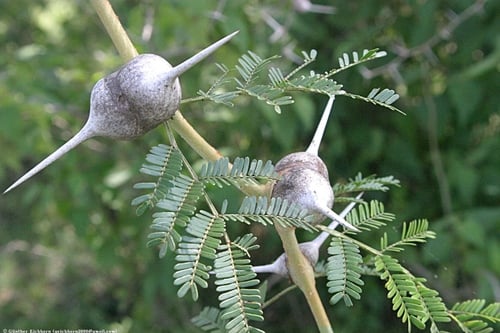
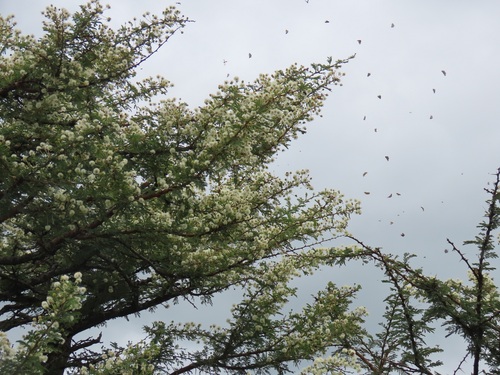
iNaturalist· cc-by-nc
(c) congonaturalist, some rights reserved (CC BY-NC), uploaded by congonaturalist
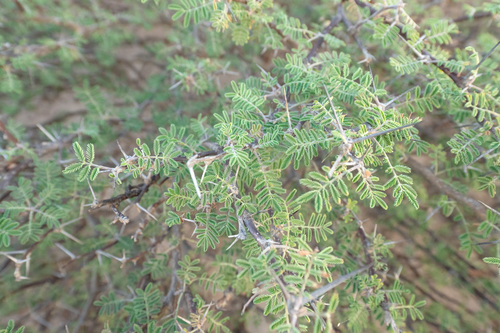
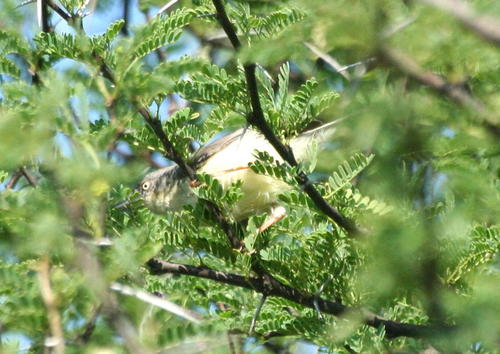
iNaturalist· cc-by-nc
(c) congonaturalist, some rights reserved (CC BY-NC), uploaded by congonaturalist
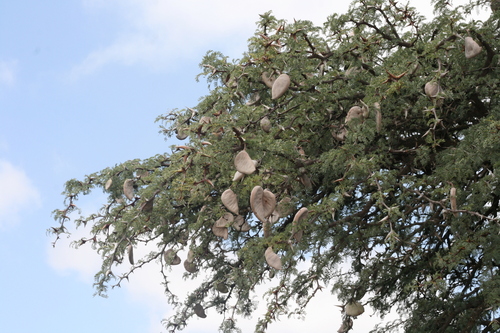
iNaturalist· cc-by-nc
(c) Abubakar S. Ringim, some rights reserved (CC BY-NC), uploaded by Abubakar S. Ringim
Summary
Source: WikipediaBauhinia rufescens is a shrub in the family Fabaceae, native to semi-arid areas of Africa such as the Sahel. It is usually 1–3 meters high but can grow to 8 meters. It appears to have thorns which are actually leafless shoots. Leaves are a deep shade of green. Seeds in bunches of dark brown pods. It is common in the wild and also used as an ornamental.
Description
A shrub or small tree. It grows 3-10 m high. The bark is grey and smooth but becomes scaly when old. It has very tough, leathery, silvery leaves. The flowers are small and white. The fruit are curling pods which explode. They are 10 cm long and twisted. There are 4-10 seeds
Edible Uses
The fruit and pods are eaten.
Medicinal Uses
The bark is astringent. It is used in the treatment of dysentery. The bark of the roots and trunk is used to cure chest complaints, syphilis and other venereal diseases, leprosy, diarrhoea and dysentery and to reduce fever. The root is antipyretic and astringent. It is used in the treatment of intermittent fevers. The leaves and fruit are used in the treatment of diarrhoea and dysentery. The leaves are used externally in the form of a decoction for treating the eye diseases.
Distribution
A tropical plant. It grows in the dry savannah especially on river banks. It grows in the Sahel. It can grow in arid places. It can grow in coastal sands. It grows between 200-800 m above sea level.
Where It Grows
Africa*, Asia, Burkina Faso, Ethiopia, Ghana, Guinea, Guinée, Guinea-Bissau, India, Indonesia, Mauritania, Niger, Nigeria, Sahel, SE Asia, Senegal, Sierra Leone, Sudan, West Africa,
Cultivation
Plants are grown from seeds. The seeds are boiled and allowed to cool slowly.
Propagation
Seed - it has a hard seedcoat and needs scarification before sowing to speed up germination. This can usually be done by pouring a small amount of nearly boiling water on the seeds (being careful not to cook them!) and then soaking them for 12 - 24 hours in warm water. By this time they should have imbibed moisture and swollen - if they have not, then carefully make a nick in the seedcoat (being careful not to damage the embryo) and soak for a further 12 hours. Trees are normally ready for planting out 4 - 6 months after germination. Cuttings of half-ripe wood, with the leaves removed, placed in moist sand. Good rooting has been observed on cuttings, with 85% producing roots in 2 weeks. The cuttings rooted better in a sand or a sand-gravel mixture, and upper nodes rooted better than basal nodes.
Other Uses
A fibre obtained from the inner bark is used for making ropes. The bark is a source of tannins. The light-brown wood is fine-grained. It is used in carpentry, joinery and for carving. The wood is used for fuel and to make charcoal. The plant can be trained to make a good hedge. It makes a good, impenetrable, browse-resistant barrier. It can be planted on dunes to help stabilize and control them.
Notes
There are about 250-350 Bauhinia species. Most are in the tropics. Also as Caesalpinaceae.
Synonyms
Also Known As
Bauhinia kharoub tree, Bauhinia nammare tree, Dirga, Jiga, Jinkiliza, Jirga, Matsagi, Namani, Namari, Nammary, Pohon bohinia kulkul, Randa
References (13)
- Ambasta S.P. (Ed.), 2000, The Useful Plants of India. CSIR India. p 69
- Barwick, M., 2004, Tropical and Subtropical Trees. A Worldwide Encyclopedic Guide. Thames and Hudson p 49
- Bernholt, H. et al, 2009, Plant species richness and diversity in urban and peri-urban gardens of Niamey, Niger. Agroforestry Systems 77:159-179
- Burkill, H. M., 1985, The useful plants of west tropical Africa, Vol. 3. Kew.
- Encycl. 1:391. 1785
Show all 13 references Hide references
- Harris, F. M. A. and Mohammed, S., 2003, Relying on Nature: Wild Foods in Northern Nigeria. Ambio Vol. 32 No. 1. p 25-30
- Jardin, C., 1970, List of Foods Used In Africa, FAO Nutrition Information Document Series No 2.p 122
- Jardin, C., 1970, List of Foods Used In Africa, FAO Nutrition Information Document Series No 2.p 24 (As Bauhinia rubescens)
- Maydell, H. von, 1990 Trees and shrubs of the Sahel: their characteristics and uses. Margraf. p 185
- Savill, P. S. & Fox, J. E. D., Trees of Sierra Leone. p 64
- Sukarya, D. G., (Ed.) 2013, 3,500 Plant Species of the Botanic Gardens of Indonesia. LIPI p 154
- World Checklist of Useful Plant Species 2020. Royal Botanic Gardens, Kew
- www.worldagroforestrycentre.org/treedb/