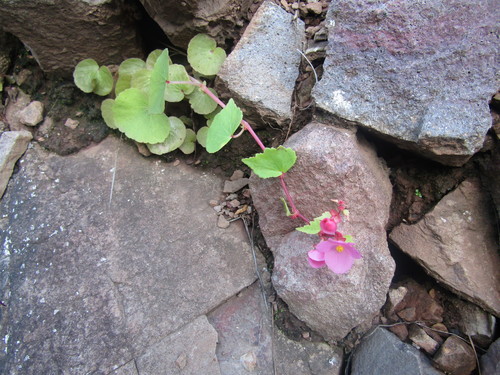
Begonia josephi
A. DC.
Jajew
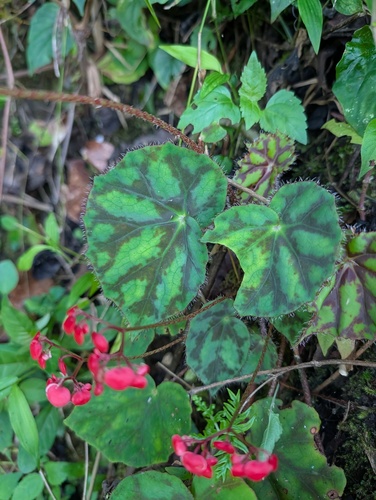
iNaturalist· cc-by-nc
(c) Rinzin Dorji, some rights reserved (CC BY-NC), uploaded by Rinzin Dorji
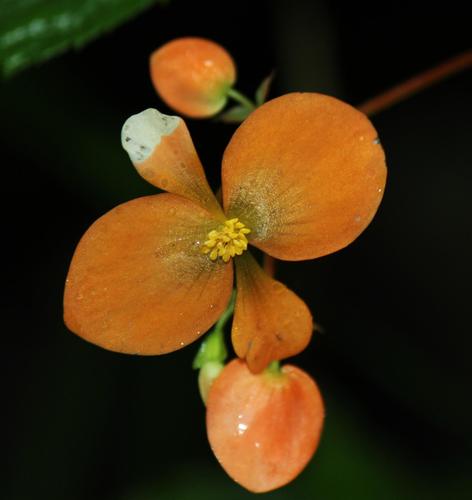
iNaturalist· cc-by-nc
(c) Rinzin Dorji, some rights reserved (CC BY-NC)
Description
A herb. It loses its leaves during the year. It has tubers 1-2 cm across. There is one leaf. The leaf stalk is 10-22 cm long. The leaves are broadly oval and 10-16 cm long by 9-13 cm wide.
Edible Uses
The leaves are eaten as a vegetable.
Traditional Uses
The leaves are eaten as a vegetable.
This uses section is brief — help expand it
Distribution
It is a subtropical plant. It grows on the edges of forests on rocks in moist places between 2,600-2,800 m above sea level.
Where It Grows
Asia, Bhutan, China, Himalayas, India, Nepal, Northeastern India, Tibet,
Notes
There are 900-1,000-1,500 Begonia species.
Also Known As
Gumbolopang
References (3)
- Angami, A., et al, 2006, Status and potential of wild edible plants of Arunachal Pradesh. Indian Journal of Traditional Knowledge 5(4) October 2006, pp 541-550
- Ann. Sci. Nat. Bot. ser. 4, 11:126. 1859 "josephi"
- Rao, R.R. & Neogi, B., 1980, Observation on the Ethnobotany of the Khasi and Garo tribes in Meghalaya (India). J. Econ. Tax. Bot. Vol. 1 pp 157-162