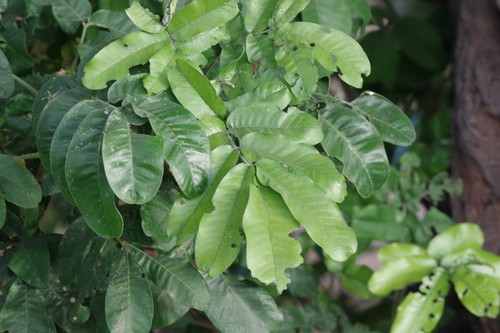
Heynea trijuga
Roxb. ex Sims
Indian heynea
iNaturalist· cc-by
(c) Siddarth Machado, some rights reserved (CC BY), uploaded by Siddarth Machado
iNaturalist· cc-by
(c) Siddarth Machado, some rights reserved (CC BY), uploaded by Siddarth Machado
iNaturalist· cc-by
(c) Siddarth Machado, some rights reserved (CC BY), uploaded by Siddarth Machado
Summary
Source: WikipediaHeynea trijuga is a species of plant in the family Meliaceae. It is native to an area of tropical Asia from Nepal and India to Indonesia and the Philippines. It is threatened by habitat loss in Nepal.
Description
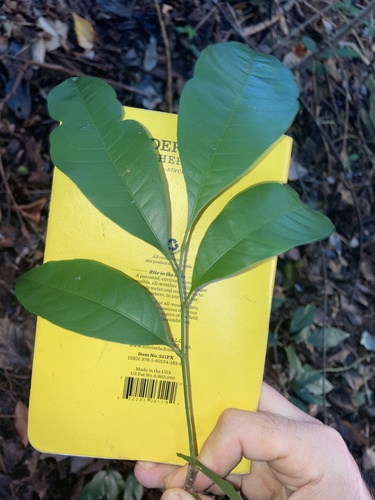
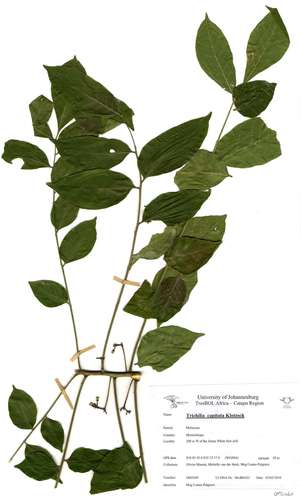
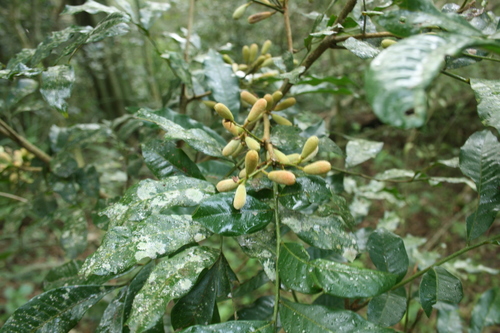
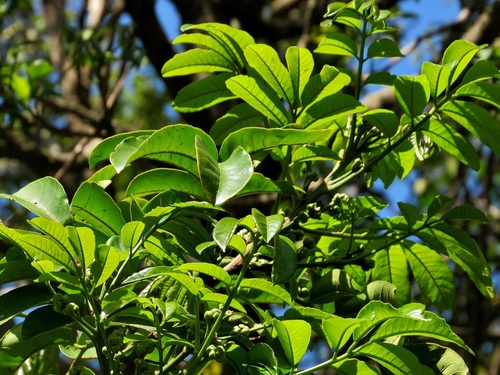
A tree. It grows 10-20 m tall. The trunk can be 25 cm across. The leaves are alternate and oval. They are 8-16 cm long by 4-5 cm wide. They have opposite leaflets. The flowers are yellowish white and in panicles. The fruit is an oval capsule 3 cm long by 1-3 cm wide. It is red. There is one seed.
Edible Uses
The sour fruits are eaten.
Traditional Uses
The fruit are sour but eaten. Caution: It may have some poisonous effects. The seeds are probably poisonous.
This uses section is brief — help expand it
Medicinal Uses
The bark, leaves and fruit are bitter and have medicinal value.
Known Hazards
The fruit may have some poisonous effects and the seeds are probably poisonous.
Distribution
A tropical plant. It grows in Madya Pradesh in India. In southern China it grows in forests between 200-1,300 m above sea level. In Indonesia it grows between 700-2,400 m above sea level.
Where It Grows
Asia, Bhutan, China, Himalayas, India, Indochina, Indonesia, Laos, Malaysia, Myanmar, Nepal, Philippines, SE Asia, Thailand, Vietnam,
Cultivation
Plants can be grown from seeds.
Other Uses
An oil is obtained from the seed. It is used for illumination. The wood is rather soft. It can be used for general interior carpentry. The wood is of low value and mainly used for fuel. The tree is planted as a pioneer species in northern Thailand in reforestation projects to restore native woodland - it is planted in degraded woodland and open areas in a mix with various other species that all have the ability to grow fast; produce dense, weed-suppressing crowns; and attract seed-dispersing wildlife, particularly birds and bats.
Synonyms
Also Known As
Ankhataruwa, Ban-ritha, Chang chuet, Chinanji, Chok khon, Duak, Fan noi, Gundira, Juak, Kapia kushi, Karai, Karaivilangu, Komalsiuli, Kora, Korakkadi, Kurukkati, Limbara, Menchabai, Migliok-kung, Nang yai, Rolang-phang, Tagat-ta-gyi, Tangis sarang burong, Tangisang burong, Ta pla ton, Theng-are-arong
References (6)
- Ambasta, S.P. (Ed.), 2000, The Useful Plants of India. CSIR India. p 265
- Bot. Mag. 41: t. 1738. 1815 (Roxb., Hort. beng. 33. 1814, nom. nudum)
- Burkill, I.H., 1966, A Dictionary of the Economic Products of the Malay Peninsula. Ministry of Agriculture and Cooperatives, Kuala Lumpur, Malaysia. Vol 1 (A-H) p 1182
- Chaudhury, R.H.N., et al, 1980, Ethnobotanical Uses of Herbaria - 2. J. Econ, Tax Bot Vol 1 p 168
- Sukarya, D. G., (Ed.) 2013, 3,500 Plant Species of the Botanic Gardens of Indonesia. LIPI p 324
Show all 6 references Hide references
- Wongprasert, T. et al, 2011, A Synoptic Account of the Meliaceae of Thailand. Thai For. Bull. 39:210-266