Syzygium oblatum
(Roxb.) Wall. ex Cowan & Cowan
iNaturalist· cc-by-nc
(c) 刘光裕 Liu Guangyu, some rights reserved (CC BY-NC), uploaded by 刘光裕 Liu Guangyu
iNaturalist· cc-by-nc-sa
(c) 106611639464075912591, some rights reserved (CC BY-NC-SA), uploaded by 106611639464075912591
Description
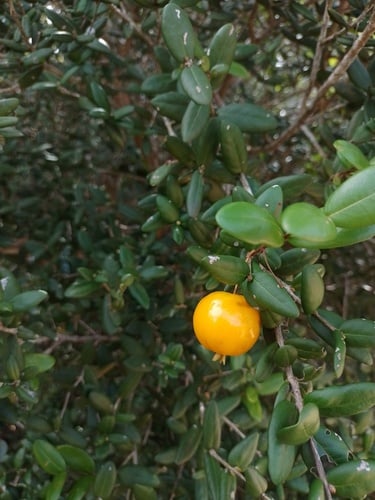
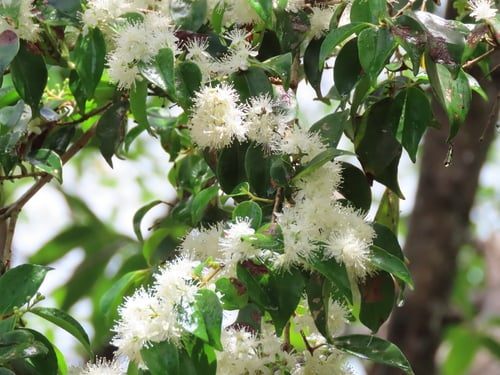
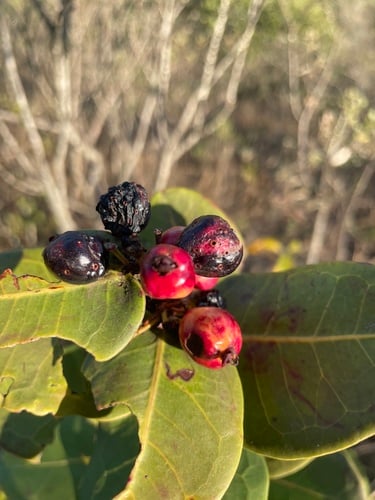
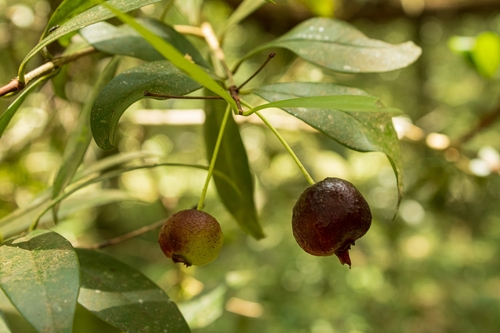
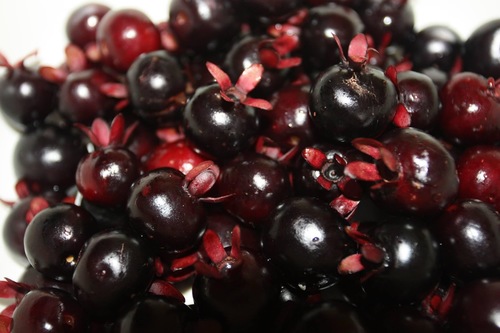
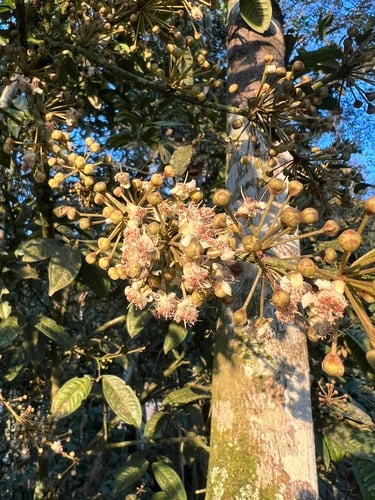
A moderate sized tree. It grows 12-20 m tall. The leaves are oval and 9-12 cm long by 4-6 cm wide. They are leathery. The flower clusters are near the ends of the branches. The fruit are round and up to 1.5 cm across. They have one seed.
Edible Uses
The ripe fruit are eaten raw.
Traditional Uses
The ripe fruit are eaten raw.
This uses section is brief — help expand it
Distribution
A tropical plant. It grows between 600-1000 m altitude in Yunnan in China. It grows in subtropical broadleaved evergreen forest.
Where It Grows
Asia, Bangladesh, Cambodia, China, India, Indochina, Indonesia, Malaysia, Myanmar, SE Asia, Thailand, Vietnam,
Cultivation
The seeds get distributed by fruit bats. Plants grow from seeds.
Propagation
Seed - best sown as soon as it is ripe.
Production
In China plants flower in April to May and fruit from November to January.
Other Information
It is occasionally cultivated as a fruit tree.
Synonyms
Also Known As
Dedaruan paya, Gola jam, Goolam, Jambu hutan, Kaujama, Kelat beti, Kelat lapis, Samak naching, Thabye-ni, Thabye-sat-chi, Tha-pyay
References (6)
- Ambasta, S.P. (Ed.), 2000, The Useful Plants of India. CSIR India. p 615
- Burkill, I.H., 1966, A Dictionary of the Economic Products of the Malay Peninsula. Ministry of Agriculture and Cooperatives, Kuala Lumpur, Malaysia. Vol 1 (A-H) p 987 (As Eugenia oblata)
- Hedrick, U.P., 1919, (Ed.), Sturtevant's edible plants of the world. p 300 (As Eugenia oblata)
- Jin, Chen et al, 1999, Ethnobotanical studies on Wild Edible Fruits in Southern Yunnan: Folk Names: Nutritional Value and Uses. Economic Botany 53(1) pp 2-14
- Pasha, M. K. & Uddin, S. B., 2019, Minor Edible Fruits of Bangladesh. Bangladesh J. Plant Taxon. 26(2): 299–313
Show all 6 references Hide references
- Shin, T., et al, 2018, Traditional knowledge of wild edible plants with special emphasis on medicinal uses in Southern Shan State, Myanmar. Journal of Ethnobiology and Ethnomedicine (2018) 14:48