Mangifera siamensis
Warburg ex Craib
Menhe, Jioxiu
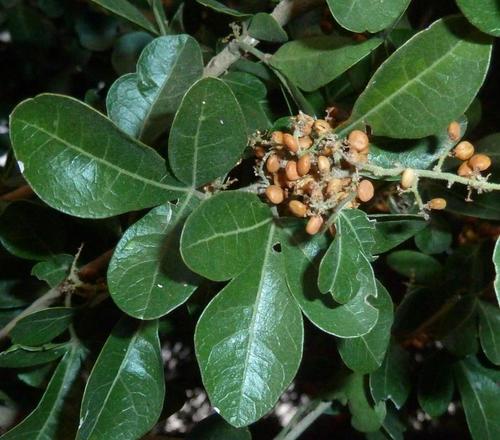
iNaturalist· cc-by-nc
(c) Ulu, some rights reserved (CC BY-NC)
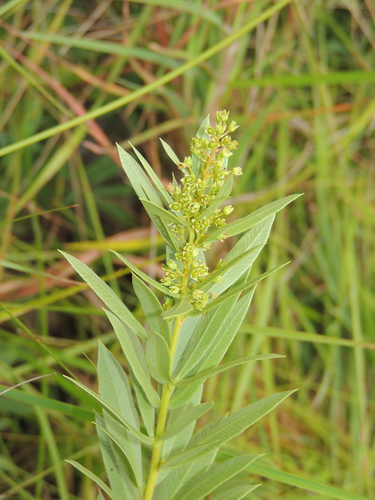
iNaturalist· cc-by
(c) Jagdish Supekar, some rights reserved (CC BY)
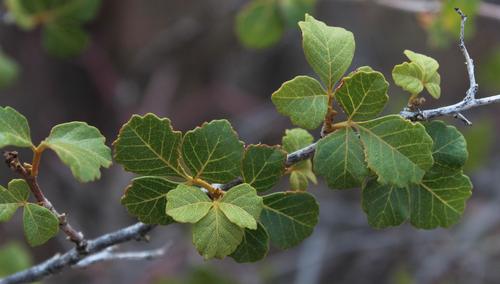
iNaturalist· cc-by-nc
(c) yerbasanta, some rights reserved (CC BY-NC)
Description
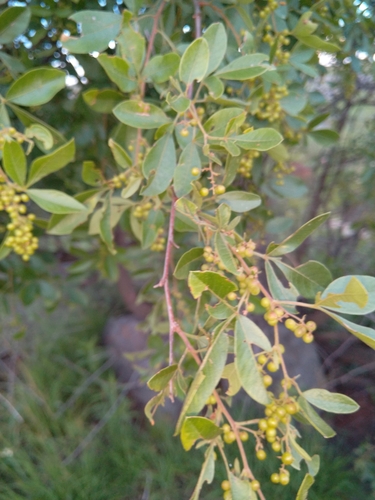
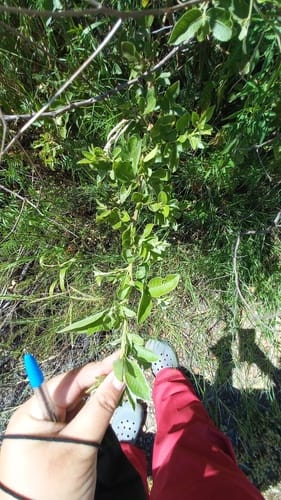
A tree. The young branches are hairy. The leaf stalk is 1-4 cm long and flattened and broader at the base. The leaves are oblong to sword shaped and 10-19 cm long by 3-5 cm wide. They are light green underneath. The flowers are in panicles at the ends of branches. They are in groups 14 cm long. The fruit are oval or kidney shaped and 4-5 cm long by 3 cm wide.
Edible Uses
The tree is better known for its fruit than for its timber. However, mango trees can be converted to lumber once their fruit-bearing lifespan has finished. The wood is susceptible to damage from fungi and insects. The wood is used for musical instruments such as ukuleles, plywood and low-cost furniture. The bark is used to produce a yellow dye.
Traditional Uses
The fruit are sweet and sour and are eaten.
This uses section is brief — help expand it
Known Hazards
Urushiols in the fruit peel can trigger contact dermatitis in sensitised individuals. This reaction is more likely to occur in people who have been exposed to other plants from the family Anacardiaceae, such as poison oak and poison ivy, which are widespread in the United States. The wood is known to produce phenolic substances that can cause contact dermatitis.
Distribution
A tropical plant. It grows between 600-700 m above sea level in Yunnan. It grows in lowland forest near Jinghong.
Where It Grows
Asia, China, Indochina, FSM, SE Asia, Thailand,
Production
In southern China plants flower in March to April and fruit in May to July.
Other Information
It is sold in local markets.
Notes
It has been recorded from Papua New Guinea and Solomons but possibly in error.
Nutrition
| Part | Moisture | kJ | kcal | Protein | Vit A | Vit C | Iron | Zinc |
|---|---|---|---|---|---|---|---|---|
| Fruit | 85.5 | — | — | — | — | 24.4 | — | — |
Also Known As
Dang lao gang, Mao mao si, Mong, Muang-khi-ya, Rereke
References (4)
- Cao, Y., et al, 2020, Ethnobotanical study on wild edible plants used by three trans-boundary ethnic groups in Jiangcheng County, Pu’er, Southwest China. Journal of Ethnobiology and Ethnomedicine (2020) 16:66
- Flora of China. 11: 338-339, 2008,
- Jin, Chen et al, 1999, Ethnobotanical studies on Wild Edible Fruits in Southern Yunnan: Folk Names: Nutritional Value and Uses. Economic Botany 53(1) pp 2-14
- PROSEA No. 2