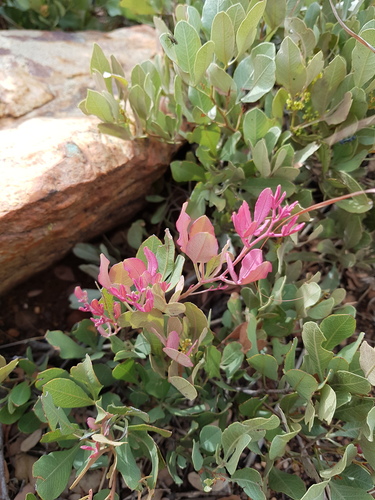
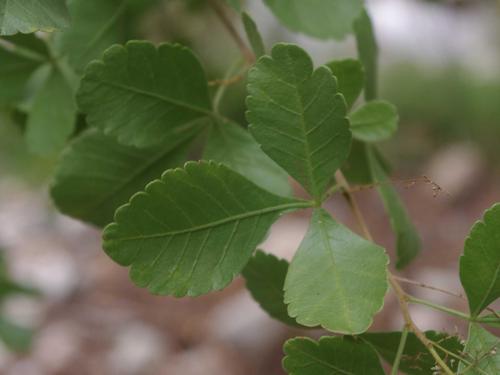
Searsia pyroides var. integrifolia
(Burch.) T. S. Yi et al, (Engl.) Moffett
iNaturalist· cc-by-nc
(c) megan_smith213, some rights reserved (CC BY-NC)
iNaturalist· cc-by-nc
(c) Athol Ferguson, some rights reserved (CC BY-NC), uploaded by Athol Ferguson
Summary
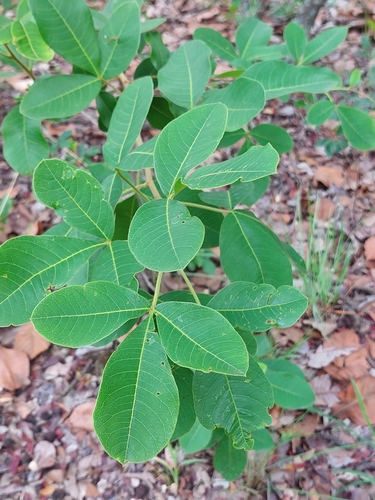
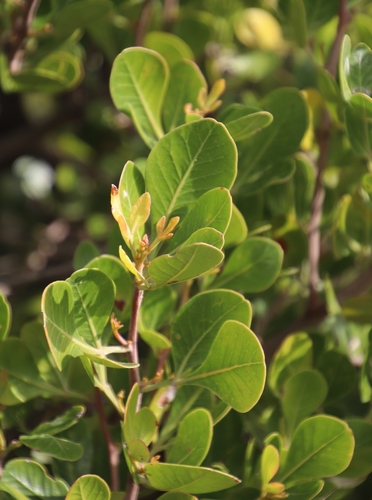
Source: WikipediaSearsia pyroides, previously known as Rhus pyroides, (common currant-rhus English, gewone taaibos Afrikaans, nhlokoshiyane isiZulu) is a species of Searsia, native to southern Africa. This tree occurs throughout the whole of South Africa, a part of Botswana, Zimbabwe and Tanzania and in some areas of Namibia near Windhoek. It is very variable in all respects, though it is usually bushy and often thorny. It is found in bushveld, dry thornveld, on rocky hillsides, termite mounds, water courses and even on the fringes of forests. It is very hardy, tough, drought resistant and deciduous. The leaves are attractive and trifoliolate and it sometimes has large, woody thorns. Flowers are very small, greenish and are borne in summer. The male and female flowers are borne on separate trees and the female trees bear small fruits 3–4 mm in diameter, which turn red when ripe. The tree attracts a multitude of birds and insects due to its nutritious fruit and is an attractive addition to a garden. It is a host plant for the moth Xylopteryx arcuata.
Description
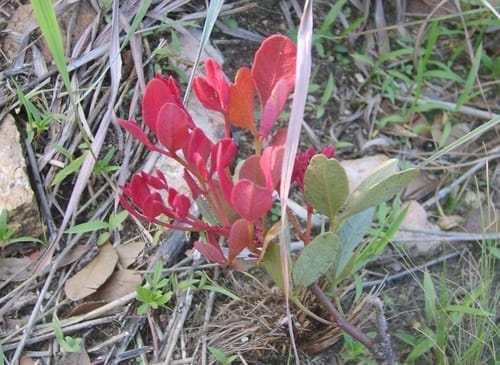
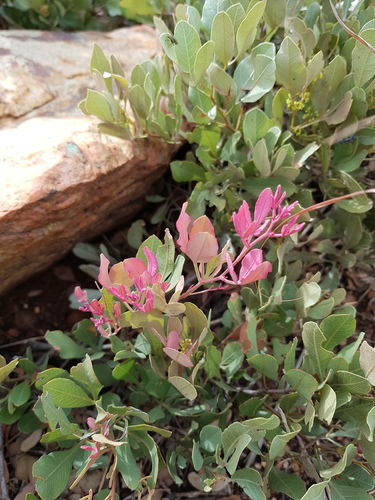
A low sprawling shrub. It grows 30 cm tall. The leaves are broadly sword shaped and taper to the tip. The flowering shoots are at the top. The fruit are 5 mm across.
Edible Uses
The fruit are eaten.
Distribution
It is a subtropical plant.
Where It Grows
Africa, Eswatini, South Africa, Southern Africa, Swaziland,
Synonyms
References (3)
- Moffett, R. O., 2007, Name changes in the Old World Rhus and recognition of Searsia (Anacardiaceae). Bothalia 37,2: 165-175 (2007)
- Ogle & Grivetti, 1985, (As Rhus fraseri)
- Peters, C. R., O'Brien, E. M., and Drummond, R.B., 1992, Edible Wild plants of Sub-saharan Africa. Kew. p 50 (As Rhus fraseri)