Malpighia coccigera
L.
Barbados holly, Miniature holly
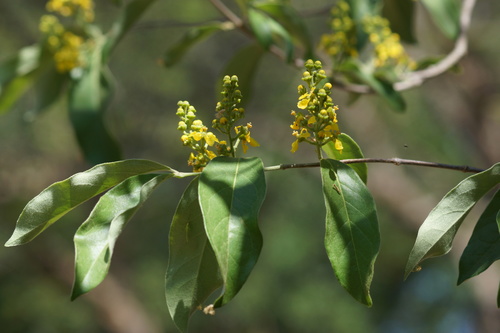
iNaturalist· cc-by-nc-sa
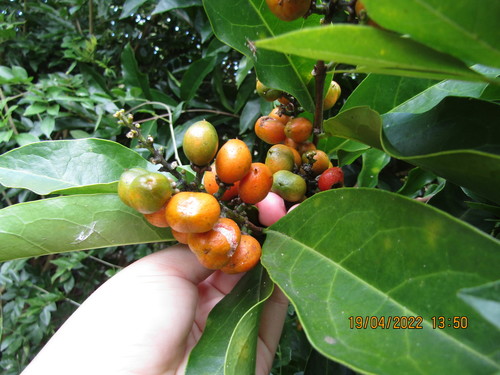
(c) 106611639464075912591, some rights reserved (CC BY-NC-SA), uploaded by 106611639464075912591
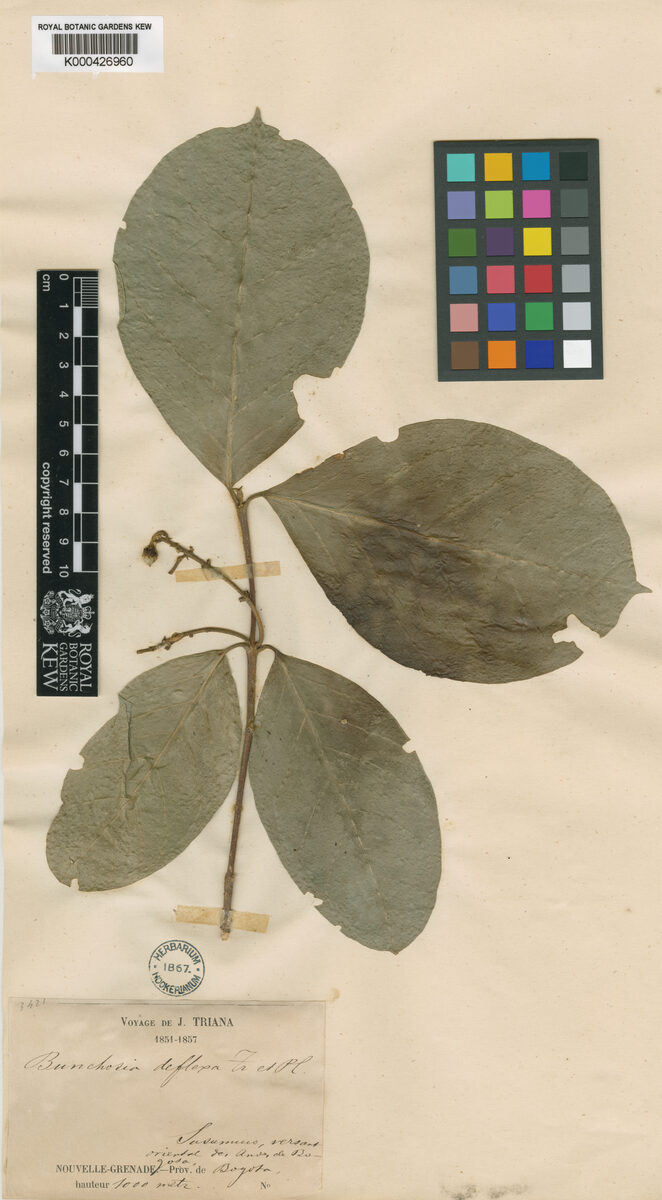
iNaturalist· cc0
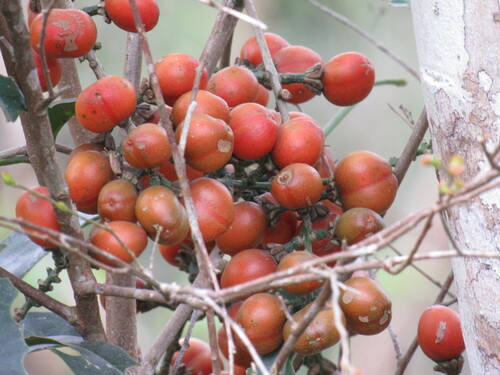
no rights reserved, uploaded by jfm smitty
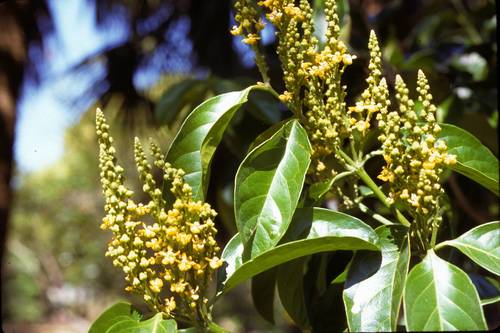
iNaturalist· cc-by-nc
(c) Omar Monzon Carmona, some rights reserved (CC BY-NC), uploaded by Omar Monzon Carmona
Summary
Source: WikipediaMalpighia coccigera is a species of flowering plant in the family Malpighiaceae, that is native to the Caribbean. It is commonly known as Singapore holly or dwarf holly due to the shape of its leaves, despite it not being a true holly (genus Ilex).
Description
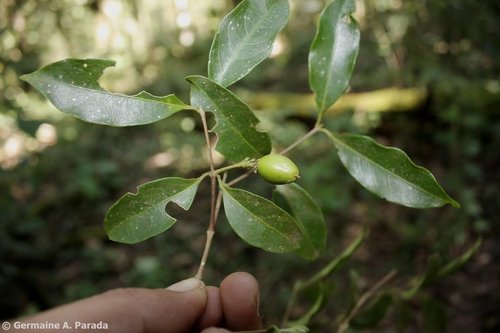
A small evergreen shrub. The bark is light coloured. It grows 75 cm high and 75 cm wide. The leaves are 25 mm long and dark glossy green. They have deep teeth and sharp prickles. The flowers are pink to mauve. The fruit is small and red-purple when ripe. They are 6-12 mm wide.
Edible Uses
Fruit - raw or cooked. They can be used in tarts, jellies and marmalades. The plant flowers and therefore fruits all year round. The purple fruit is around 5 - 15mm in diameter.
Traditional Uses
The fruit are eaten fresh. They are also used in tarts, jellies, and marmalades.
This uses section is brief — help expand it
Distribution
A tropical plant. It grows naturally in the West Indies. It needs moderate moisture. It needs an average, well-drained soil. It can grow in some shade. It suits hardiness zones 10-12.
Where It Grows
Asia, Australia, Bangladesh, Caribbean, Central America*, Cuba*, Hawaii, India, Indochina, Indonesia, Laos, Lesser Antilles, Myanmar, North America, Pacific, Puerto Rico, SE Asia, USA, West Indies,
Cultivation
It can be grown from cuttings or seed. It makes a good hedge plant.
Propagation
Seed - Cuttings - cuttings of half-ripe wood, with entire leaves, in a frame with bottom heat.
Other Uses
The plant has prickly, holly-like leaves and can be grown as a dwarf hedge. It is very tolerant of trimming, and has been used for topiary.. Prostrate forms of the plant can be used for ground cover.
Other Information
It is a cultivated food plant.
Notes
There are 40 Malpighia species.
Also Known As
Holi kate, Kanta malpighia, Singapore holly
References (16)
- Ambasta, S.P. (Ed.), 2000, The Useful Plants of India. CSIR India. p 351
- Arora, R. K., 2014, Diversity in Underutilized Plant Species - An Asia-Pacific Perspective. Bioversity International. p 75
- Etherington, K., & Imwold, D., (Eds), 2001, Botanica's Trees & Shrubs. The illustrated A-Z of over 8500 trees and shrubs. Random House, Australia. p 460
- Facciola, S., 1998, Cornucopia 2: a Source Book of Edible Plants. Kampong Publications, p 146
- Hedrick, U.P., 1919, (Ed.), Sturtevant's edible plants of the world. p 398
Show all 16 references Hide references
- Heywood, V.H., Brummitt, R.K., Culham, A., and Seberg, O. 2007, Flowering Plant Families of the World. Royal Botanical Gardens, Kew. p 200
- Hibbert, M., 2002, The Aussie Plant Finder 2002, Florilegium. p 189
- Kermath, B. M., et al, 2014, Food Plants in the Americas: A survey of the domesticated, cultivated and wild plants used for Human food in North, Central and South America and the Caribbean. On line draft. p 509
- Kunkel,
- Llamas, K.A., 2003, Tropical Flowering Plants. Timber Press. p 252
- Pasha, M. K. & Uddin, S. B., 2019, Minor Edible Fruits of Bangladesh. Bangladesh J. Plant Taxon. 26(2): 299–313
- PROSEA (Plant Resources of South East Asia) handbook, Volume 2, 1991, Edible fruits and nut. p 199
- Sp. pl. 1:426. 1753
- Staples, G.W. and Herbst, D.R., 2005, A tropical Garden Flora. Bishop Museum Press, Honolulu, Hawaii. p 380 (Drawing)
- Sukarya, D. G., (Ed.) 2013, 3,500 Plant Species of the Botanic Gardens of Indonesia. LIPI p 668
- Tanaka,