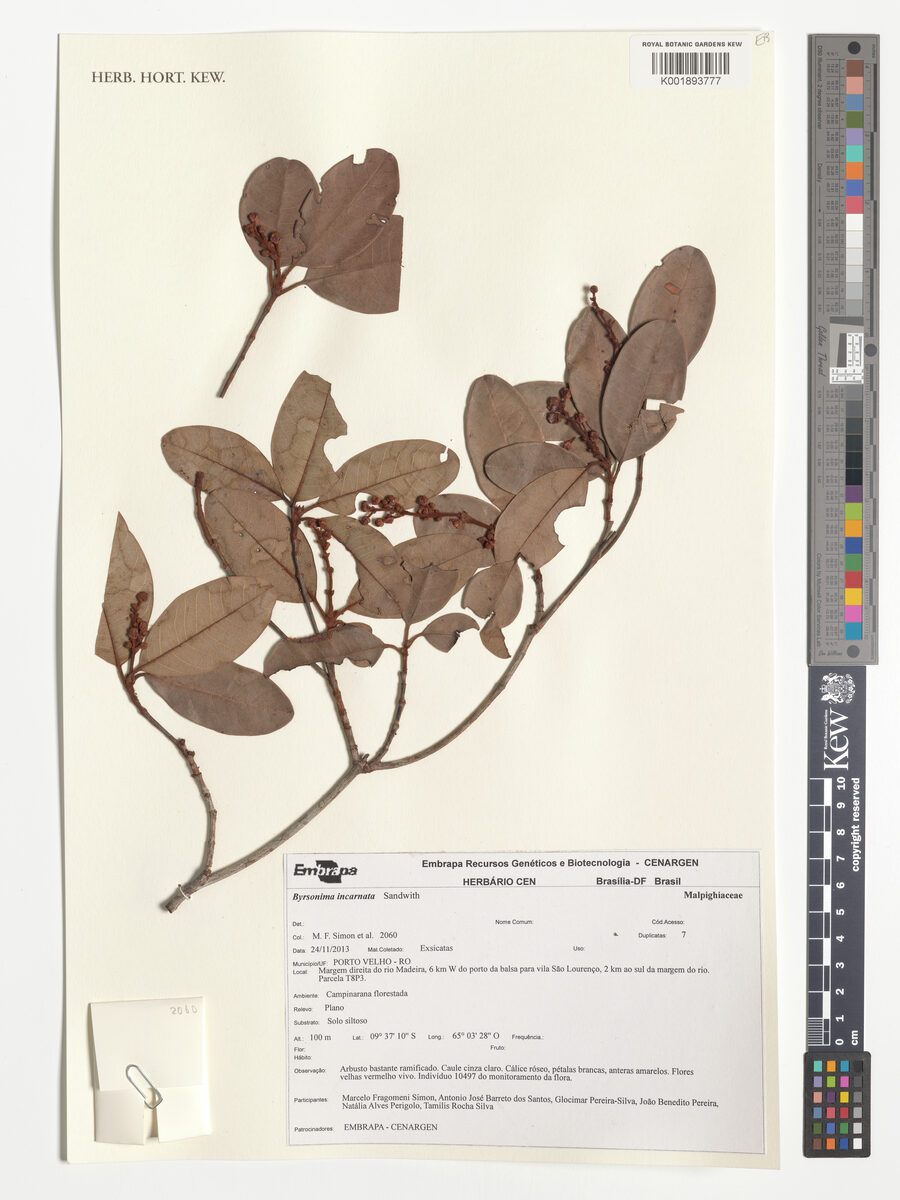
Byrsonima verbascifolia
(L.) Rich
Murici
iNaturalist· cc-by-nc-sa
(c) Mauricio Mercadante, some rights reserved (CC BY-NC-SA)
iNaturalist· cc-by-nc
(c) Guilherme A. Fischer, some rights reserved (CC BY-NC), uploaded by Guilherme A. Fischer
iNaturalist· cc-by-nc
(c) Onildo João Marini Filho, some rights reserved (CC BY-NC), uploaded by Onildo João Marini Filho
Description
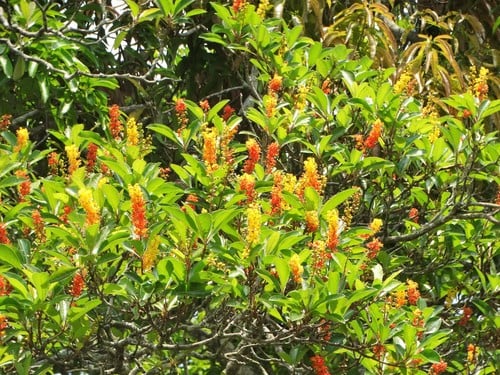
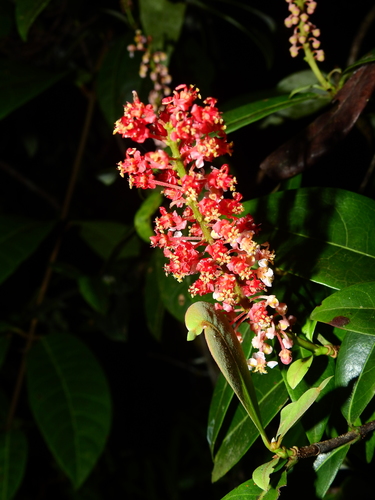
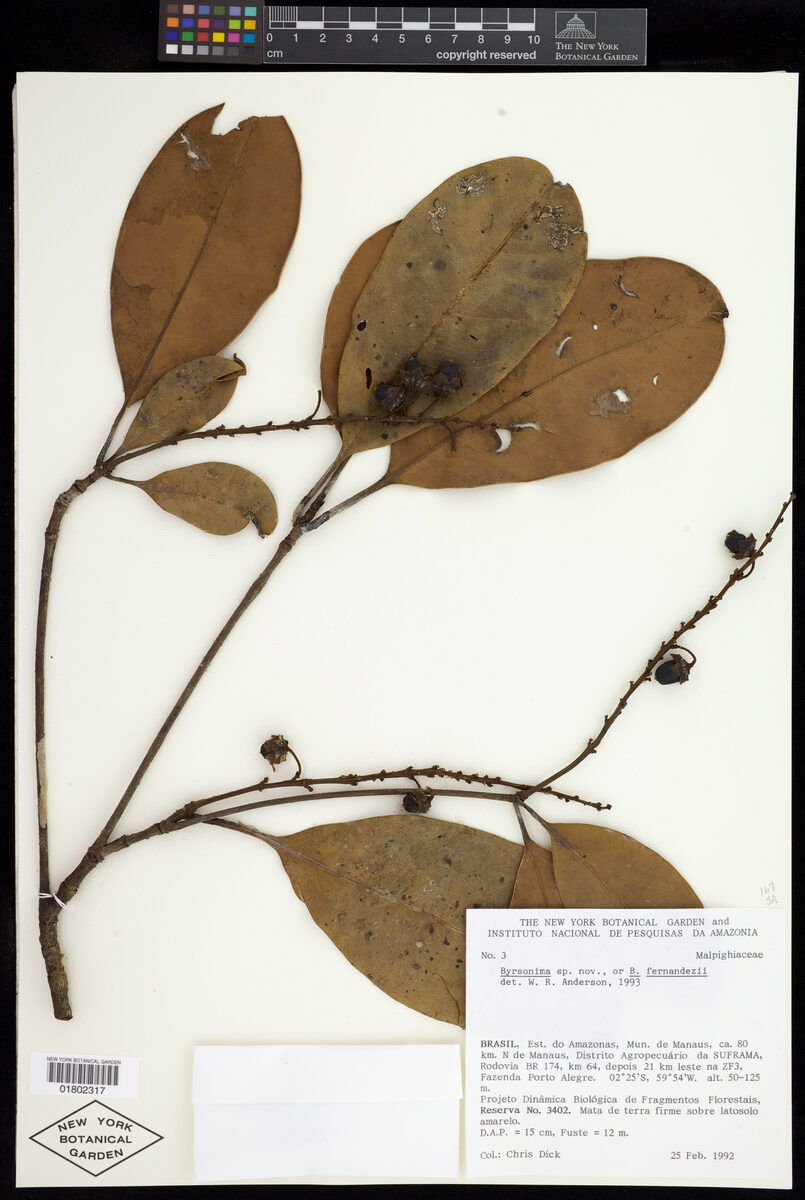
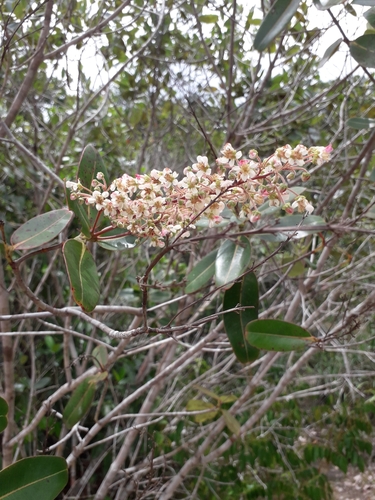
A tree. It grows 4-6 m high. Often it is only 1 m high. The trunk is twisted. It is 15-25 cm across. The bark is thick and rough. The leaves are simple and near the ends of branches. They are 14-20 cm long by 6-12 cm wide. The flowers are in groups in the axils of leaves. They are 15-25 cm long on stalks 1-6 cm long. The flowers are red and yellow. The fruit is round and fleshy with a sweet pulp.
Edible Uses
The fruits are used as juices (typically sweetened due to their acidity), jams, and puddings. The seeds yield oil.
Traditional Uses
The fruit are used as juices. They are acid so are eaten with sugar. They are also used for jams and puddings.
This uses section is brief — help expand it
Medicinal Uses
The seed oil has traditional uses.
Distribution
It is a tropical plant. It grows in the Amazon and central Brazil. It grows on dry soil.
Where It Grows
Amazon, Bolivia, Brazil*, Central America, Colombia, Cuba, French Guiana, Guianas, Guyana, Honduras, Nicaragua, South America, Suriname, Trinidad-Tobago, Venezuela, West Indies,
Cultivation
Plants are grown from seed. The ripe fruit are put in plastic bags to soften them and make it easier to removed the seeds. Fresh seed are planted and germinate in 4-8 weeks.
Propagation
Seed - best sown as soon as it is ripe in a sunny position, either in a nursery seedbed or in individual containers. Germination rates are normally low, with the seed sprouting within 4 - 8 weeks. Transplant the nursery bed seedlings to individual containers when 5 - 7cm tall.
Other Uses
The bark is a source of tannins. A black dye obtained from the bark is used to colour textiles. The wood is medium-textured, moderately heavy, with poor mechanical properties and low durability. Because of its small size it is only used for fine cabinet making. The wood is used for fuel and making charcoal.
Production
Plants grow slowly.
Other Information
The fruit are enjoyed.
Notes
There are 127 Byrsonima species. They grow in tropical America.
Nutrition
| Part | Moisture | kJ | kcal | Protein | Vit A | Vit C | Iron | Zinc |
|---|---|---|---|---|---|---|---|---|
| Fruit | 80.6 | 272 | 66 | 0.7 | — | — | 1.4 | 0.6 |
Synonyms
Also Known As
Douradinha-falsa, Murici-assu, Murici-grande, Murici-guassu, Murici-pequeno, Murici-rasteiro, Murici, Orelha-de-burro, Orelha-de-veado
References (15)
- Bircher, A. G. & Bircher, W. H., 2000, Encyclopedia of Fruit Trees and Edible Flowering Plants in Egypt and the Subtropics. AUC Press. p 71
- Bortolotto, I. M., et al, 2018, Lista preliminar das plantas alimenticias nativas de Mato Grosso do Sul, Brasil. Iheringia, Serie Botanica, Porto Alegre, 73 (supl.):101-116
- Brazil: Biodiversity for Food and Nutrition
- Cavalcante, P.B., 1991, Frutas comestíveis da Amazônia. Edições CEJUP
- Grandtner, M. M. & Chevrette, J., 2013, Dictionary of Trees, Volume 2: South America: Nomenclature, Taxonomy and Ecology. Academic Press p 85
Show all 15 references Hide references
- Hunter, D., et al, 2019, The potential of neglected and underutilized species for improving diets and nutrition. Planta (2019) 250:709-729
- Kermath, B. M., et al, 2014, Food Plants in the Americas: A survey of the domesticated, cultivated and wild plants used for Human food in North, Central and South America and the Caribbean. On line draft. p 153
- Kew Plants of the World Online
- Lopez-Diago, D. & Garcia, N., 2021, Wild edible fruits of Colombia. Biota ColomBiana 22 (2) p 41
- Lorenzi, H., 2002, Brazilian Trees. A Guide to the Identification and Cultivation of Brazilian Native Trees. Vol. 02 Nova Odessa, SP, Instituto Plantarum p 244
- Lorenzi, H., Bacher, L., Lacerda, M. & Sartori, S., 2006, Brazilian Fruits & Cultivated Exotics. Sao Paulo, Instituto Plantarum de Estuados da Flora Ltda. p 158
- Paz, F. S., et al, 2021, Edible Fruit Plant Species in the Amazon Forest Rely Mostly on Bees and Beetles as Pollinators. Journal of Economic Entomology, XX(XX), 2021, 1–13
- Roa, J. A. G. & Boada, D. S. G., 2018, Fundación para el Fortalecimiento de la Fruticultura y Plantas Alimenticias no Convencionales en Colombia.
- Villachica, H., 1996, Frutales y hortalizas promisorios de la Amazonía. Tratado de Cooperación Amazónica
- www.colecionandofrutas.org