Chionanthus virginicus
L.
Fringe tree, Old Man's Beard, Grancy greybeard
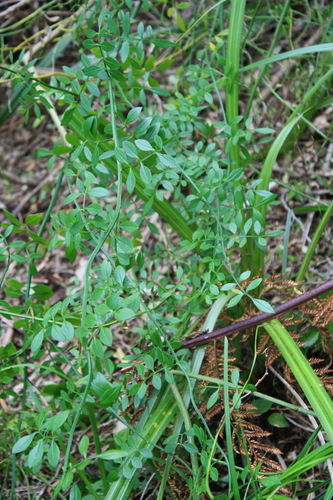
iNaturalist· cc-by-nc
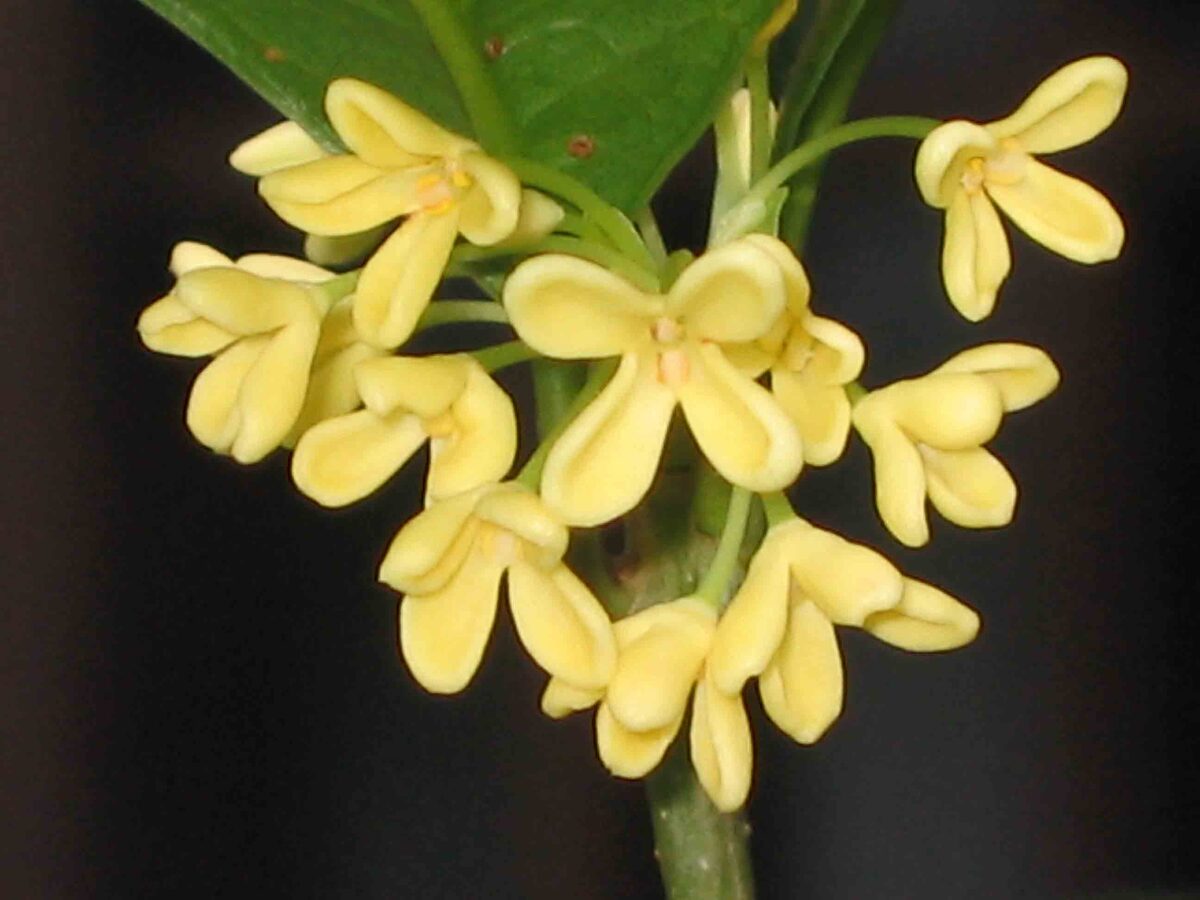
(c) Arthur T. LaBar, some rights reserved (CC BY-NC)
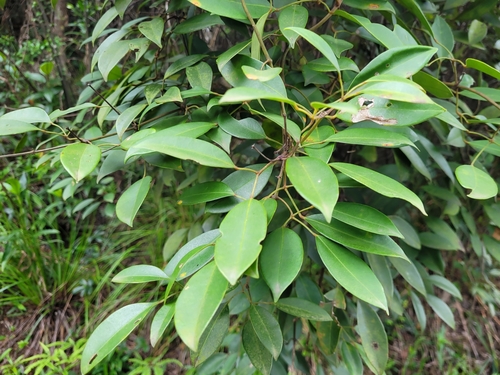
iNaturalist· cc-by
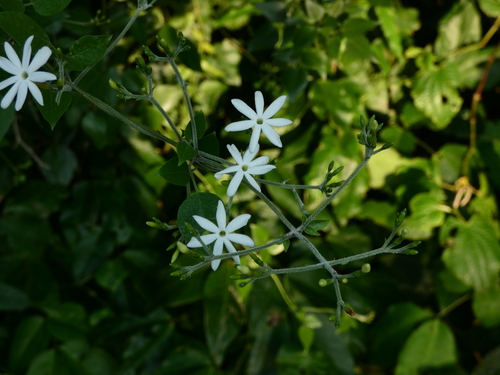
(c) Kathy Richardson, some rights reserved (CC BY)
iNaturalist· cc-by
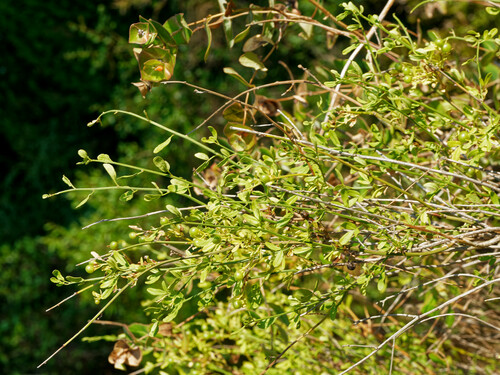
(c) Kathy Richardson, some rights reserved (CC BY)
Summary
Source: WikipediaChionanthus virginicus (white fringetree) is a tree native to the savannas and lowlands of the northeastern and southeastern United States, from Massachusetts south to Florida, and west to Oklahoma and Texas.
Description
A tree. It loses its leaves during the year. It can be 9-10 m tall. The bark is grey and smooth. It becomes furrowed with age. The leaves are oval and narrow. They are 20 cm long by 10 mm wide. Male and female flowers are on separate plants. They are 3 cm long and white. The flowers are in long drooping sprays. The fruit are egg shaped and deep blue. They are 2 cm long and have a bloom. They have a large stone.
Edible Uses
The fruit can be used as a pickle in the manner of olives. Each fruit is up to 18mm long, has a thin pulp, and contains 1–3 rounded seeds.
Traditional Uses
The fruit are pickled like olives.
This uses section is brief — help expand it
Medicinal Uses
Fringe tree was commonly used by North American Indians and European settlers to treat inflammations of the eye, mouth ulcers, and spongy gums. In modern herbalism it is regarded as one of the most reliable remedies for disorders of the liver and gall bladder. The dried root bark is alterative, aperient, cholagogue, diuretic, febrifuge, and tonic, and is used to treat gallbladder pain, gallstones, jaundice, and chronic weakness. A tincture of the bark was once widely used internally for hypertrophy of the liver, jaundice, bilious headache, gallstones, and rheumatism. The root bark also appears to strengthen function in the pancreas and spleen, and anecdotal evidence suggests it may substantially reduce sugar levels in the urine. Fringe tree stimulates the appetite and digestion and is considered an excellent remedy for chronic illness, particularly where the liver is affected. A tea or poultice made from the root bark can be used externally as a wash for wounds, inflammations, sores, and infections. The roots can be harvested at any time of year; the bark is peeled off and dried for later use.
Distribution
It is a temperate plant. It is native to the eastern United States. It grows naturally in rich moist soil. It suits hardiness zones 4-9. Arboretum Tasmania.
Where It Grows
Australia, Britain, Canada, Europe, North America, Slovenia, Tasmania, Turkey, Türkiye, USA,
Cultivation
Prefers a good loamy neutral to acid soil in full sun. Succeeds in partial shade but does not fruit so well in such a position. Plants flower more freely in areas with hotter summers and are slow-growing in areas with cool summers.. A very ornamental plant, it is hardy to about -25°c. A fast-growing but short-lived tree in the wild, where it is remarkably free from diseases or insect pests. Plants begin to flower and bear fruit when they are 5 - 8 years old. The flowers have a delicate sweet perfume. Dioecious, male and female plants must be grown if seed and fruit is required. This species transplants easily. Plants in this genus are notably resistant to honey fungus.
Propagation
Seed is best sown as soon as it is ripe in a cold frame, where germination is usually good. Stored seed can be sown in February or March in a warm greenhouse, though germination may then take 18 months at 15–20°c. Alternatively, stored seed can be pre-soaked for 2–3 hours in warm water, given 3 months of warm stratification, then 3 months at 2–4°c, after which germination can be fairly rapid. Prick seedlings into individual pots when large enough to handle and grow on in a greenhouse or cold frame, planting out the following spring or early summer. Layering can be carried out in early summer once new growth is long enough, in spring, or in autumn; early summer layering takes 15 months.
Other Uses
The wood is hard, heavy, and close-grained, weighing approximately 39lb per cubic foot, but is of no commercial value due to the small size of the tree.
Production
They are slow growing. They can take 10 years to flower.
Notes
The bark is used in medicine. There are about 80-100 Chionanthus species (including Linociera). They are tropical or subtropical.
Synonyms
Also Known As
Virginski sneženec
References (15)
- Bodkin, F., 1991, Encyclopedia Botanica. Cornstalk publishing, p 251
- Brown, D., 2002, The Royal Horticultural Society encyclopedia of Herbs and their uses. DK Books. p 167
- Coombes, A.J., 2000, Trees. Dorling Kindersley Handbooks. p 228
- Cundall, P., (ed.), 2004, Gardening Australia: flora: the gardener's bible. ABC Books. p 372
- Etherington, K., & Imwold, D., (Eds), 2001, Botanica's Trees & Shrubs. The illustrated A-Z of over 8500 trees and shrubs. Random House, Australia. p 209
Show all 15 references Hide references
- Facciola, S., 1998, Cornucopia 2: a Source Book of Edible Plants. Kampong Publications, p 162
- Hibbert, M., 2002, The Aussie Plant Finder 2002, Florilegium. p 66
- Kermath, B. M., et al, 2014, Food Plants in the Americas: A survey of the domesticated, cultivated and wild plants used for Human food in North, Central and South America and the Caribbean. On line draft. p 220
- Kunkel,
- Little, E.L., 1980, National Audubon Society Field Guide to North American Trees. Alfred A. Knopf. p 644
- Lord, E.E., & Willis, J.H., 1999, Shrubs and Trees for Australian gardens. Lothian. p 50
- Loughmiller, C & L., 1985, Texas Wildflowers. A Field Guide. University of Texas, Austin. p 172
- Plants for a Future database, The Field, Penpol, Lostwithiel, Cornwall, PL22 0NG, UK. http://www.scs.leeds.ac.uk/pfaf/
- Sp. pl. 1:8. 1753 "virginica"
- Young, J., (Ed.), 2001, Botanica's Pocket Trees and Shrubs. Random House. p 241