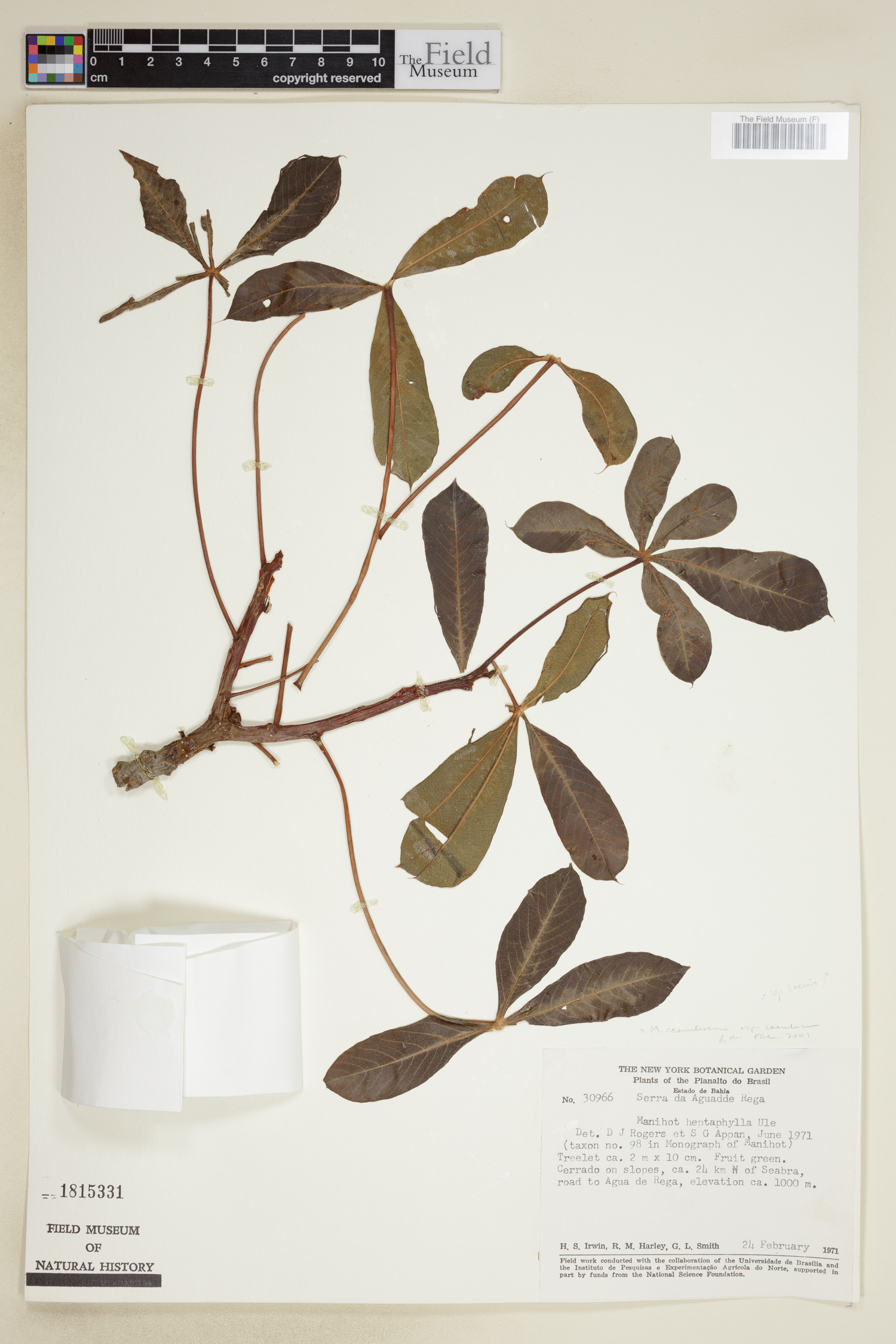
Claoxylon indicum
(Reinw.ex Blume) Hassk.
Sitampu tree
iNaturalist· cc-by-nc-sa
(c) 106611639464075912591, some rights reserved (CC BY-NC-SA), uploaded by 106611639464075912591
iNaturalist· cc-by-nc
(c) Gavin, some rights reserved (CC BY-NC), uploaded by Gavin
Summary
Source: WikipediaClaoxylon indicum is a plant in the spurge family Euphorbiaceae native to south and southeast Asia. The Latin word indicum means "Indian", referring to the locality of collection of the type specimen, which was probably Java, part of the Dutch East Indies at that time.
Description
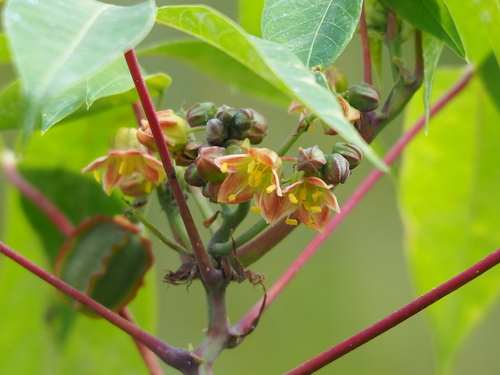
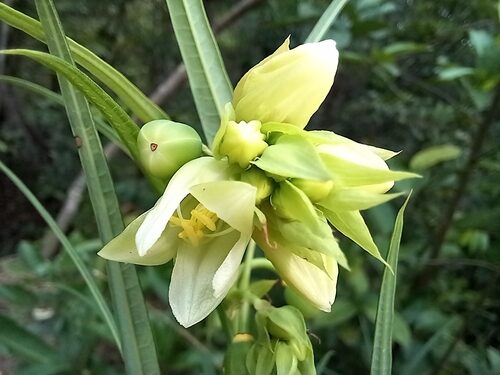
A shrub or small tree. It grows 20 m tall. It often has a purple covering. The trunk is 20-35 cm across. The leaves are alternate. The leaf stalk is 16 cm long. The leaf blade is oval and 9-27 cm long by 5-20 cm wide. It has a covering of small dots that let the light through. The edges of the leaves have coarse teeth. The male flowering stalk is in the axils of leaves. It can be 40 cm long. The flower groups have 6-13 together. There are 15-25 stamens. The female flowering stalk is in the axils and is shorter and more dense than the male one. It is up to 12 cm long. The fruit are 3-4 angled. The capsule has 6-8 furrows along it. It is 5-6 mm long and 7-8 mm wide. The seeds are oval or kidney shaped.
Edible Uses
Young leaves eaten as a lalab (a vegetable salad served with sambal) with rice. Consumed as vegetables and used in sauces. Young leaves are used to prepare a spicy sauce or are eaten steamed, as a vegetable.
Traditional Uses
The leaves are used for a spicy sauce. They are also steamed as a vegetable.
This uses section is brief — help expand it
Medicinal Uses
The leaves are used as a laxative. A decoction of the leaves is takenin China to treat various diseases The leaves, pounded together with pieces of bark, are applied externally to the chest as a treatment for asthma.
Known Hazards
The tree produces a suffocating smoke and so cannot be used for firewood.
Distribution
A tropical plant. It grows in humid locations on humus rich soils. It can also be on sandy soils. It grows up to 850 m altitude. It grows in secondary forest. It grows at about 700 m altitude. It requires light and humidity. In Yunnan.
Where It Grows
Asia, Cambodia, China, Christmas Island, India, Indochina, Indonesia, Laos, Malaysia, Myanmar, Pacific, Philippines, SE Asia, Thailand, Vietnam,
Cultivation
Plants can be grown from seeds. Trees are easily grown from cuttings.
Propagation
Seed - Cuttings root easily.
Other Uses
The tree produces a suffocating smoke and so cannot be used for firewood.
Notes
There are about 75-80 Claoxylon species.
Synonyms
Also Known As
Berketupuk, Bleketupuk, Chapa batu, Chhe: toch, Jarak kayu, Juru ayam, Katerbik, Ketupuk, Kha ka ai, Khang namphung, L(00j)e m(aj)i, Lampin budak, Laping budak, Loc mai, Ngun peungkhao, Ngun phung khao, Phakwan baiyai, Pohon sitampu, Si nimnim, Sitampu, Suru ayam, Talingkup, Talingkup, Tetupuk
References (12)
- Ambasta, S.P. (Ed.), 2000, The Useful Plants of India. CSIR India. p 130
- Burkill, I.H., 1966, A Dictionary of the Economic Products of the Malay Peninsula. Ministry of Agriculture and Cooperatives, Kuala Lumpur, Malaysia. Vol 1 (A-H) p 584 (As Claoxylon polot)
- Cat. hort. bot. bogor. 235. 1844
- Forest Inventory and Planning Institute, 1996, Vietnam Forest Trees. Agriculture Publishing House p 203 (As Claoxylon polot)
- Interpr. Herb. amboin. 200. 1917 (As Claoxylon polot)
Show all 12 references Hide references
- Martin, F.W. & Ruberte, R.M., 1979, Edible Leaves of the Tropics. Antillian College Press, Mayaguez, Puerto Rico. p 98, 191 (As Claoxylon polot)
- Ochse, J.J. et al, 1931, Vegetables of the Dutch East Indies. Asher reprint. p 265 (As Claoxylon polot)
- PROSEA handbook Volume 13 Spices. p 250
- Reis, S. V. and Lipp, F. L., 1982, New Plant Sources for Drugs and Foods from the New York Botanical Garden herbarium. Harvard. p 155 (As Claoxylon polot)
- Seidemann J., 2005, World Spice Plants. Economic Usage, Botany, Taxonomy. Springer. p 110
- Sukarya, D. G., (Ed.) 2013, 3,500 Plant Species of the Botanic Gardens of Indonesia. LIPI p 202
- World Checklist of Useful Plant Species 2020. Royal Botanic Gardens, Kew