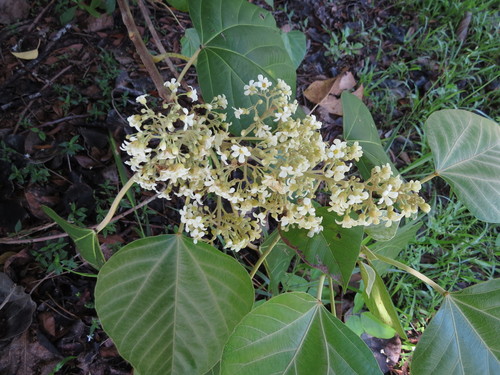
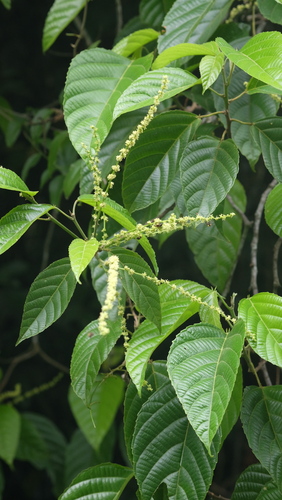
Sapium glandulosum
(L.) Morong
Brazil sapium, Bolivia rubber
iNaturalist· cc-by-nc
(c) Francisco Amador, some rights reserved (CC BY-NC), uploaded by Francisco Amador
iNaturalist· cc-by-nc
(c) Alex Espinosa, some rights reserved (CC BY-NC)
Summary
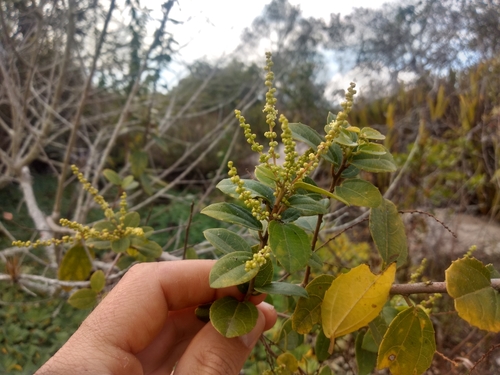
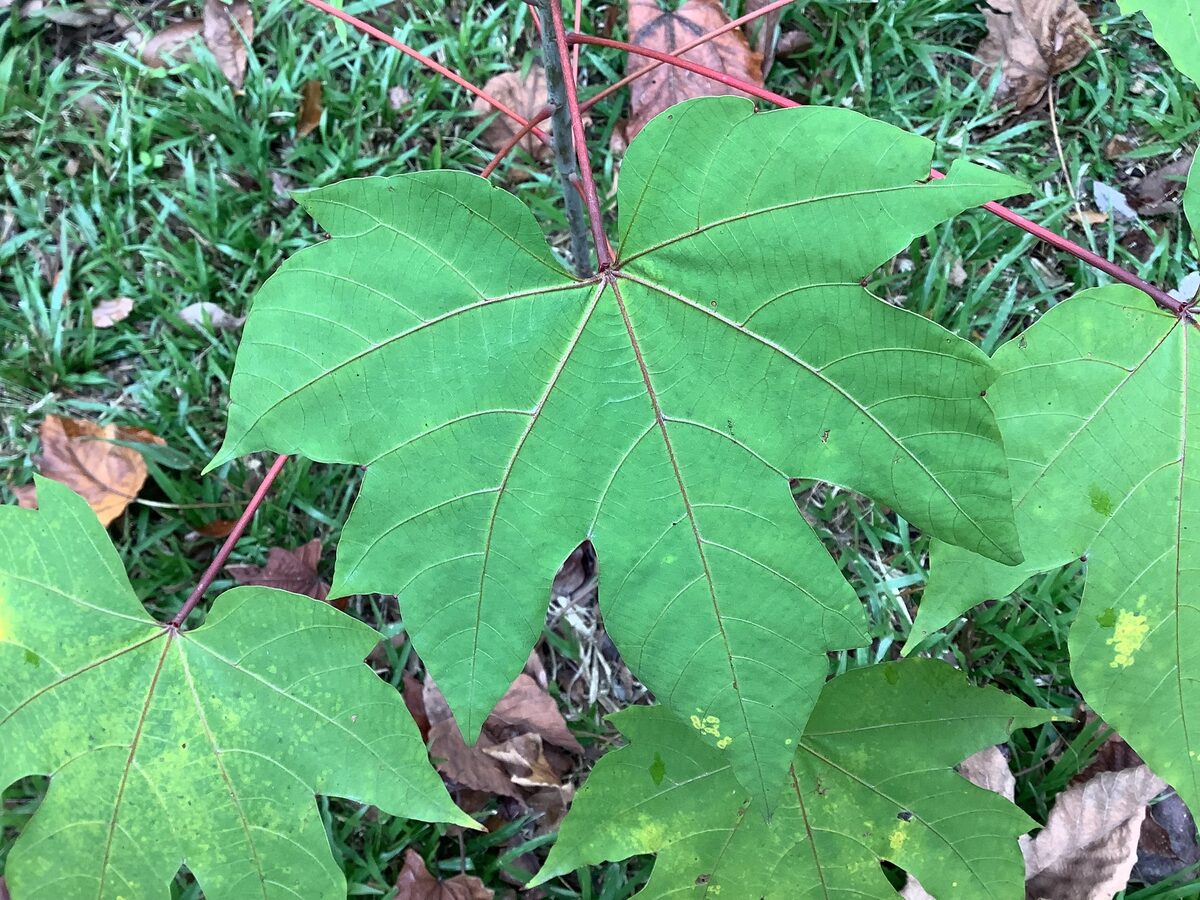
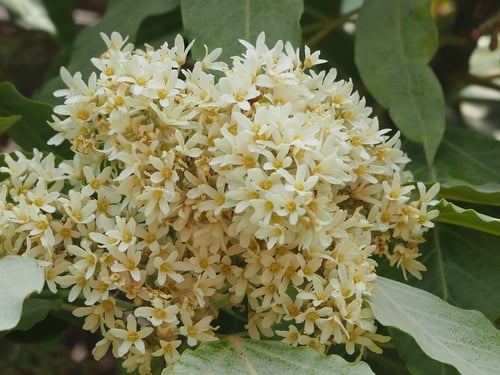
Source: WikipediaSapium glandulosum is a species of tree in the family Euphorbiaceae. It is native to the Neotropics from Mexico and the Caribbean south to Argentina, and it has been cultivated elsewhere. It is the most common Sapium species. Its common names include gumtree, milktree, leche de olivo, and olivo macho. This is a species of tree up to 30 meters tall, usually with some buttress roots and multiple trunks. Smaller woody parts can have short, thick spines. It has a thin, patchy, peeling, scarred outer bark and a granular inner bark. It produces large amounts of milky latex. The alternately arranged leaves have toothed oblong or oval leaves up to 27 centimeters long by 8 wide. New leaves have gland-tipped teeth. The species is monoecious. The inflorescence is a spikelike arrangement of clusters of male flowers with a few female flowers at the base. The tiny rounded purple male flower is barely over a millimeter long. The female flower has 3 styles about 2 millimeters long. The fruit is a greenish-brown, rounded capsule up to a centimeter long which splits into 3 segments, each holding a seed. The seed is covered in a thin layer of red pulp. This tree grows in tropical moist and wet forests. The copious latex is of high quality and can be used to make rubber. It is difficult to harvest, so it is not commercially useful.
Description
A tree. It grows 5-20 m tall. The leaves are often in clusters. The leaves are 3-14 cm long and 2-5 cm wide. The flowering shoots are at the ends of the branches. They are 3-15 cm long
Edible Uses
The fruit and seeds are eaten.
Known Hazards
The latex is toxic and can damage the eyes if it comes into contact with them.
Distribution
It is a tropical plant. It grows up to 2,200 m above sea level.
Where It Grows
Bolivia, Brazil, Central America, Colombia, Costa Rica, Cuba, Ecuador, Honduras, Mexico, Panama, Paraguay, Peru, South America, Trinidad and Tobago, Venezuela, West Indies,
Cultivation
Prefers a sunny position. Plants can succeed on thin, dry soils. Established plants are drought tolerant.
Propagation
Seed - best sown as soon as it is ripe in a partially shaded position in a nursery seedbed. A low germination rate can usually be expected, with the seed sprouting within 10 - 35 days. In nature, the seeds germinate soon (within a week or two) after coming into contact with the moist forest floor.
Other Uses
A latex is obtained from the tree. It is the source of a good rubber. When cut, the bark secretes a fair quantity of a sweet, pinkish latex. The heartwood is pale brown; the sapwood cream-coloured in a band 12 - 25mm wide. The wood is straight-grained; coarse-textured; very soft; light; not strong; not durable; tasteless, but with a slightly foetid odour. It requires a sharp knife to cut smoothly across the grain; It is easy to work; checks and is liable to stain in drying. It is little used, but occasionally light boxes are made from it. The wood is used for fuel and to make charcoal. The tree plays an important role, within its native range, in the reclamation of storm-ravaged land by the forest. Trees and saplings are sturdy, resistant to drought and excessive sunlight, and are thus good pioneer plants. They frequently are among the first woody plants to invade clearings caused by tree-falls, landslides, or human intervention. They are also good competitors on steep slopes where soils are thin and xeric conditions are prevalent. Saplings one meter tall have been observed in storm-damaged sites after only two years of regeneration.
Synonyms
Also Known As
Caucho masha, Gomhout, Haia-haia, I'ra, Kasaba-oedoe, Lechero, Mukonyo, Shiringarana, Sipichi, Toropi
References (2)
- Grandtner, M. M. & Chevrette, J., 2013, Dictionary of Trees, Volume 2: South America: Nomenclature, Taxonomy and Ecology. Academic Press p 583
- Roa, J. A. G. & Boada, D. S. G., 2018, Fundación para el Fortalecimiento de la Fruticultura y Plantas Alimenticias no Convencionales en Colombia.