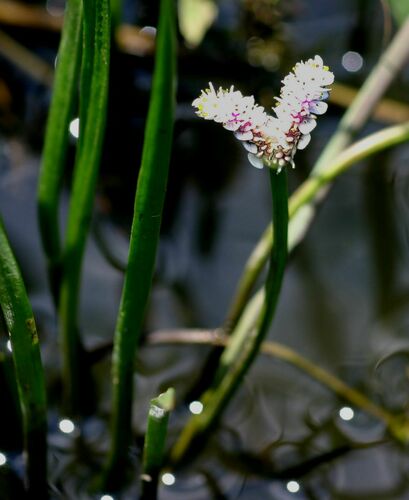
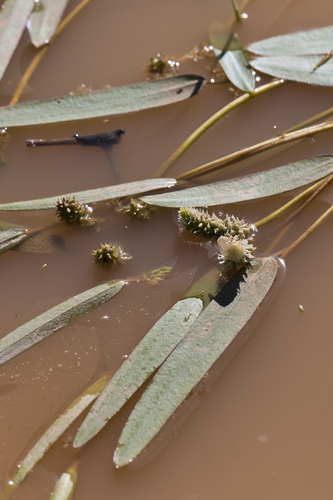
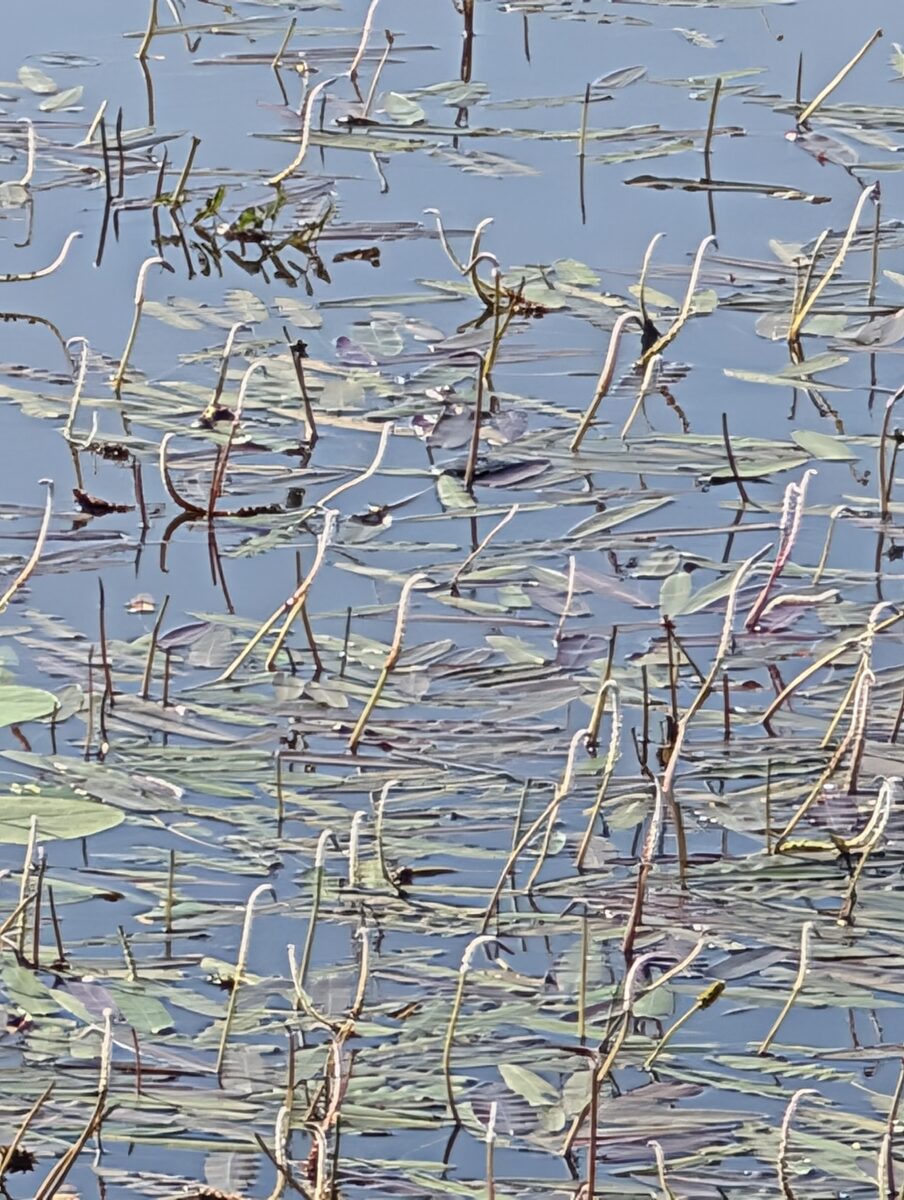
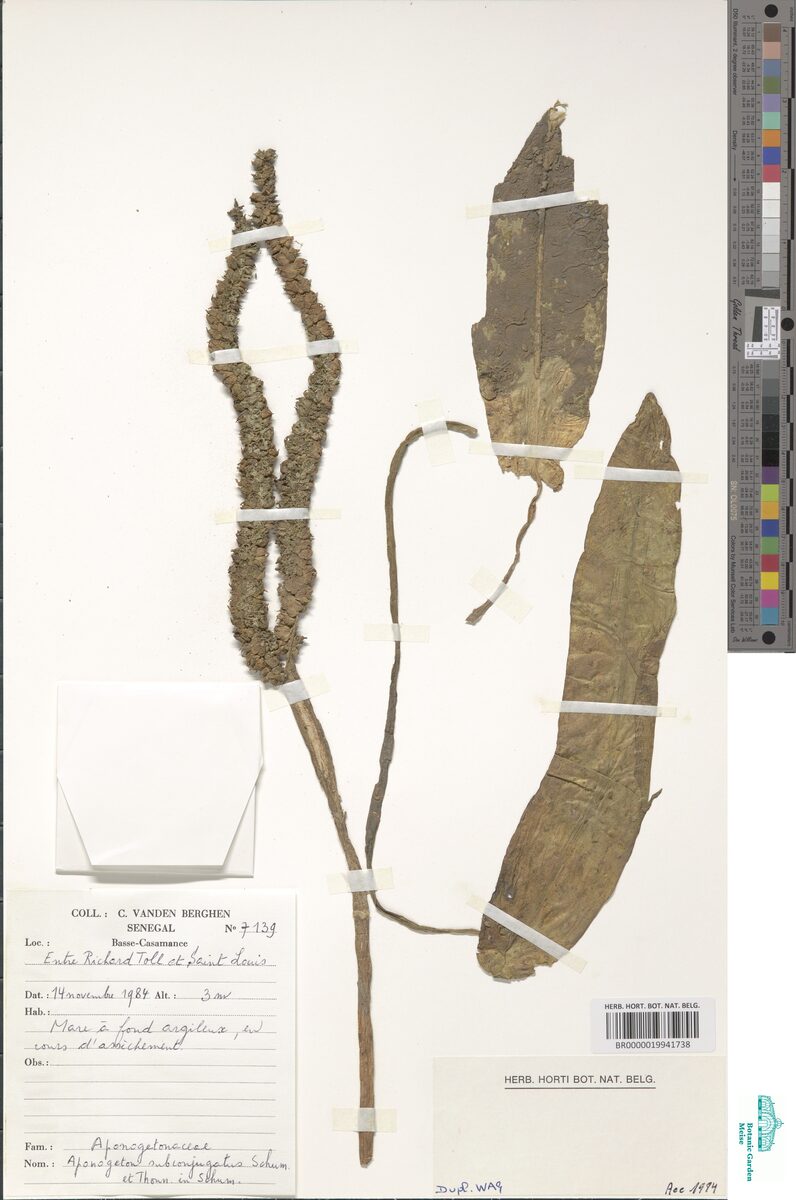
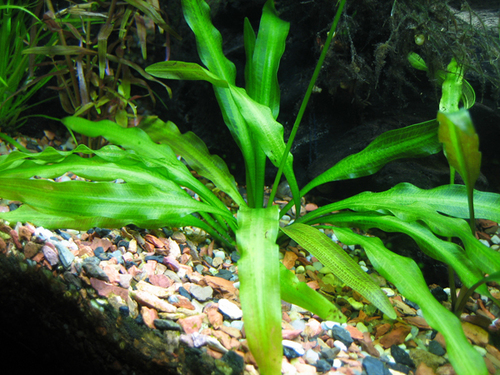
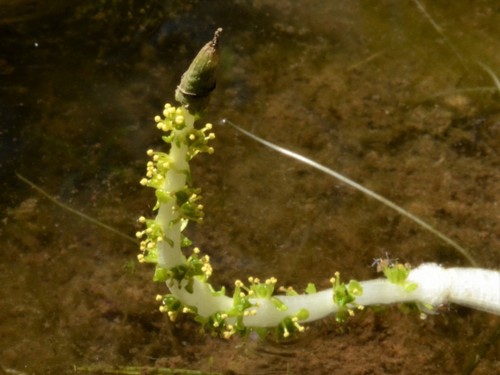
Aponogeton madagascariensis
(Mirb.) H. Bruggen
Lattice-leaf, Water-yam, Madagascar laceplant
iNaturalist· cc-by-nc-sa
(c) Gonzalo Valenzuela, some rights reserved (CC BY-NC-SA)
iNaturalist· cc-by
(c) Yasuaki Kobayashi, some rights reserved (CC BY)
iNaturalist· pd
Laila_, no known copyright restrictions (public domain)
Summary
Source: WikipediaAponogeton madagascariensis is commonly known as Madagascar laceleaf, lattice leaf or lace plant. It is an aquatic plant native to Madagascar in the family Aponogetonaceae popularly sold for use in aquariums.
Description
A herb. It grows 15 cm tall. It grows in water. The leaves have a netlike appearance.
This description is brief — help expand it
Edible Uses
The starchy tuber, corms, and roots are eaten.
Traditional Uses
The starchy tuber is eaten.
This uses section is brief — help expand it
Distribution
A subtropical plant. It is a water plant. It is grown in cool running water. It does best with a temperature of 18°-22°C. It does best with a dry dormant period and lower temperatures of about 12°C for several months.
Where It Grows
Asia, East Africa, Madagascar, Malaysia, Mauritius, SE Asia,
Notes
There are about 12-44 Aponogeton species. They are tropical and subtropical.
Synonyms
References (9)
- Bircher, A. G. & Bircher, W. H., 2000, Encyclopedia of Fruit Trees and Edible Flowering Plants in Egypt and the Subtropics. AUC Press. p 36 (As Aponogeton fenestralis)
- Blumea 16:249. 1968
- Burkill, I.H., 1966, A Dictionary of the Economic Products of the Malay Peninsula. Ministry of Agriculture and Cooperatives, Kuala Lumpur, Malaysia. Vol 1 (A-H) p 195 (As Aponogeton fenestralis)
- Hedrick, U.P., 1919, (Ed.), Sturtevant's edible plants of the world. p 65 (As Aponogeton fenestralis)
- Heywood, V.H., Brummitt, R.K., Culham, A., and Seberg, O., 2007, Flowering Plant Families of the World. Royal Botanical Gardens, Kew. p 344
Show all 9 references Hide references
- Lim, T. K., 2015, Edible Medicinal and Non Medicinal Plants. Volume 9, Modified Stems, Roots, Bulbs. Springer p 10
- PROSEA handbook Volume 9 Plants yielding non-seed carbohydrates. p 187 (As Aponogeton fenestralis)
- Romanowski, N., 2007, Edible Water Gardens. Hyland House. p 37
- World Checklist of Useful Plant Species 2020. Royal Botanic Gardens, Kew