Aponogeton elongatus
F. Muell. ex Benth.
Lace Plant, Waterlily, Australian laceplant
iNaturalist· pd
Internet Archive Book Images, no known copyright restrictions (public domain)
iNaturalist· cc-by-nc
(c) Brandan R Espe, some rights reserved (CC BY-NC)
Description
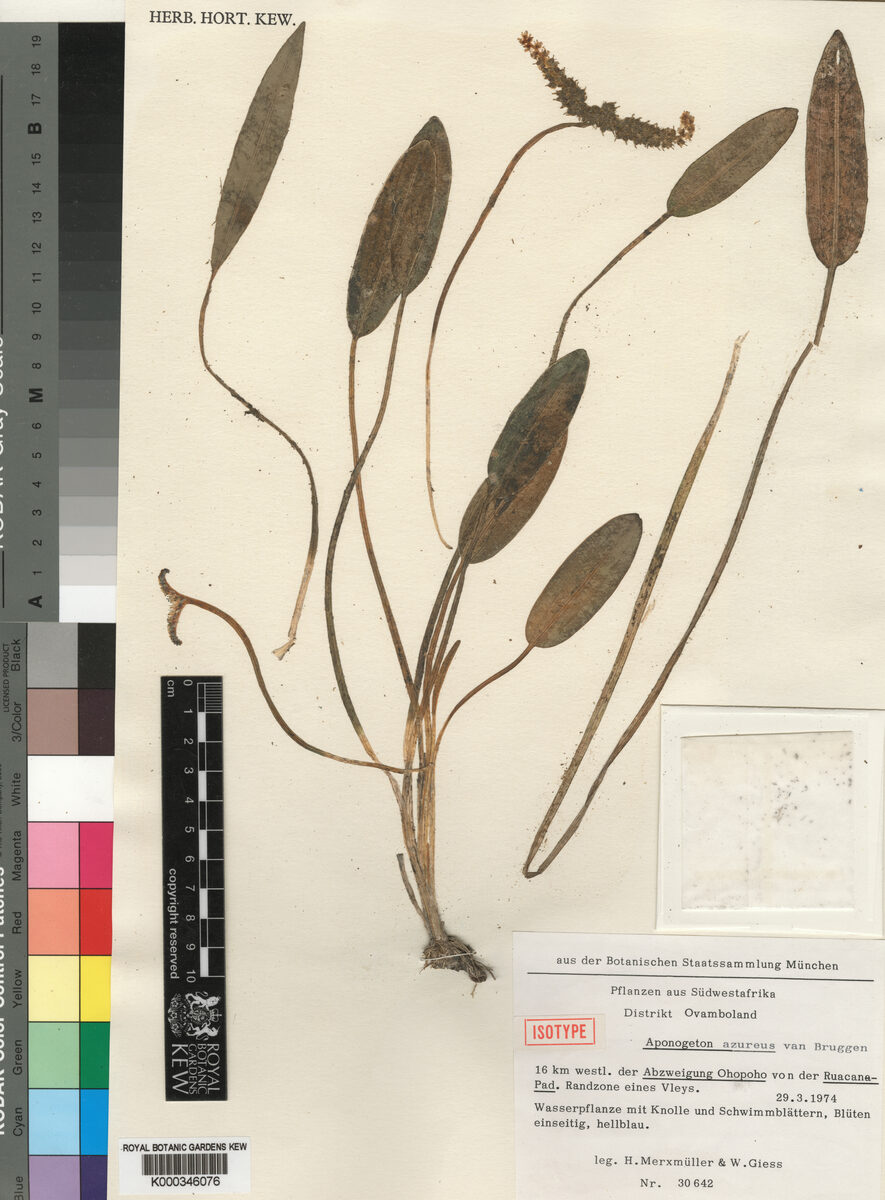
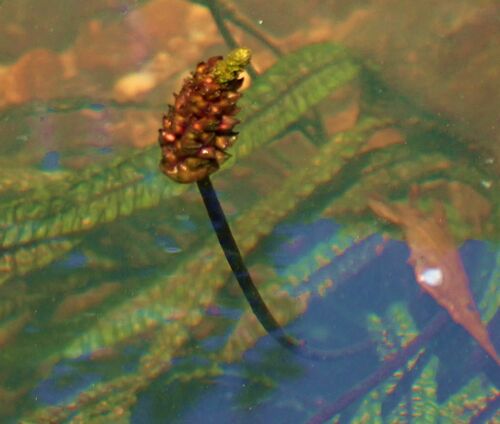
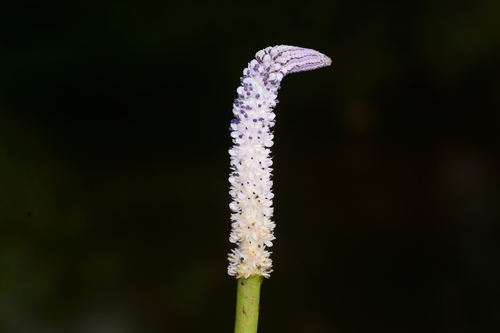
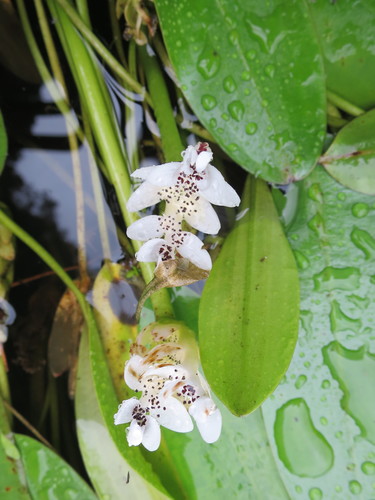
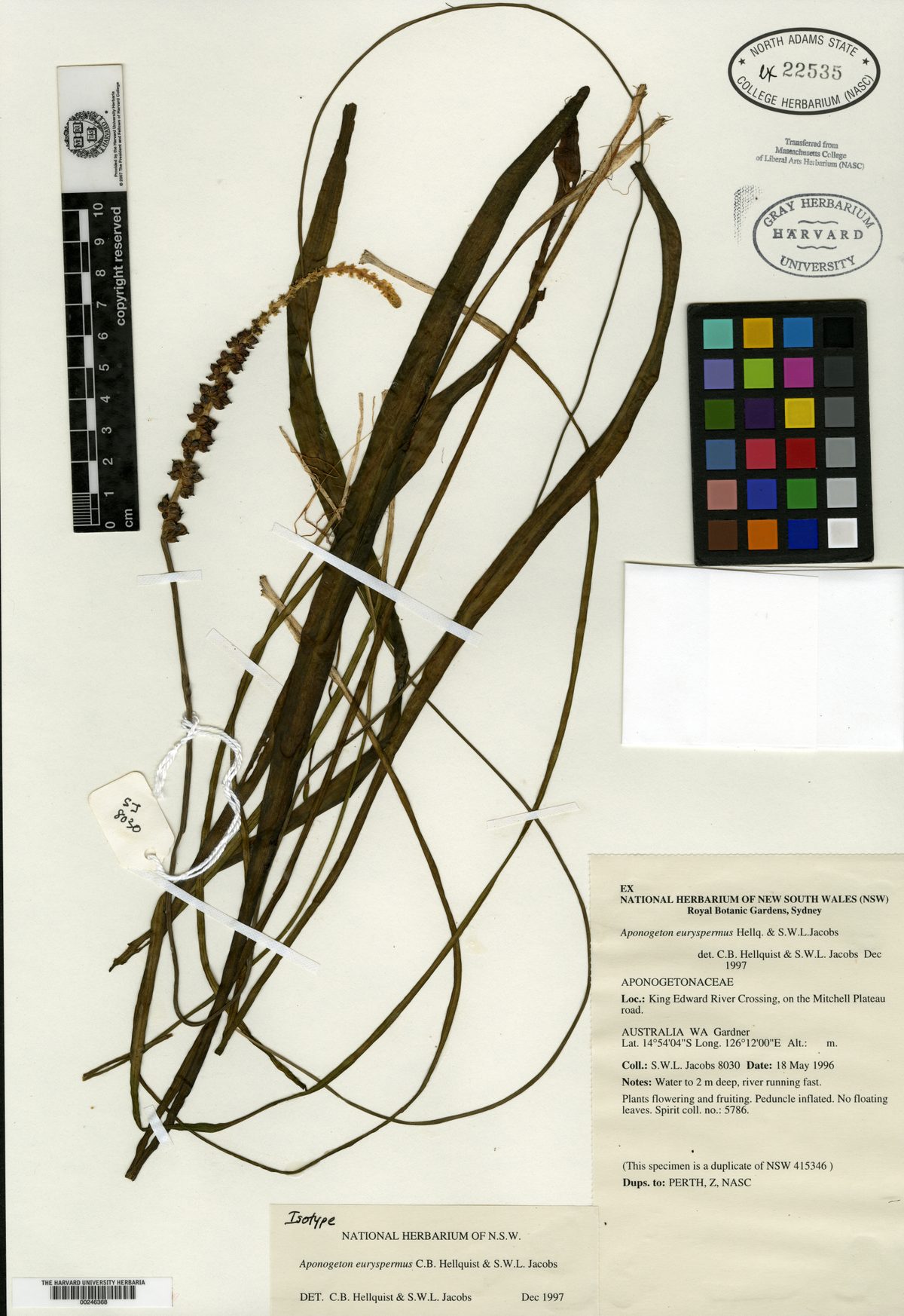
A small plant which grows in water. The leaves are 10-50 cm long by 1-5 cm wide. They are narrow, dark green and crinkled. Leaves are in clusters at the tip of the corm. They are often under the water but are sometimes floating. The floating leaves are smaller. The flowers are on a thin stem 1.5 m long. The flowers are small. They have a scent. The fruit is a follicle 2.5-6 cm long and 2-5 cm wide. There are 2-5 seeds.
Edible Uses
The corms and tubers are cooked and eaten.
Traditional Uses
The corms or tubers are cooked and eaten.
This uses section is brief — help expand it
Distribution
A tropical plant. It grows in fresh water. It can grow in still or flowing water. It can grow in shallow or deep pools. The water temperature needs to be above 15 °C. In tropical Queensland it grows from sea level to 50 m altitude. It does best in ponds that dry out.
Where It Grows
Australia*,
Cultivation
Plants can be grown from tubers when it is near the surface of the mud. They can also be grown from seed.
Notes
The Aponogetonaceae are plants which grow in fresh water. They have rhizomes or corms. There are about 12-44 Aponogeton species. They are tropical and subtropical.
Nutrition
| Part | Moisture | kJ | kcal | Protein | Vit A | Vit C | Iron | Zinc |
|---|---|---|---|---|---|---|---|---|
| Tuber | 46 | 610 | 146 | 4.6 | — | — | 2 | 0.7 |
Also Known As
Anbidjoh, Ankodjbang, Yangun
References (17)
- Bindon, P., 1996, Useful Bush Plants. Western Australian Museum. p 41.
- Bodkin, F., 1991, Encyclopedia Botanica. Cornstalk publishing, p 92
- Cooper, W. and Cooper, W., 2004, Fruits of the Australian Tropical Rainforest. Nokomis Editions, Victoria, Australia. p 57
- Crawford, I. M., 1982, Traditional Aboriginal Plant Resources in the Kalumburu Area: Aspects in Ethno-economics. Records of the Western Australian Museum Supplement No. 15
- Cribb, A.B. & J.W., 1976, Wild Food in Australia, Fontana. p 146
Show all 17 references Hide references
- Elliot, W.R., & Jones, D.L., 1982, Encyclopedia of Australian Plants suitable for cultivation. Vol 2. Lothian. p 215
- Garde, M., et al, 2003, A Preliminary List of Kundedjnjenghmi Plant Names. Northern Land Council. (Arnhem Land, Australia)
- Hibbert, M., 2002, The Aussie Plant Finder 2002, Florilegium. p 30
- Lavelle, M., 2008, Wild Flowers of Australia and Oceania. Southwater. p 113
- Lazarides, M. & Hince, B., 1993, Handbook of Economic Plants of Australia, CSIRO. p 22
- Lim, T. K., 2015, Edible Medicinal and Non Medicinal Plants. Volume 9, Modified Stems, Roots, Bulbs. Springer p 10
- Maiden, J. H., 1889, The Useful Native Plants of Australia (including Tasmania). The Technology Museum of NSW, Sydney. p 7
- Morley, B.D., & Toelken, H.R., (Eds), 1983, Flowering Plants in Australia. Rigby. p 319
- Romanowski, N., 2007, Edible Water Gardens. Hyland House. p 38
- Sainty, G.R. & Jacobs, S.W.L., 1981, Waterplants of New South Wales. Water Resources Commission. NSW p 64
- Wheeler, J.R.(ed.), 1992, Flora of the Kimberley Region. CALM, Western Australian Herbarium, p 962
- Wightman, Glenn et al. 1992, Mangarrayi Ethnobotany: Aboriginal Plant Use from the Elsey Area Northern Australia. Northern Territory Botanical Bulletin No 15. Parks and Wildlife Commission of the Northern Territory. p10