Baccaurea dulcis
(Jack) Muell. Arg.
Rambai
wikimedia· cc-by-sa
Wikimedia Commons - KVDP
gbif· cc0
President and Fellows of Harvard College
gbif· cc0
President and Fellows of Harvard College
Description
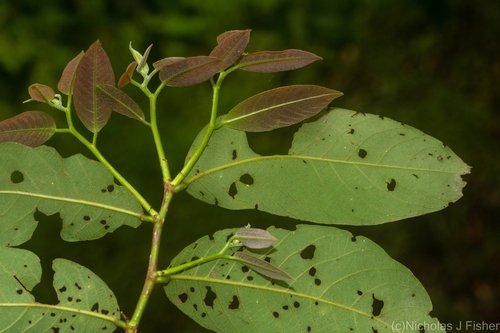
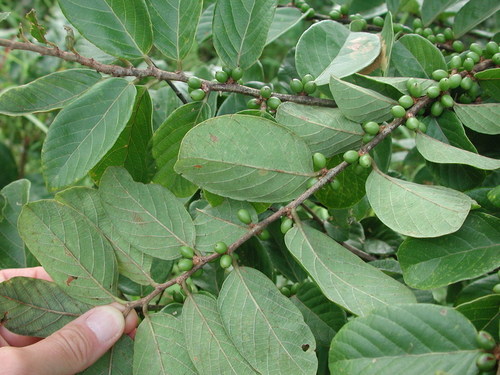
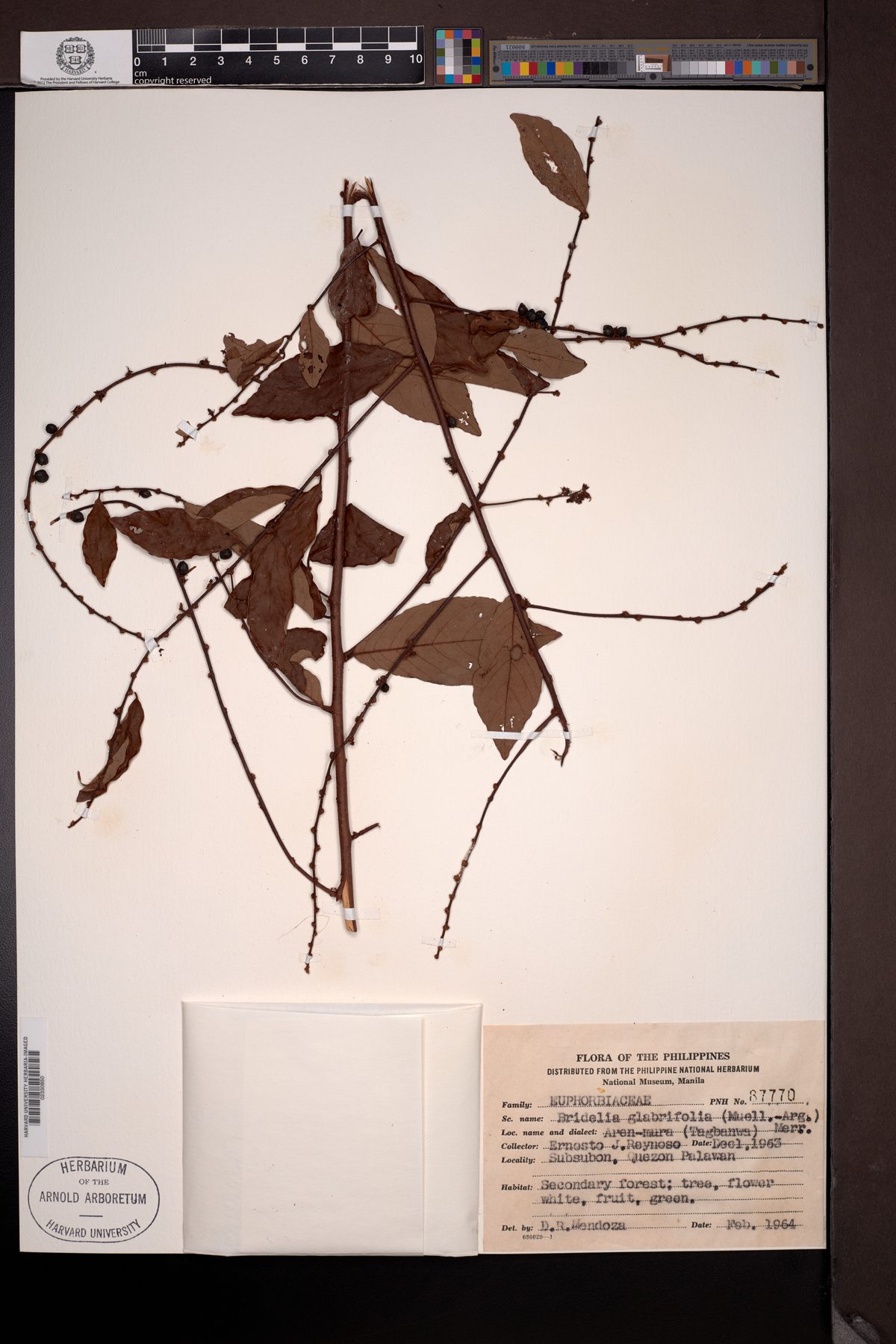
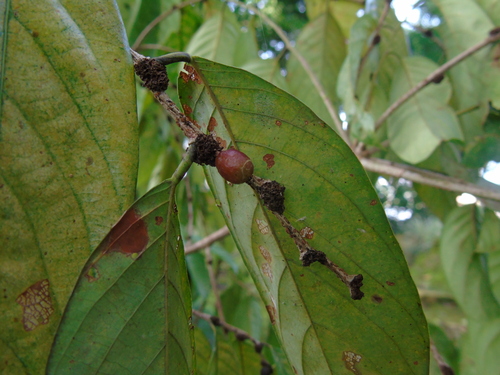
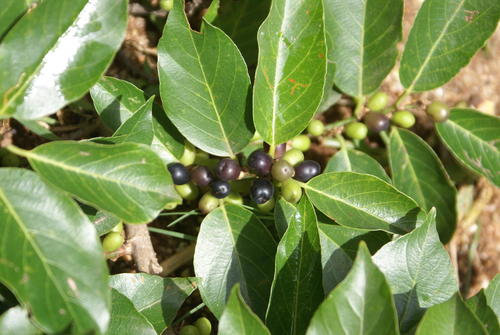
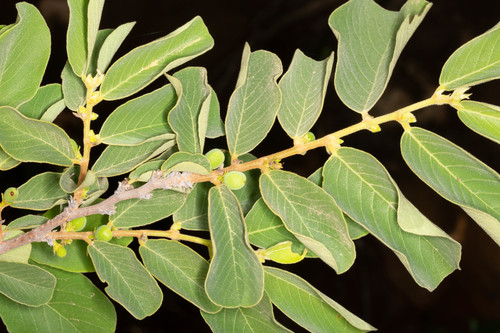
A medium sized evergreen tree. It grows 5-15 m tall. The trunk can be 50 cm across. The leaves are a fattened oval shaped. They are 14-18 cm long by 8-13 cm wide. They are rough and reddish underneath. The leaf stalk is 1-5 cm long. The flowers hang from the branches. Male and female flowers are separate. The male flower shoots are 6-11 cm long. They have yellow flowers which have a scent. The female flowering stalks are 5-14 cm long. The fruit is small and yellow. They are 3.5-4 cm across. They occur in long clusters. The flesh is whitish.
Edible Uses
The fruit can be eaten raw or cooked. A pleasant, melting, white flesh. The flavour is normally sweet but is sometimes acid. The small, yellow, globose fruits are produced in small clusters.
Traditional Uses
The fruit are eaten fresh. They are also cooked.
This uses section is brief — help expand it
Medicinal Uses
We have no specific information on this species, but the bark of several members of this genus is used to relieve eye inflammation.
Distribution
A tropical plant. It suits the hot tropical lowlands. In Indonesia it grows up to 1,100 m above sea level.
Where It Grows
Asia, Australia, China, Indonesia, Malaysia, Myanmar, Pacific, Philippines, SE Asia, Thailand, Vietnam,
Cultivation
Plants are grown by seed.
Propagation
Seed - when sown fresh it usually germinates in a few days.
Other Uses
We have no specific information for this species, but the bark of several members of this genus is used, along with other ingredients, as a dyestuff to colour silk yellow, red or mauve, using the dyeing process known as 'pekan' in Malay. Although we have no specific information for this species, most members of this genus produce an excellent timber, which can be used to build houses and boats and to make furniture. In common with other trees that produce their flowers and fruits on the trunk of the tree, members of this genus are generally considered to be good support trees for the climbing rattan palms, which are grown to provide material for basket making, weaving into furniture, making ropes etc.
Other Information
The trees are cultivated. The fruit are sold in markets.
Notes
There are about 80 Baccaurea species.
Synonyms
Also Known As
Chupa, Cupa, Kapul, Kapundung, Ketupa, Pohon rambai manis, Tjupa, Tupa
References (20)
- Arora, R. K., 2014, Diversity in Underutilized Plant Species - An Asia-Pacific Perspective. Bioversity International. p 60
- Bircher, A. G. & Bircher, W. H., 2000, Encyclopedia of Fruit Trees and Edible Flowering Plants in Egypt and the Subtropics. AUC Press. p 51
- Burkill, I.H., 1966, A Dictionary of the Economic Products of the Malay Peninsula. Ministry of Agriculture and Cooperatives, Kuala Lumpur, Malaysia. Vol 1 (A-H) p 281
- Coronel, R.E., 1982, Fruit Collections in the Philippines. IBPGR Newsletter p 9
- A. L. P. P. de Candolle, Prodr. 15(2):460. 1866
Show all 20 references Hide references
- Flowerdew, B., 2000, Complete Fruit Book. Kyle Cathie Ltd., London. p 162
- Facciola, S., 1998, Cornucopia 2: a Source Book of Edible Plants. Kampong Publications, p 100
- Hedrick, U.P., 1919, (Ed.), Sturtevant's edible plants of the world. p 89
- Lembaga Biologi Nasional, 1977, Buah-Buahan, Balai Pustaka, Jakarta. p 72
- Martin, F. W., et al, 1987, Perennial Edible Fruits of the Tropics. USDA Handbook 642 p 27
- Milow, P., et al, 2013, Malaysian species of plants with edible fruits or seeds and their evaluation. International Journal of Fruit Science. 14:1, 1-27
- Morton,
- Priyadi, H., et al, Five hundred plant species in Gunung Halimun Salak National Park West Java. A checklist including Sundanese names, distribution and use. CIFOR, FFPRI, SLU p 73
- PROSEA (Plant Resources of South East Asia) handbook, Volume 2, 1991, Edible fruits and nut. p 98
- PROSEA handbook Volume 9 Plants yielding non-seed carbohydrates. p 187
- Slik, F., www.asianplant.net
- Sosef, M. S. M., Hong, L. T., & Prawirohatmodjo, S., (Eds.), 1998, Timber tree: Lesser-known timbers. Plant Resources of South-East Asia, 5(3), p 92
- Sukarya, D. G., (Ed.) 2013, 3,500 Plant Species of the Botanic Gardens of Indonesia. LIPI p 144
- World Checklist of Useful Plant Species 2020. Royal Botanic Gardens, Kew
- Zeven, A. C. & de West, J. M. J., 1982, Dictionary of cultivated plants and their regions of diversity. Wageningen. p 52