Atriplex argentea
Nutt.
Silvery orach
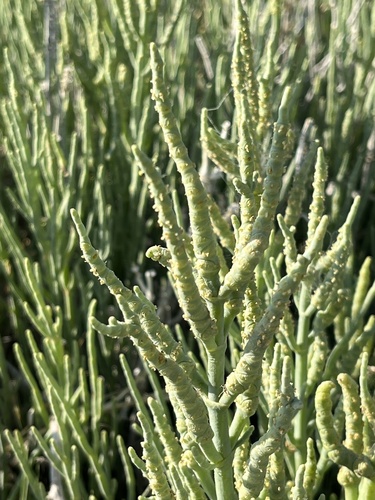
iNaturalist· cc-by-nc-sa
(c) Naomi Fraga, some rights reserved (CC BY-NC-SA), uploaded by Naomi Fraga
iNaturalist· cc-by-nc
(c) Gerry Carr, some rights reserved (CC BY-NC), uploaded by Gerry Carr
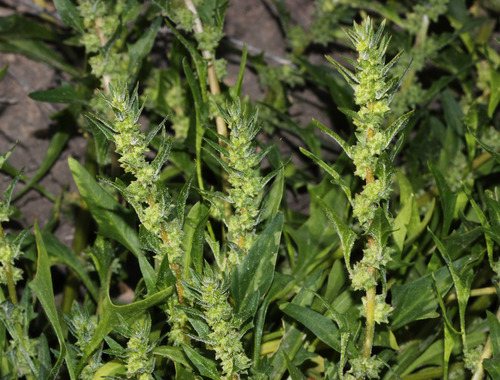
iNaturalist· cc-by-nc
(c) Gerry Carr, some rights reserved (CC BY-NC), uploaded by Gerry Carr
Summary
Source: WikipediaAtriplex argentea is a species of saltbush known by the common names silverscale saltbush and silver orache. It is native to western North America from southern Canada to northern Mexico, where it grows in many types of habitat, generally on saline soils.
Description
A small herb. It is erect and greyish green. It grows 15-80 cm tall. The leaves are sword shaped or triangle shaped.
This description is brief — help expand it
Edible Uses
Edible Parts: Leaves Seed Edible Uses: Leaves (cooked), young fruits, seeds. Edibility rating: 3/5. Taste & processing notes: Pueblo boiled leaves/young fruits alone or with other foods; also used as a salty seasoning. Northern Paiute parched/ground seeds into porridge. Flavor mild for the genus but still saline/“cheno” in tone. Season/harvest: Flowers late summer–early autumn; seeds until cold weather [2-3]. Leaves - cooked, or boiled with other foods as a flavouring. The tender young leaves can be used as greens. Seed - cooked. It can be ground into a meal and used as a thickener in soups etc, or be mixed with flour when making bread etc. The immature seeds can be eaten together with their surrounding calyx.
Traditional Uses
The plant is bitter but edible.
This uses section is brief — help expand it
Medicinal Uses
Analgesic Poultice Stings Stomachic The leaves have been used as a fumigant in the treatment of pain. A poultice of the leaves has been applied to spider bites. A cold infusion of the plant has been used to treat sickness caused by drinking bad water, and to purify the water. A poultice of the chewed roots has been applied to sores and rashes. An infusion of the root has been used in the treatment of stomach aches.
Known Hazards
No member of this genus contains any toxins, all have more or less edible leaves. However, if grown with artificial fertilizers, they may concentrate harmful amounts of nitrates in their leaves.
Distribution
It grows in open salty sites.
Where It Grows
Canada, North America, USA,
Cultivation
Growing conditions: Full sun; dry to moderately moist, saline/alkaline soils (loams, sandy loams, clay loams); pH neutral–alkaline; high salt tolerance. Hardiness: ~USDA 4–9 (provenance dependent).Habitat & range: Western U.S.; alkaline flats, valley bottoms, disturbed saline ground. Size & habit: Herbaceous perennial, typically 20–70 cm, mealy-silver foliage. Cultivation: Very drought/alkali tolerant; avoid rich, wet soils. Minimal feeding; great for xeriscapes/saline remediation. The following notes are based on the general needs of the genus. Succeeds in full sun in any well-drained but not too fertile soil. Most species in this genus tolerate saline and very alkaline soils.
Propagation
Seed direct-sown in fall or spring after cold-moist strat. Lightly cover; do not overwater. Germination is usually rapid.
Other Uses
A cold infusion of the plant has been used to purify water. Seeds for granivorous birds; foliage browsed by wildlife/livestock in moderation. Special Uses
Notes
There are about 100-300 Atriplex species. They have also been put in the family Chenopodiaceae.
Also Known As
Silverscale (Atriplex argentea)
References (5)
- Beckstrom-Sternberg, Stephen M., and James A. Duke. "The Foodplant Database." http://probe.nalusda.gov:8300/cgi-bin/browse/foodplantdb.(ACEDB version 4.0 - data version July 1994)
- Gen. N. Amer. pl. 1:198. 1818
- Kermath, B. M., et al, 2014, Food Plants in the Americas: A survey of the domesticated, cultivated and wild plants used for Human food in North, Central and South America and the Caribbean. On line draft. p 103
- MacKinnon, A., et al, 2009, Edible & Medicinal Plants of Canada. Lone Pine. p 307
- Plants for a Future database, The Field, Penpol, Lostwithiel, Cornwall, PL22 0NG, UK. http://www.scs.leeds.ac.uk/pfaf/