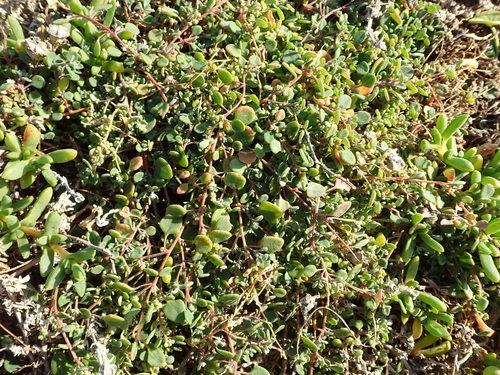
Atriplex powellii
S. Watson
Powell’s saltweed
iNaturalist· cc-by-nc-sa
(c) Sarah Vinge-Mazer, some rights reserved (CC BY-NC-SA), uploaded by Sarah Vinge-Mazer
iNaturalist· cc-by-nc-sa
(c) Sarah Vinge-Mazer, some rights reserved (CC BY-NC-SA)
Summary
Source: WikipediaAtriplex powellii, or Powell's saltweed, is a plant found in the United States and Canada.
Description
Annual orache reaching 0.7 m tall and wide. Flowers July to September; seeds ripen August to October. Dioecious (separate male and female plants required for seed production); wind-pollinated. Tolerates light sandy and medium loamy soils, thrives in well-drained conditions, and survives in nutritionally poor, very alkaline, and saline soils. Requires full sun and handles both drought and moist conditions. Hardy to UK zone 5.
Edible Uses
Edible Parts: Leaves Seed Edible Uses: Leaves boiled and eaten as greens by several Native American groups; Zuni ground the seeds with corn, formed patties, and steamed them. As with other Atriplex, expect salinity/oxalates; cook and eat in moderation [2-3]. Edibility rating: 3/5 (decent when well prepared, but not gourmet). Parts used & preparation: Leaves: Boil (often in one or more changes of water) to temper saltiness/irritants; use as a side green. Seeds (utricles): Dry heads, thresh; winnow; grind with corn or on their own; steam into cakes or simmer as mush. Expect a grain-like, slightly alkaline character; change water if harsh [2-3]. Leaves and young plants - cooked and used as greens. A salty flavour, they are often used as a flavouring for other foods. Seed - cooked. Used in piñole or ground into a meal and used as a thickener in making bread or mixed with flour in making bread. Atriplex species often accumulate oxalates, nitrates, selenium, and salts. Favor young leaves, boil and discard cooking water if harsh, and keep portions moderate—especially for people with kidney issues or on low-oxalate/low-sodium diets. Seeds are generally safer than leaves, but the bractlets/utricles range from papery to very tough; plan on threshing, winnowing, grinding, and sometimes pre-boiling to get a pleasant result. Lookalikes & cautions. Other desert oraches; same oxalate/nitrate precautions—boil and moderate use. Traditional uses: Pima potherb (“salt greens”). Harvest tips: Take only young, tender shoots; if very briny/irritating, blanch, refresh, then finish cooking.
Medicinal Uses
None known
Known Hazards
Accumulates oxalates, nitrates, selenium, and salts. Boil leaves and discard cooking water if harsh. Keep portions moderate, particularly for people with kidney issues or on low-oxalate/low-sodium diets. Seeds generally safer than leaves.
Distribution
It is a temperate plant.
Where It Grows
North America, USA,
Cultivation
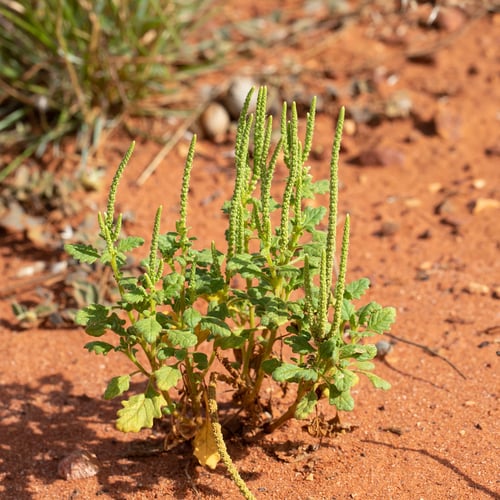
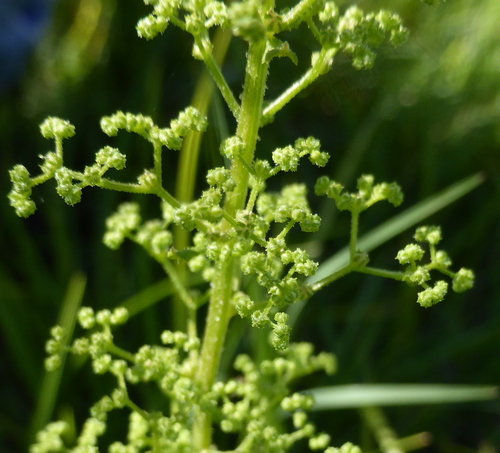
Season & phenology. Flowers in late summer to early autumn; seed set continues until hard frosts. Identification notes. Herbaceous, scurfy, often gray-green; sessile to short-petioled leaves; female flowers enclosed in paired bractlets (typical Atriplex). Best recognized by habitat and overall orache look rather than one single field mark. Habitat & distribution. Alkaline lowlands, playas, basin bottoms, disturbed saline soils from northern Arizona/New Mexico northward. Growing conditions & cultivation. Full sun; tolerates alkaline/saline, droughty, low-fertility soils; avoid rich, wet substrates. Good for xeric/heavy-salt sites and revegetation. Hardiness. Annual/short-lived—behaves reliably where summers are warm; seed can overwinter broadly; functionally hardy in USDA 4–9 (as a reseeding annual). Size & habit. Typically 20–70 cm tall, branching, upright to somewhat sprawling. Weed potential. Low–moderate. Will self-seed on saline/disturbed ground but rarely a serious pest outside that niche. Lookalikes & cautions. Other oraches/saltbushes; all accumulate oxalates/nitrates/selenium to varying degrees—boil and moderate portions; avoid frequent large servings, kidney issues, or high-nitrate sites (corrals, fertilized field edges).
Propagation
Propagation. By seed; sow shallow (2–5 mm) in spring or late autumn. Soak 12–24 h to leach salts; sow utricles whole or cleaned seed. Light improves germination; 15–25 °C. Thin to avoid legginess.
Other Uses
Good for xeric/heavy-salt sites and revegetation. Suitable for salt-tolerant cover on degraded alkaline soils. Special Uses
Notes
There are about 100-300 Atriplex species. They have also been put in the family Chenopodiaceae.
Synonyms
Also Known As
Atriplex powellii — Powell’s Orache / Saltweed.
References (4)
- Beckstrom-Sternberg, Stephen M., and James A. Duke. "The Foodplant Database." http://probe.nalusda.gov:8300/cgi-bin/browse/foodplantdb.(ACEDB version 4.0 - data version July 1994)
- Plants for a Future database, The Field, Penpol, Lostwithiel, Cornwall, PL22 0NG, UK. http://www.scs.leeds.ac.uk/pfaf/
- Saunders, C.F., 1948, Edible and Useful Wild Plants. Dover. New York. p 54
- Tozer, F., 2007, The Uses of Wild Plants. Green Man Publishing. p 43