Atriplex prostrata
Boucher ex DC.
Spear-leaved orache
iNaturalist· cc-by-nc
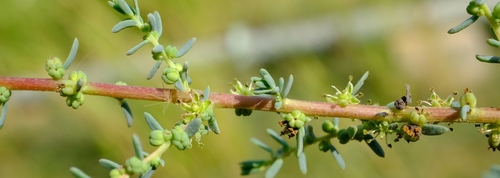
(c) Mary Stewart, some rights reserved (CC BY-NC), uploaded by Mary Stewart
iNaturalist· cc-by-nc
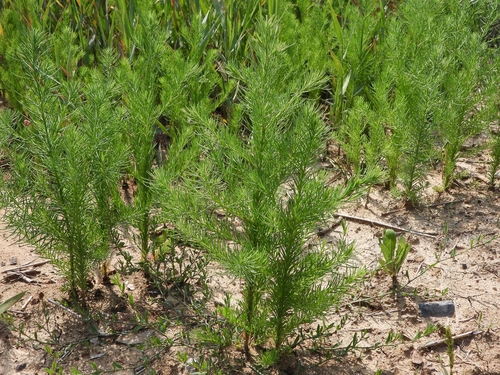
(c) Stéphane Bello, some rights reserved (CC BY-NC), uploaded by Stéphane Bello
iNaturalist· cc-by-sa
(c) Andreas Rockstein, some rights reserved (CC BY-SA)
Summary
Source: WikipediaAtriplex prostrata, called the spear-leaved orache, hastate orache, thin-leaf orache, triangle orache, and fat hen, is a widespread species of flowering plant in the saltbush genus Atriplex, native to Europe, Macaronesia, northern Africa, Ethiopia, the Middle East, western Siberia, and Central Asia, and introduced to temperate North America, South America, Australia, New Zealand, Korea, Japan, and Primorsky Krai in far eastern Russia. It is a facultative halophyte.
Description
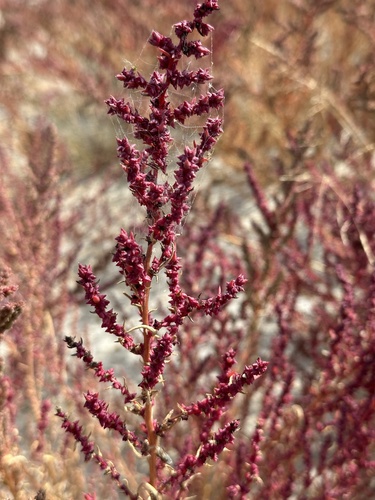
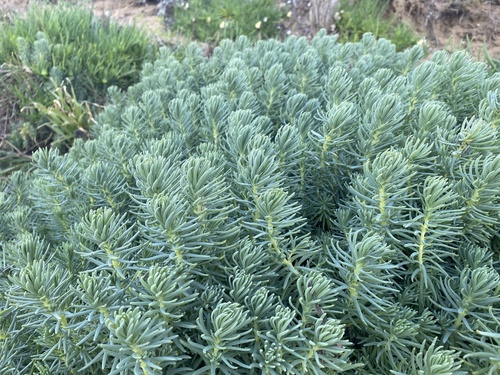
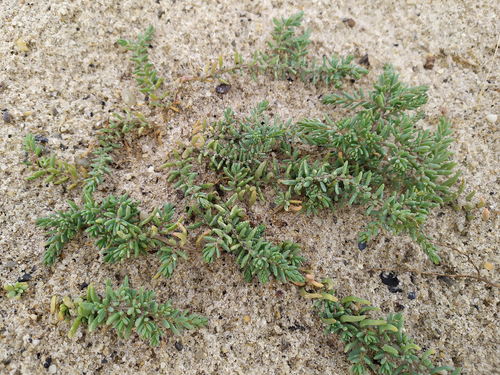
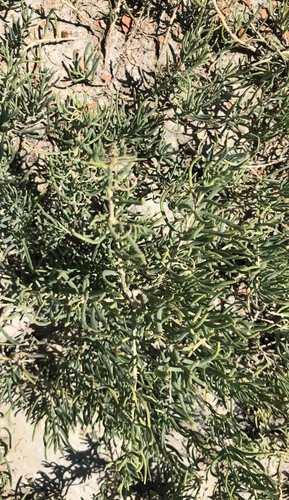
An annual herb reaching 1 m high. The stems trail near the ground. The leaves are alternate. They have leaf stalks. The leaf blade is 5-8 cm long. It has teeth along the edge. The leaves are mealy grey-green. The seeding spikes are wiry.
Edible Uses
The leaves are used in pies, pickles, and stews. Both leaves and seeds are edible.
Traditional Uses
The leaves are used in pies and pickles. They are also used in stews.
This uses section is brief — help expand it
Distribution
It is a temperate and Mediterranean climate plant. It grows in valley moist meadows, roadsides. It grows by the sea on salty soils. In Argentina it grows from sea level to 500 m above sea level. Tasmania Herbarium.
Where It Grows
Afghanistan, Africa, Albania, Argentina, Asia, Australia, Balkans, Britain, Bulgaria, Chile, China, Europe, Falklands, France, Germany, India, Iran, Ireland, Italy, Luxembourg, Mediterranean, Middle East, New Zealand, North Africa, Norway, Russia, Scandinavia, Slovenia, South America, Spain, Tasmania, Uruguay,
Cultivation
Plants can be grown by seed or cuttings.
Notes
There are about 100-300 Atriplex species. They have also been put in the family Chenopodiaceae.
Synonyms
Also Known As
Armuelle silvestre, Atriplice comune, Espinaca, Hastate Orache, Ji ye bin li, Kopievidna loboda, Tangmelde
References (18)
- Blamey, M and Grey-Wilson, C., 2005, Wild flowers of the Mediterranean. A & C Black London. p 40
- Bodkin, F., 1991, Encyclopedia Botanica. Cornstalk publishing, p 118
- Centofanti, T. & Banuelos, G., 2019, Practical uses of Halophytic Plants as Sources of Food and Fodder. CAB International. p 331 (As Atriplex triangularis)
- Cerne, M., 1992, Wild Plants from Slovenia used as Vegetables. Acta Horticulturae 318 (As Atriplex hastata)
- Girard, N. J., 2020, Sustainable Foraging of Wild Edible Plants in Norway. A Bioculutral Approach. M. Sc. thesis Norwegian University. p 127
Show all 18 references Hide references
- J. B. P. A. M. de Lamarck & A. P. de Candolle, Fl. franc. ed. 3, 3:387. 1805
- Low, T., 1991, Wild Herbs of Australia and New Zealand. Angus & Robertson. p 47 (Drawing)
- Mabey, R., 1973, Food for Free. A Guide to the edible wild plants of Britain, Collins. p 91
- Malezas Comestibles del Cono Sur, INTA, 2009, Buernos Aires
- Nedelcheva A., 2013, An ethnobotanical study of wild edible plants in Bulgaria. EurAsian Journal of BioSciences 7, 77-94
- Paczkowska, G. & Chapman, A.R., 2000, The Western Australian Flora. A Descriptive Catalogue. Western Australian Herbarium. p 201
- Plants for a Future database, The Field, Penpol, Lostwithiel, Cornwall, PL22 0NG, UK. http://www.scs.leeds.ac.uk/pfaf/
- Tardio, J., et al, 2006, Ethnobotanical review of wild edible plants in Spain. Botanical J. Linnean Soc. 152, 27-71
- Tasmanian Herbarium Vascular Plants list p 21
- Upson, R., & Lewis R., 2014, Updated Vascular Plant Checklist and Atlas for the Falkland Islands. Falklands Conservation and Kew.
- van Wyk, B., 2005, Food Plants of the World. An illustrated guide. Timber press. p 79
- www.eFloras.org Flora of China
- Zhu Gelin (Chu Ge-ling); Steven E. Clemants, CHENOPODIACEAE [Draft], Flora of China