Pseuderanthemum tunicatum
(Afzel.) Milne-Redh.
iNaturalist· cc-by-nc
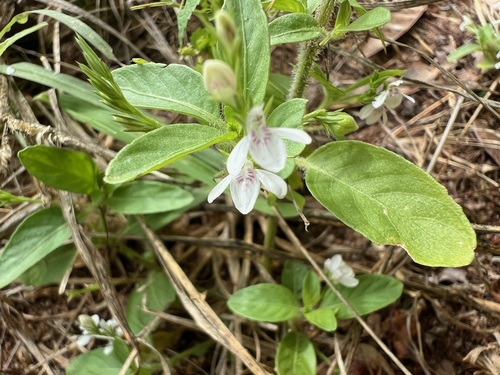
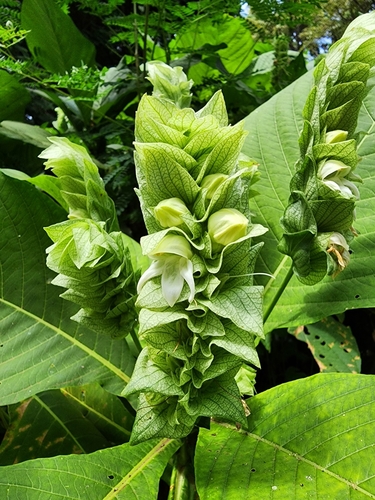
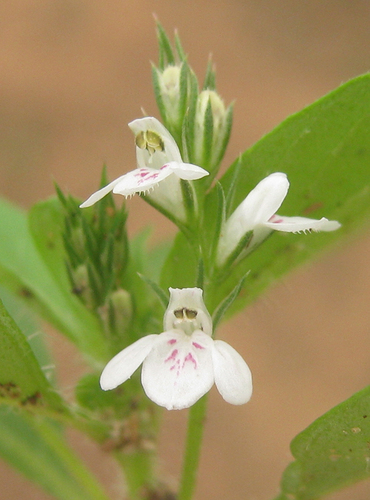
(c) Ehoarn Bidault, some rights reserved (CC BY-NC), uploaded by Ehoarn Bidault
iNaturalist· cc-by-nc
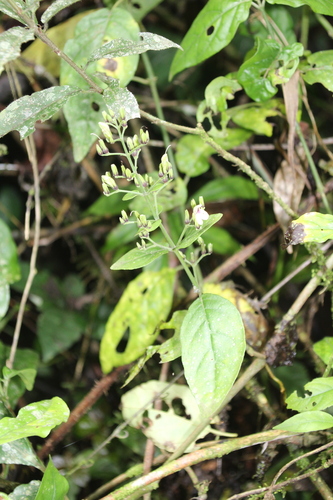
(c) Faya Julien Simbiano, some rights reserved (CC BY-NC)
iNaturalist· cc-by-nc
(c) emskakoon, some rights reserved (CC BY-NC)
Description
A woody herb or small shrub. It grows 85 cm high. It can be 3 m high. The leaf stalks are red. The flowers are white to purple.
This description is brief — help expand it
Edible Uses
The leaves are eaten as a vegetable.
Distribution
A tropical plant. It grows in evergreen forests in West Africa. It grows on rocks and near streams. In Malawi it grows between 700-1,700 m altitude.
Where It Grows
Africa, Angola, Cabinda, Cameroon, Central Africa, Central African Republic, CAR, Congo, East Africa, Equatorial-Guinea, Gabon, Ghana, Kenya, Malawi, Mascarenes, Mozambique, Nigeria, Sierra Leone, Southern Africa, Tanzania, West Africa, Zambia, Zimbabwe,
Synonyms
References (10)
- Abbiw, D.K., 1990, Useful Plants of Ghana. West African uses of wild and cultivated plants. Intermediate Technology Publications and the Royal Botanic Gardens, Kew. p 42
- Bull. Misc. Inform. Kew 1936:264. 1936
- Burkill, H. M., 1985, The useful plants of west tropical Africa, Vol. 1. Kew.
- Fowler, D. G., 2007, Zambian Plants: Their Vernacular Names and Uses. Kew. p 75
- Grubben, G. J. H. and Denton, O. A. (eds), 2004, Plant Resources of Tropical Africa 2. Vegetables. PROTA, Wageningen, Netherlands. p 564
Show all 10 references Hide references
- Harris, D. J., 2002, The vascular plants of the Dzanga-Sangha Reserve, Central African Republic. National Botanic Garden of Belgium, 2002. – 274 pages p 38
- Jardin, C., 1970, List of Foods Used In Africa, FAO Nutrition Information Document Series No 2.p 96
- Martin, F.W. & Ruberte, R.M., 1979, Edible Leaves of the Tropics. Antillian College Press, Mayaguez, Puerto Rico. p 172
- White, F., Dowsett-Lemaire, F. and Chapman, J. D., 2001, Evergreen Forest Flora of Malawi. Kew. p 118
- World Checklist of Useful Plant Species 2020. Royal Botanic Gardens, Kew