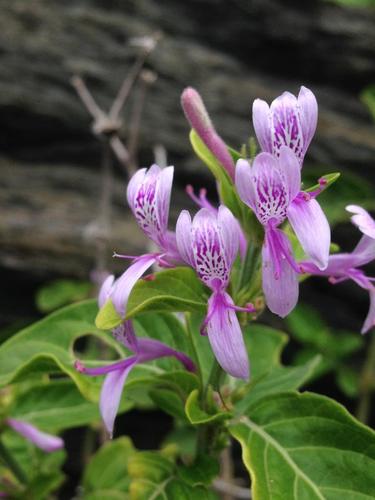
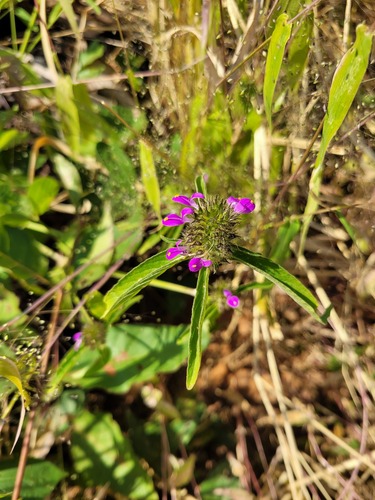
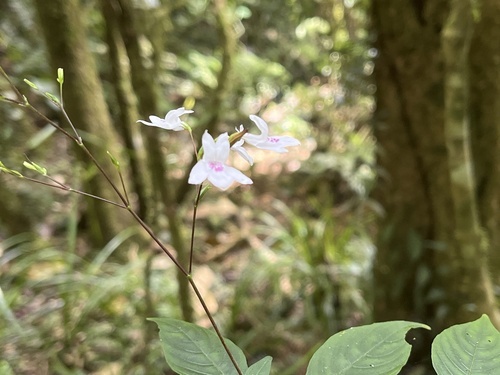
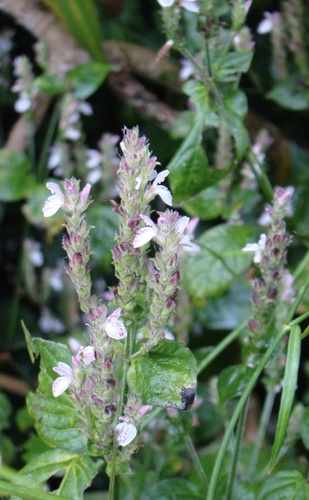
Pseuderanthemum whartonianum
Hemsl.
Ofenga
wikimedia· cc-by-sa
Billjones94 (via Wikimedia Commons)
wikimedia· cc-by-sa
Marshman at English Wikipedia / Eric Guinther (via Wikimedia Commons)
wikimedia· cc-by-sa
Krzysztof Ziarnek, Kenraiz (via Wikimedia Commons)
Description
A small shrub. It grows up to 1.5-6 m high. The leaves are oval and have prominent veins.
This description is brief — help expand it
Edible Uses
The leaves are eaten cooked, sometimes with water changed to reduce bitterness. Cultivated pale-leafed types are less sour than wild forms.
Traditional Uses
The leaves are eaten cooked. Sometimes the water is changed to remove bitter tastes. The cultivated pale leafed types are less sour.
This uses section is brief — help expand it
Distribution
A tropical plant. Grows in coastal and inland areas. It grows on atolls.
Where It Grows
Kiribati, Pacific, Solomon Islands, Tuvalu, Vanuatu,
Cultivation
It is grown from stem cuttings. It can be grown as a hedge.
Other Information
An important edible green in Malaita in the Solomon Islands.
Notes
There are about 60 Pseuderanthemum species. They grow in the tropics. A species called Pseuderanthemum palatiferum in Vietnam has been found to assist the growth rate in piglets. Not in The Plant List. In Singapore a plant Pseuderanthemum eldorado looks very similar.
Also Known As
Aidua, Burape, Burako, Faele, Gofere, Gurape, Gure, No Ute, Nyia nyivale, Osiosiga, Pure, Siki, Sungu, Taeve, Te iamaii, Te iaro, Wasina
References (4)
- French, B.R., 2010, Food Plants of Solomon Islands. A Compendium. Food Plants International Inc. p 95
- Henderson, C.P. and I.R.Hancock, 1988, A Guide to the Useful Plants of the Solomon Islands. Res. Dept. Min of Ag. & Lands. Honiara, Solomon Islands. p 114
- Lyons, G., et al, 2020, Macro- and Micronutrients from Traditional Food Plants Could Improve Nutrition and Reduce Non-Communicable Diseases of Islanders on Atolls in the South Pacific. Plants 2020, 9, 942
- Walter, A. & Lebot, V., 2007, Gardens of Oceania. ACIAR Monograph No. 122. p 175