Rhinacanthus nasutus
(L.) Kurz
Snake jasmine, Dainty spurs
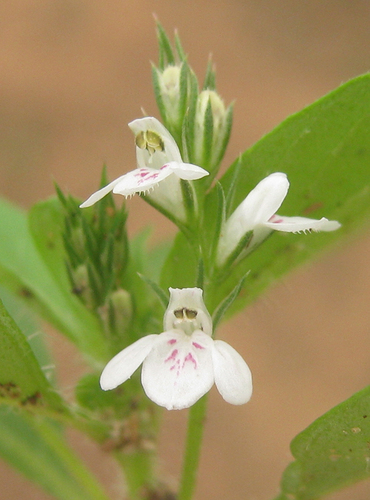
iNaturalist· cc0
no rights reserved, uploaded by 葉子
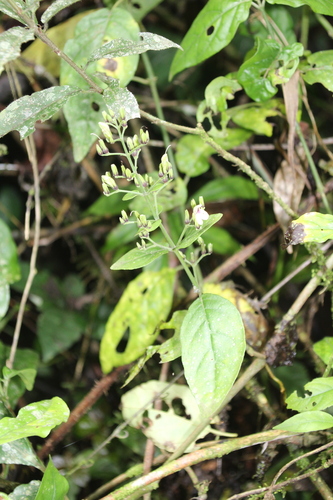
iNaturalist· cc0
no rights reserved, uploaded by 葉子
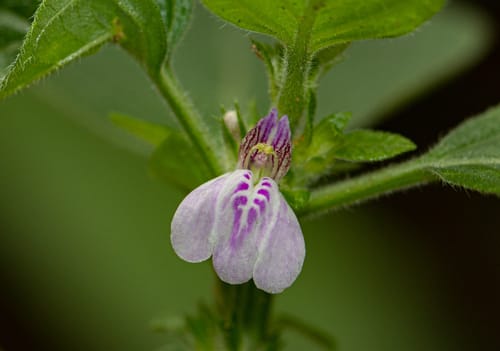
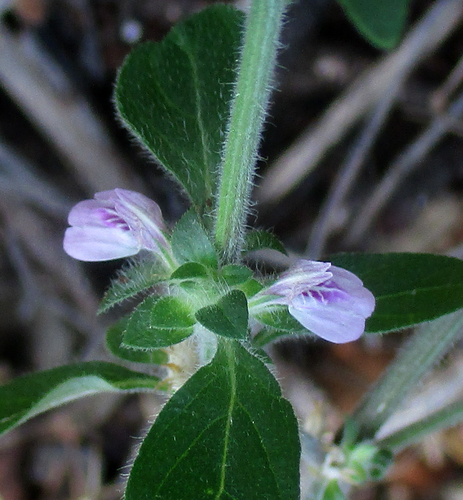
iNaturalist· cc-by-nc-sa
(c) 106611639464075912591, some rights reserved (CC BY-NC-SA), uploaded by 106611639464075912591
Summary
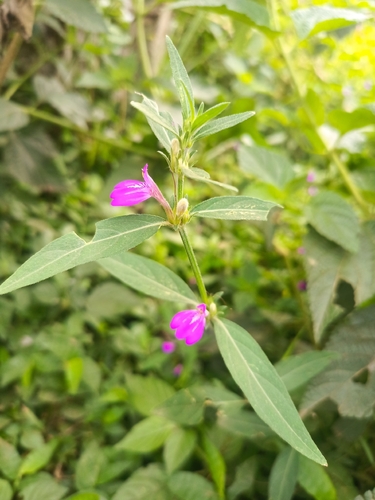
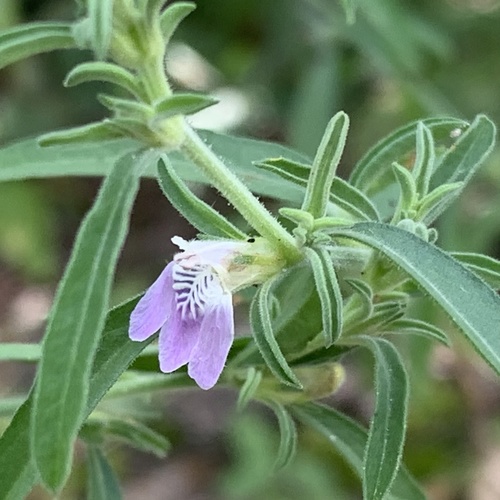
Source: WikipediaRhinacanthus nasutus, commonly known as snake jasmine, is a plant native to tropical Asia and the western Indian Ocean. It is a slender, erect, branched, somewhat hairy shrub 1–2 m in height. The leaves are oblong, 4–10 cm in length, and narrowed and pointed at both ends. The inflorescence is a spreading, leafy, hairy panicle with the flowers usually in clusters. The calyx is green, hairy, and about 5 mm long. The corolla-tube is greenish, slender, cylindric, and about 2 cm long. The flowers is 2-lipped; the upper lip is white, erect, oblong or lancelike, 2-toothed at the apex, and about 3 mm in both length and width; and the lower lip is broadly obovate, 1.1-1.3 cm in both measurements, 3-lobed, and white, with a few, minute, brownish dots near the base. The fruit (capsule) is club-shaped and contains 4 seeds.
Description
A small shrub. It grows 1.5 m tall. The stems are stout and 4 angled. They are hairy when young. The leaves are narrowly oval and 2-7 cm long by 1-3 cm wide. They are hairy underneath. The edges can be wavy. The flowers are in panicles 50 cm long at the ends of the branches or in the axils of leaves. They are greenish-white.
Edible Uses
The leaves, stems, and flowers are edible, with leaves also prepared as tea.
Medicinal Uses
Used in traditional medicine.
Distribution
A tropical plant. It grows in forests and is cultivated around villages in southern China below 700 m above sea level. In Brisbane Botanical gardens. In Yunnan.
Where It Grows
Africa, Asia, Australia, Cambodia, China, East Africa, India, Indochina, Indonesia, Laos, Madagascar, Malaysia, Myanmar, Philippines, SE Asia, Sri Lanka, Thailand, Vietnam,
Cultivation
Plants can be grown from seeds or by cuttings.
Propagation
Seed - Stem cuttings, about 10cm long, comprising 2 - 3 nodes, are planted under partial shade during the rainy season.
Other Uses
The seeds are used for scenting clothes. Regularly planted as a hedge, it has also been used to prevent soil erosion in road construction.
Other Information
It is sold in local markets in China. It is cultivated.
Notes
It is used in medicine.
Synonyms
Also Known As
Akar teriba, Doddapatika, Gajakarni, Juipana, Ling zhi cao, Naagamalli, Naga malla, Nagamalligai, Palak juhi, Palar sari, Puzhu-kolli, Tarebak, Tawng pau chang, Tereba, Terebak, Thongpunchang, Ubat kurap, Ya man kai, Yuthukaparni
References (9)
- Ambasta S.P. (Ed.), 2000, The Useful Plants of India. CSIR India. p 520
- Benvenuti, S. & Mazzoncini, M., 2021, The Biodiversity of Edible Flowers: Discovering New Tastes and New Health Benefits. Frontiers in Plant Science Article 569499.
- Burkill, I.H., 1966, A Dictionary of the Economic Products of the Malay Peninsula. Ministry of Agriculture and Cooperatives, Kuala Lumpur, Malaysia. Vol 2 (I-Z) p 1925
- J. Asiat. Soc. Bengal, Pt. 2, Nat. Hist. 39:79. 1870
- Jiwajinda, S., et al, 2002, Suppressive Effects of Edible Thai Plants on Superoxide and Nitric Oxide Generation. Asian Pacific Journal of Cancer Prevention, Vol 3, 2002
Show all 9 references Hide references
- Li, D. et al, 2017, Ethnobotanical survey of herbal tea plants from the traditional markets in Chaoshan, China. Journal of Ethnopharmacology. 205 (2017) 195-206
- Martin, F.W. & Ruberte, R.M., 1979, Edible Leaves of the Tropics. Antillian College Press, Mayaguez, Puerto Rico. p 172
- Sukarya, D. G., (Ed.) 2013, 3,500 Plant Species of the Botanic Gardens of Indonesia. LIPI p 699
- World Checklist of Useful Plant Species 2020. Royal Botanic Gardens, Kew