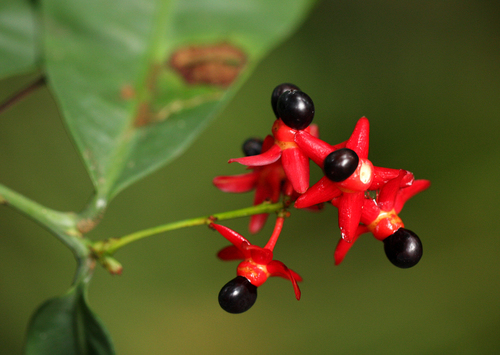
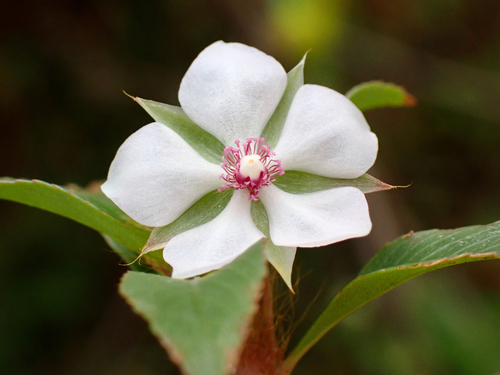
Ochna cinnabarina
Engl. & Gilg.
Small-leaved ochna
iNaturalist· cc-by-nc
(c) Jane Troughton, some rights reserved (CC BY-NC), uploaded by Jane Troughton
iNaturalist· cc-by
(c) Robert Taylor, some rights reserved (CC BY)
Description
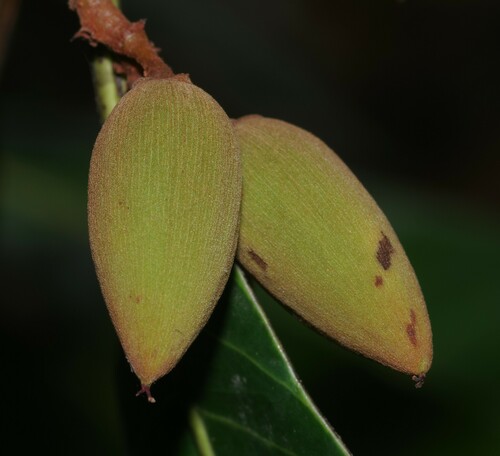
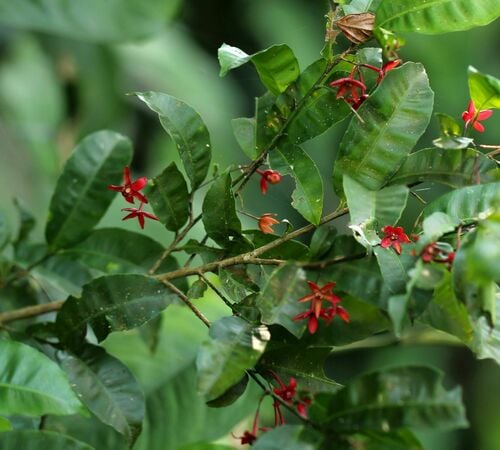
A shrub. It grows 0.6-1.8 m high. It loses its leaves. The bark is smooth. The leaf blade is 2-4 cm long by about 1 cm wide. They are narrowly oblong. The flowers occur singly on the end of short shoots. The fruit are fleshy. They are 9-11 mm long by 5-7 mm wide.
Edible Uses
The fruit is eaten.
Medicinal Uses
None mentioned.
Known Hazards
None mentioned.
Distribution
A tropical plant. It grows on the edges of forests and along river banks on Kalahari sands.
Where It Grows
Africa, Angola, Botswana, Central Africa, East Africa, Namibia, Southern Africa, Zambia, Zimbabwe,
Notes
There are 90 Ochna species.
Synonyms
Also Known As
Kateko, Mulungu-makaka
References (2)
- Altschul, S.V.R., 1973, Drugs and Foods from Little-known Plants. Notes in Harvard University Herbaria. Harvard Univ. Press. Massachusetts. no. 2829
- Fowler, D. G., 2007, Zambian Plants: Their Vernacular Names and Uses. Kew. p 51