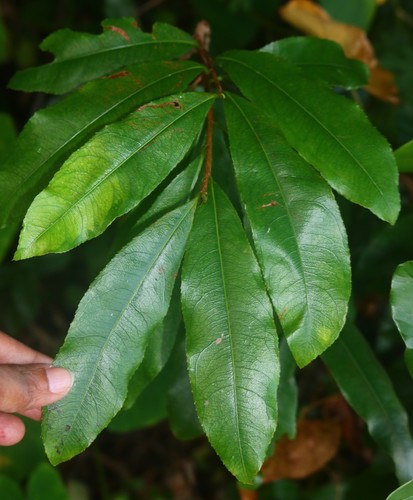
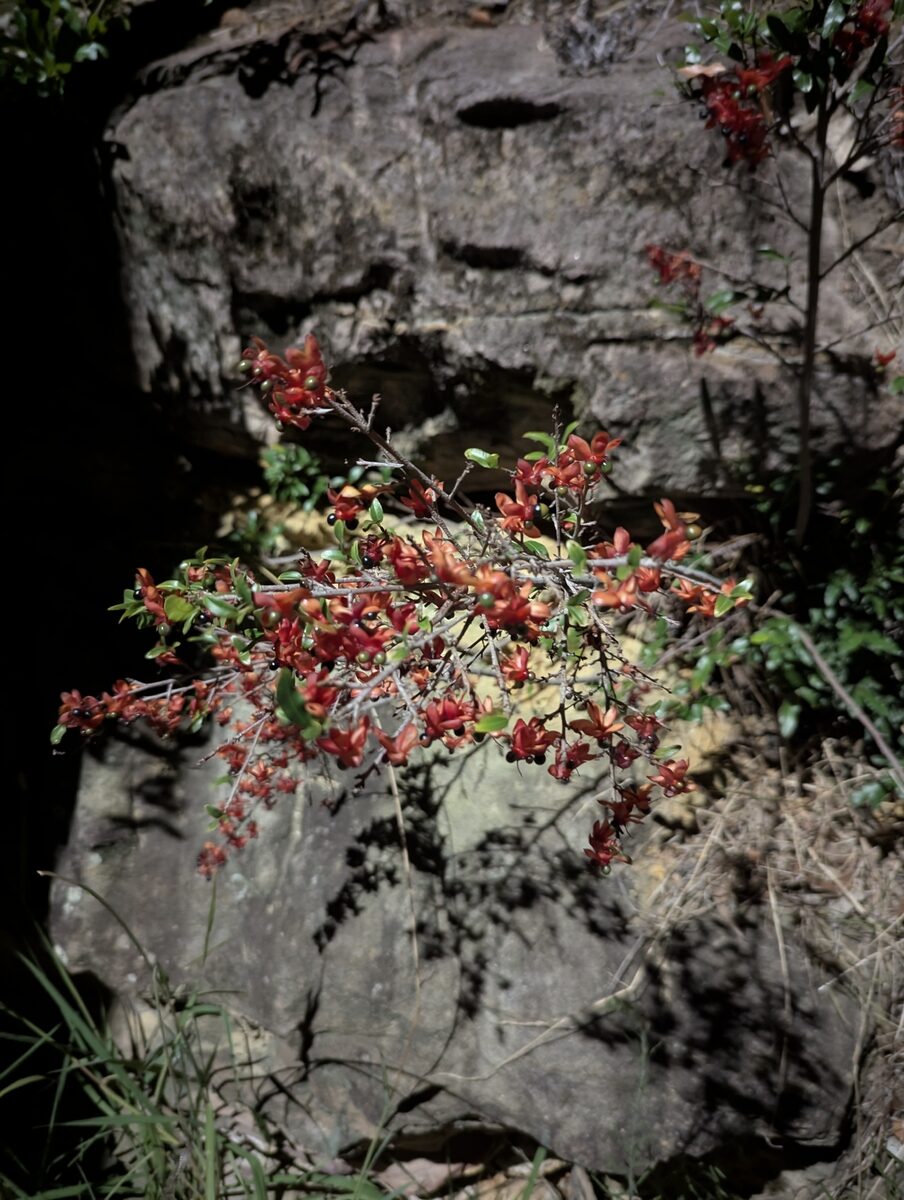
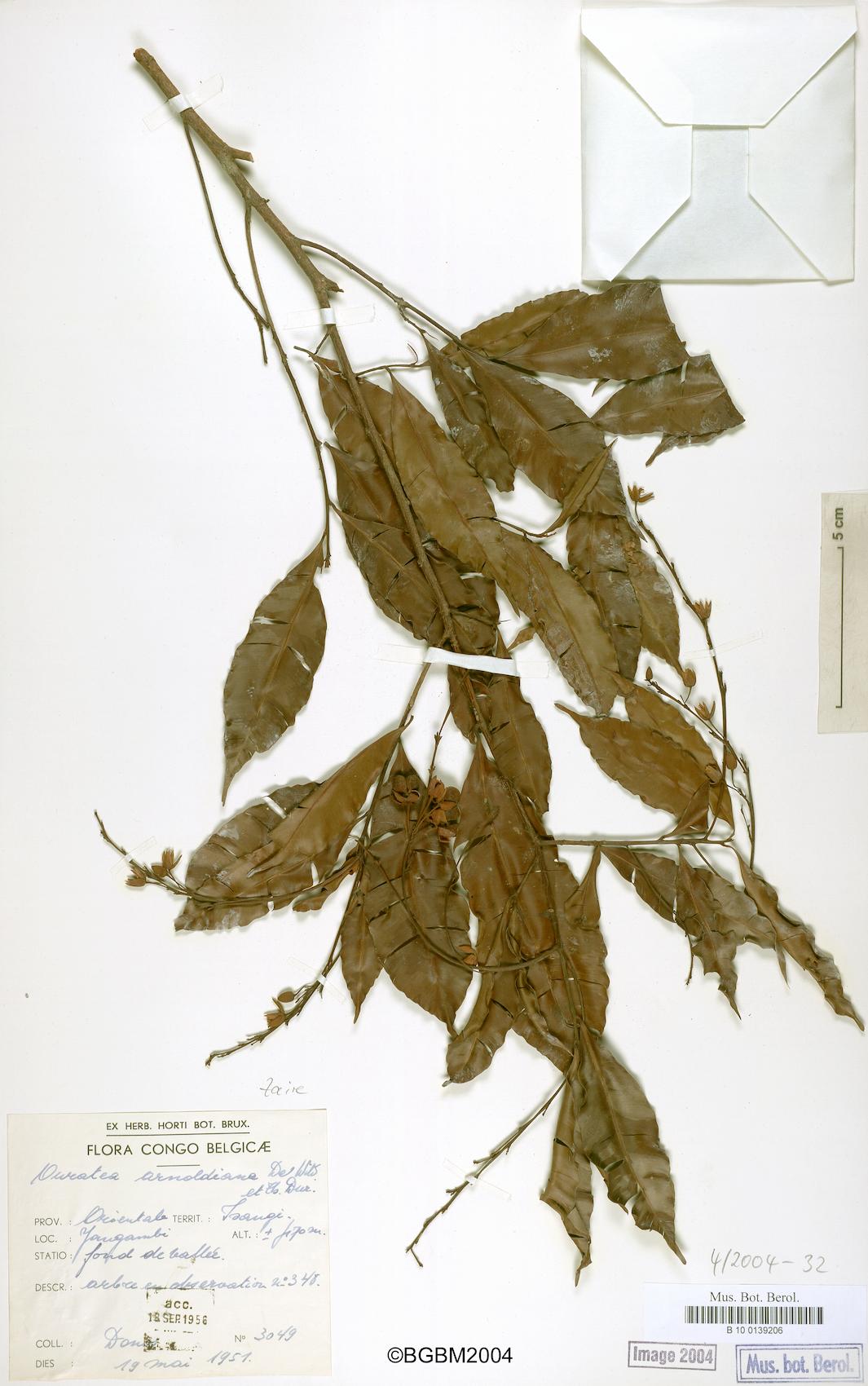
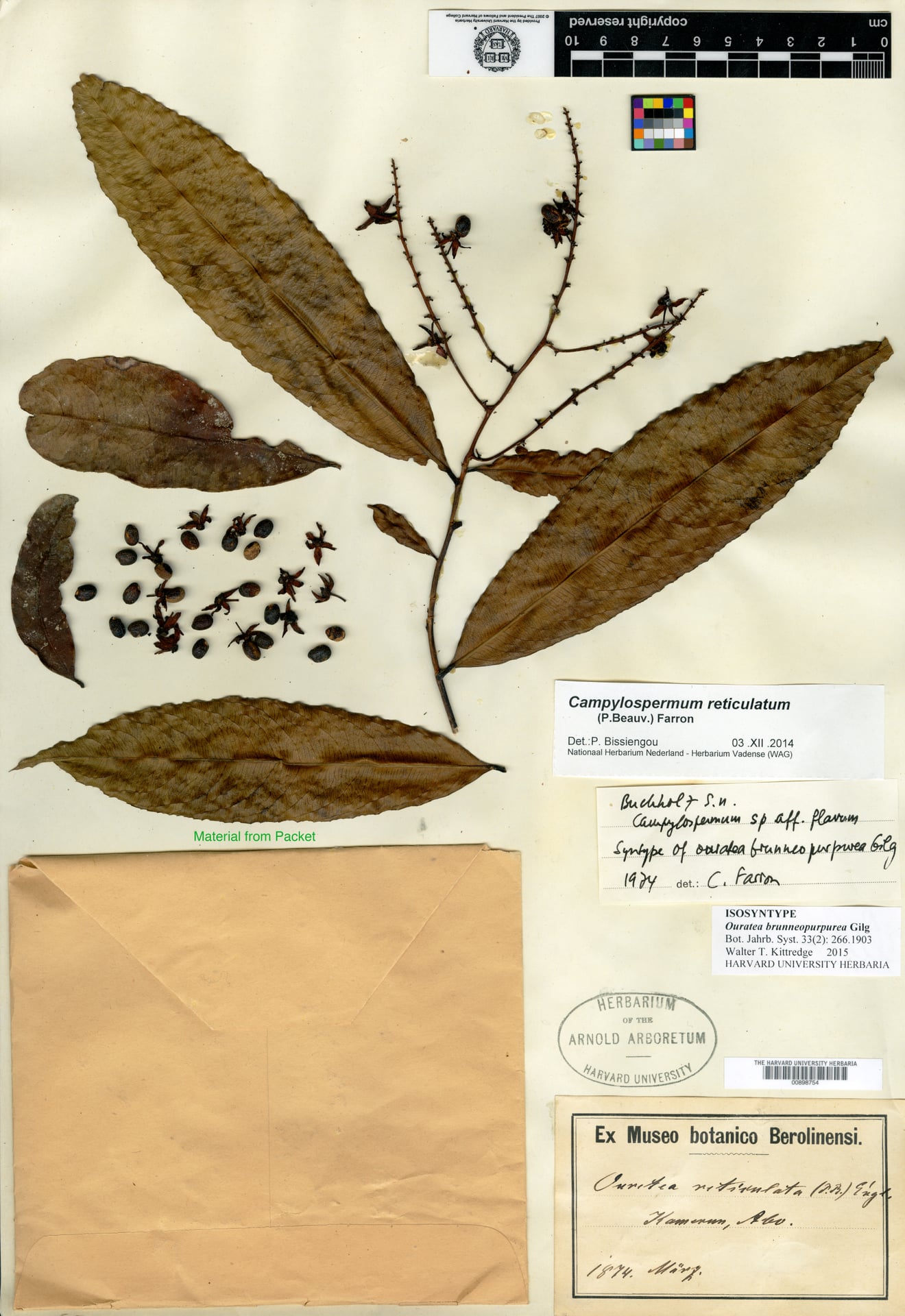
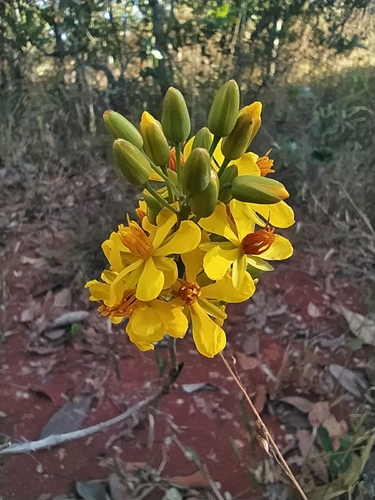
Lacunaria jenmanii - (Oliv.) Ducke
(Oliv.) Ducke
Moela de mutum
gbif· cc-by-nc
Robin Heymans
gbif· cc-by-nc
Robin Heymans
gbif· cc-by-nc
Robin Heymans
Description
Lacunaria jenmanii is an evergreen Tree growing to 10 m (32ft) by 8 m (26ft) at a slow rate. See above for USDA hardiness. It is hardy to UK zone 10. Suitable for: light (sandy), medium (loamy) and heavy (clay) soils and prefers well-drained soil. Suitable pH: mildly acid, neutral and basic (mildly alkaline) soils. It can grow in semi-shade (light woodland) or no shade. It prefers moist soil.
Edible Uses
Fruit - raw. The thick-skinned fruit has a succulent, sweet pulp with a delicious flavour. The subglobose fruit is about 7cm in diameter.
Distribution
S. America - Brazil, Peru, Ecuador, Colombia, Venezuela, the Guyanas.
Where It Grows
SOUTHERN AMERICA: French Guiana, Guyana, Suriname, Venezuela (Amazonas), Brazil (Acre, Amazonas, Maranhão, Pará, Amapá, Rondônia), Colombia (Amazonas, Antioquia, Bolívar, Caldas, Caquetá, Chocó, Meta, Santander, Vaupés), Ecuador (Napo), Peru (Amazonas, Junín, Loreto, Madre de Dios)
Cultivation
Succeeds in sunny positions and in shade. A slow-growing tree. A dioecious species, both male and female forms need to be grown if fruit and seed are required.
Propagation
Seed - it has a short viability and should be sown as fresh as possible in a partially shaded position in a nursery seedbed. Germination rates are generally low, with the seed sprouting in 40 - 60 days.
Other Uses
Fuel Wood. Other Uses The wood is coarse-textured, irregular-grained, heavy, slightly susceptible to wood eating organisms, easy to cut. It is only used for small items such as tool handles. The wood is used for fuel.
Synonyms
Also Known As
Moela de mutum