Ochna atropurpurea
DC.
Large-flowered ochna
iNaturalist· cc-by
(c) i_c_riddell, some rights reserved (CC BY), uploaded by i_c_riddell
iNaturalist· cc-by-nc
(c) Sarah Wetterer, some rights reserved (CC BY-NC)
iNaturalist· cc-by-nc
(c) Troos van der Merwe, some rights reserved (CC BY-NC), uploaded by Troos van der Merwe
Description
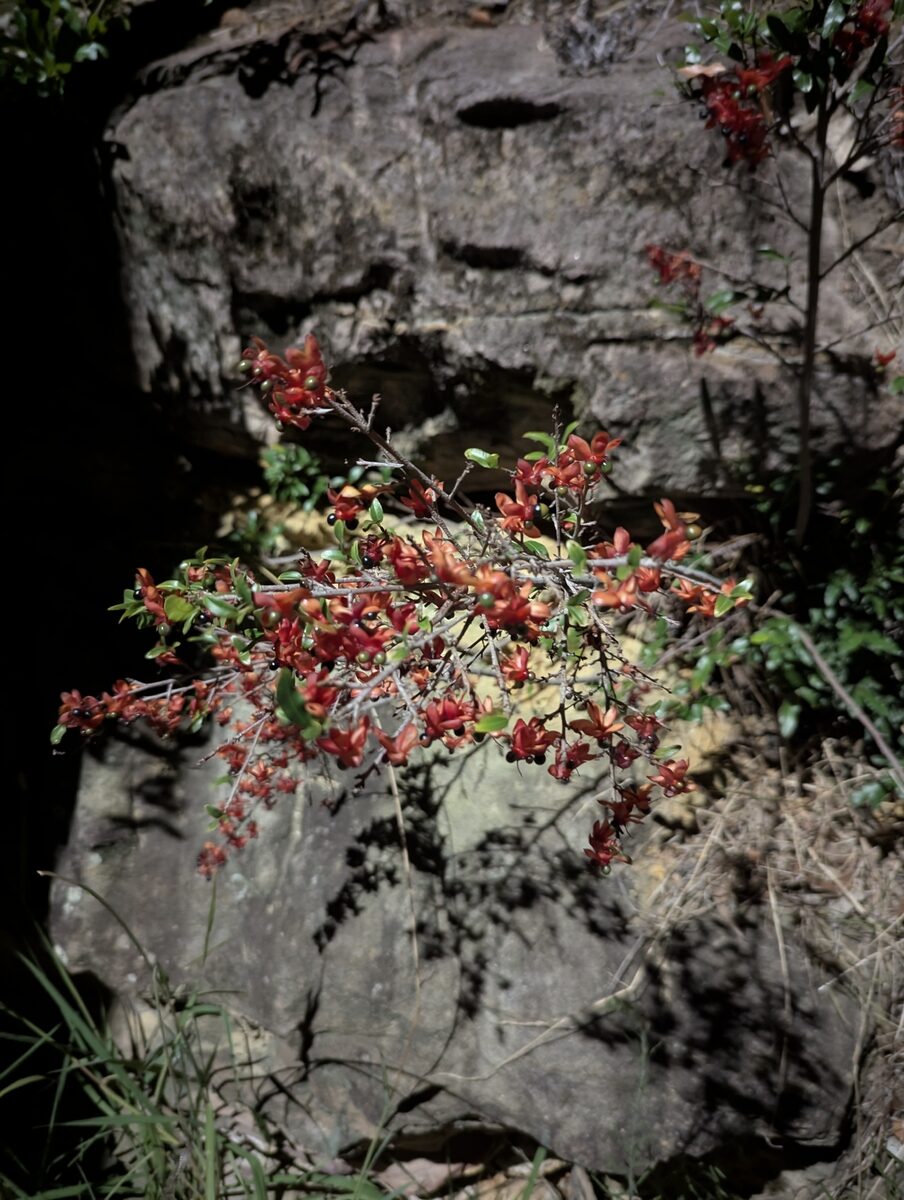
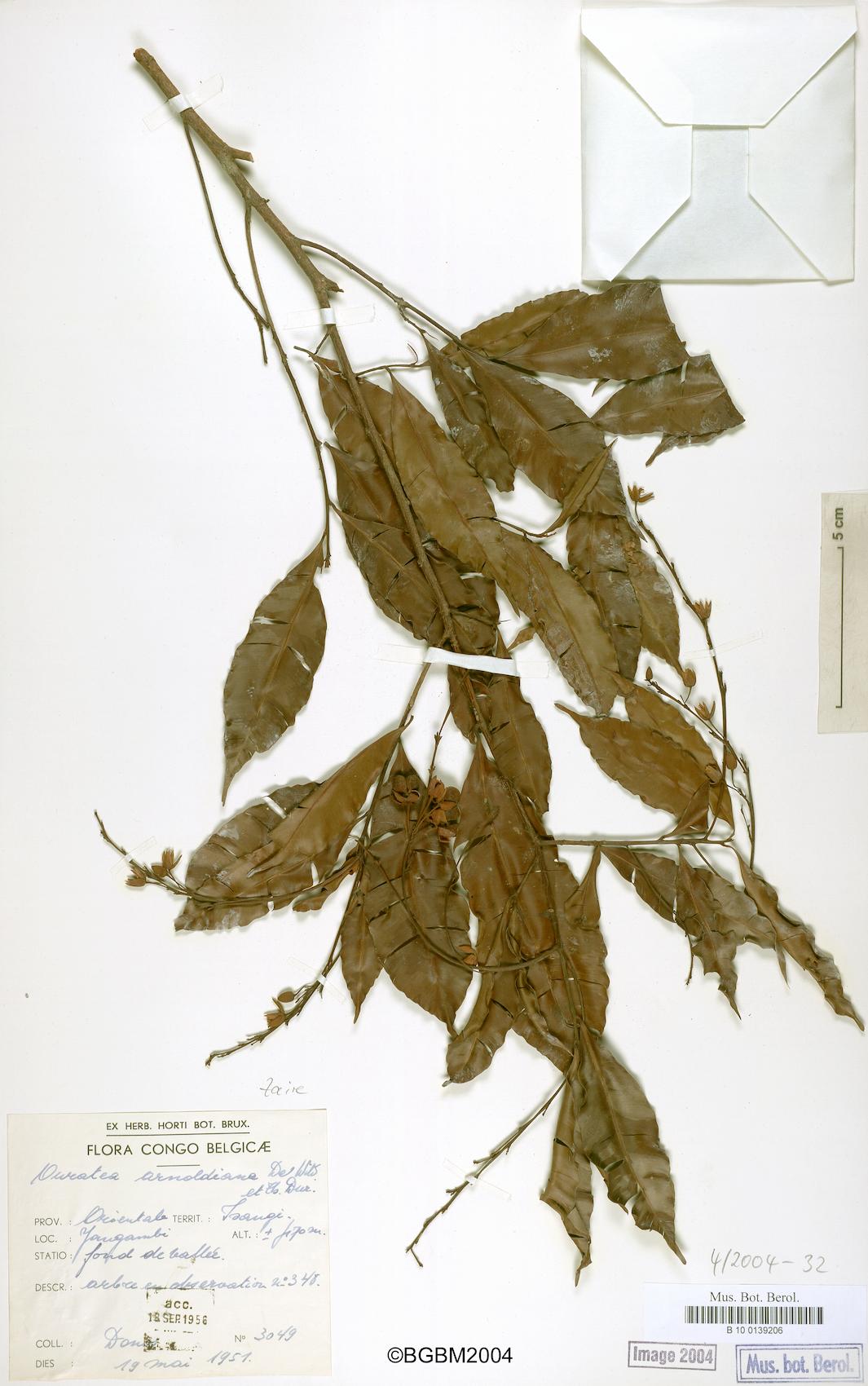
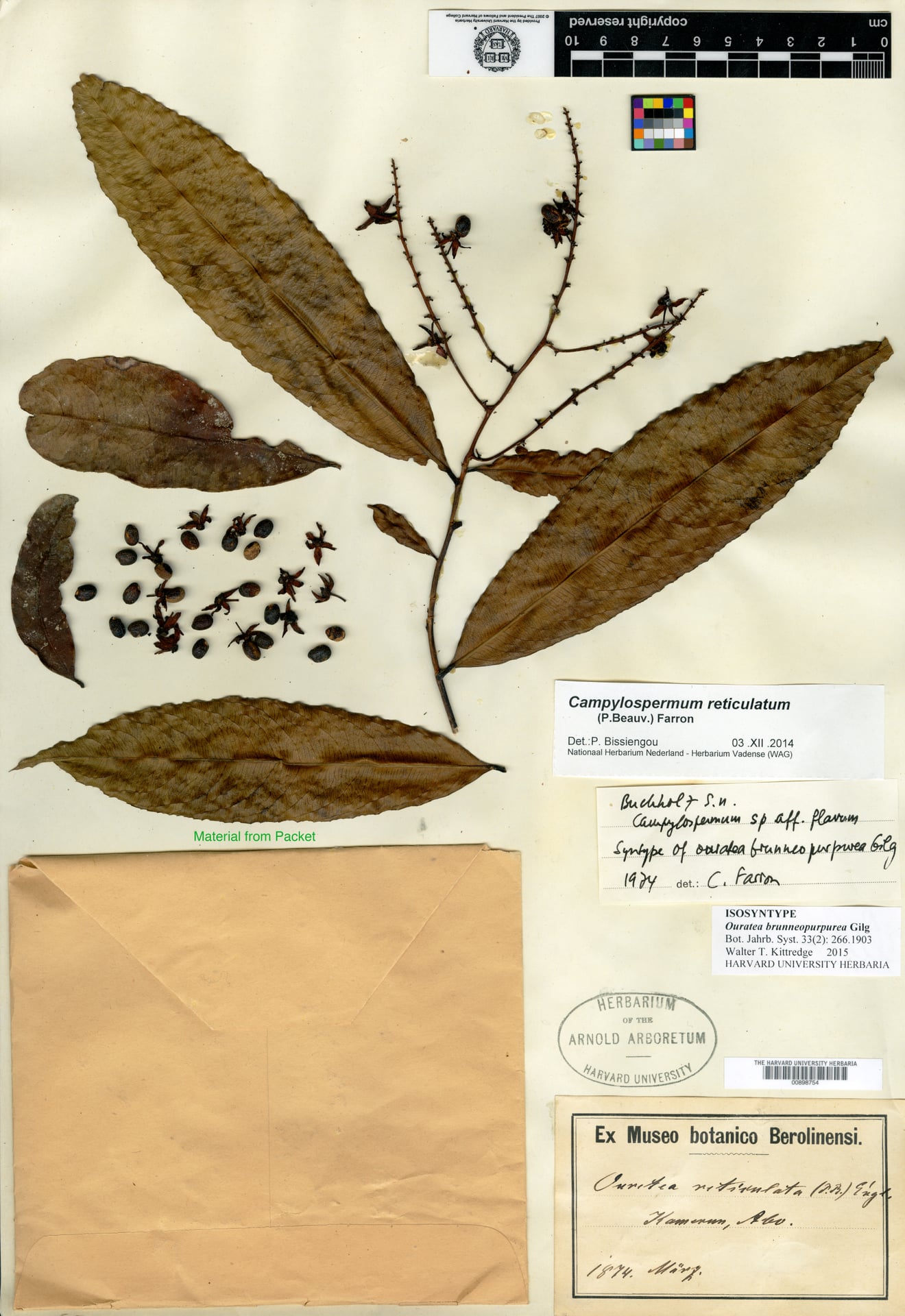
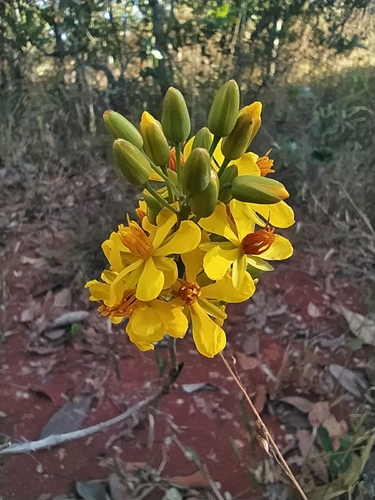
A shrub or small tree. The bark is pale brown and rough. The leaves are broadly sword shaped and 7-23 cm long. They are leathery. There are fine teeth along the edges. The leaf stalk is stout and swollen. The flowers are in branched heads. They are 2.5-3.5 cm across and bright yellow. The fruit are fleshy and in groups of 3-5. They are purple and have bright red lobes around them.
Edible Uses
The fruit are eaten raw.
Traditional Uses
The fruit are eaten raw.
This uses section is brief — help expand it
Distribution
It is a tropical plant. It grows on sandy soils and often amongst rocks. It grows in the lowlands. In Zimbabwe it grows up to 400 m above sea level.
Where It Grows
Africa, Asia, East Africa, Kenya, Mozambique, SE Asia, Tanzania, Vietnam, Zambia, Zimbabwe,
Synonyms
Also Known As
Cana-cana, Kafunyaki, Kwarula, Mai do, Mondora, Muhongo, Rehje
References (6)
- East African Herbarium records, 1981,
- Flora Zambesiaca. http://apps.kew.org/efloras (As Ochna mossambicensis)
- Fowler, D. G., 2007, Zambian Plants: Their Vernacular Names and Uses. Kew. p 51
- Grivetti, L. E., 1980, Agricultural development: present and potential role of edible wild plants. Part 2: Sub-Saharan Africa, Report to the Department of State Agency for International Development. p 47 (As Ochna mossambicensis)
- Mutie, F. M., et al, 2023, Important Medicinal and Food Taxa (Orders and Families) in Kenya, Based on Three Quantitative Approaches. Plants 2023, 12, 1145
Show all 6 references Hide references
- Peters, C. R., O'Brien, E. M., and Drummond, R.B., 1992, Edible Wild plants of Sub-saharan Africa. Kew. p 156