Astroloma pinifolium
(R. Br.) Benth.
Cranberry, Pine Heath, Pine-leaved Groundberry
iNaturalist· cc-by-nc-sa
(c) Reiner Richter, some rights reserved (CC BY-NC-SA)
iNaturalist· cc-by-nc-sa
(c) Reiner Richter, some rights reserved (CC BY-NC-SA)
iNaturalist· cc-by-nc-sa
(c) Reiner Richter, some rights reserved (CC BY-NC-SA)
Summary
An evergreen shrub reaching 1 m tall with needle-like foliage. Flowers from August to October. Hermaphroditic with both male and female organs. Thrives in light sandy to medium loamy, well-drained soils across mildly acidic to mildly alkaline pH ranges. Requires full sun and tolerates both dry and moist conditions with good drought resistance. Hardy to UK zone 8.
Description
A small stiff shrub. It can be erect or spreading. It grows to 20-60 cm tall and spread 50 cm - 1.5 m wide. The leaves are 12-25 mm long and 1-2 mm wide. The leaves are crowded together and like needles. They have sharp points. Older parts of the plant often do not have leaves. The edges of the leaves are curled. The flowers develop on short stalks at the base of the previous seasons growth. The flowers are yellow with green tips and form long tubes like bells. They are 15-18 mm long. They are constricted at the throat. The tips of the petals curve back. The fruit is round. It is green. It has a fleshy layer over a hard stone.
Edible Uses
Edible Parts: Fruit Edible Uses: Fruit - raw. Sweet and succulent when fully ripe. The fruit is about 5mm in diameter.
Medicinal Uses
None known
Distribution
A temperate plant. It grows in coastal heaths. It can also grow in subtropical and semiarid regions. It can tolerate heavy frosts. It needs moist well drained soils or dry soils. It needs full sunlight. Hobart Botanical Gardens. Tasmania Herbarium.
Where It Grows
Australia*, Tasmania*,
Cultivation
Plants can be grown from seed. Seed are slow to germinate. It can also be grown from cuttings.
Propagation
Seed - best sown as soon as it is ripe in a cold frame. The seed has a hard coat and some form of scarification is necessary or the seed can take up to 5 years to germinate. Two or three periods each of 4 - 6 weeks cold stratification can reduce the time taken to germinate. As soon as they are large enough to handle, prick the seedlings out into individual pots and grow them on in the greenhouse for at least their first winter. When large enough, plant them out into their permanent positions in late spring or early summer. Cuttings of firm young tip growths. It is very difficult to obtain suitable wood and the cuttings are slow to root.
Other Uses
None known Special Uses
Production
Plants flower from September to March.
Other Information
The fruit are enjoyed.
Notes
There are about 20 Astroloma species.
References (20)
- Bircher, A. G. & Bircher, W. H., 2000, Encyclopedia of Fruit Trees and Edible Flowering Plants in Egypt and the Subtropics. AUC Press. p 47
- Bodkin, F., 1991, Encyclopedia Botanica. Cornstalk publishing, p 115
- Cameron, M., (Ed.) 1981, A Guide to Flowers & Plants of Tasmania. Reed p 80
- Cherikoff V. & Isaacs, J., The Bush Food Handbook. How to gather, grow, process and cook Australian Wild Foods. Ti Tree Press, Australia p 194
- Collier, P., 1993, Woodland Wild flowers of Tasmania. Plant Identikit. Society for growing Australian Plants Tasmania Region. Hobart. p 32
Show all 20 references Hide references
- Curtis, W.M., 1963, The Students Flora of Tasmania Vol 2 p 424
- Elliot, W.R., & Jones, D.L., 1982, Encyclopedia of Australian Plants suitable for cultivation. Vol 2. Lothian. p 250
- Fl. austral. 4:159. 1869
- Gilfedder, L et al, 2003, The Nature of the Midlands. Midlands Bushweb. PO Box 156 Longford, Tasmania. p 88
- Greig, D., 1996, Flowering Natives for Home Gardens. Angus & Robertson. p 58
- Grieg, D., 2002, A photographic guide to Wildflowers of South-eastern Australia. New Holland. p 31
- Hibbert, M., 2002, The Aussie Plant Finder 2002, Florilegium. p 35
- Howells, C & Gulline, H., 2003, Coastal Plants of Tasmania. Plant Identikit. Australian Plant Society, Tasmania. p 27
- Lord, E.E., & Willis, J.H., 1999, Shrubs and Trees for Australian gardens. Lothian. p 149
- Maiden, J. H., 1889, The Useful Native Plants of Australia (including Tasmania). The Technology Museum of NSW, Sydney. p 8
- Minchin, R.F., Tasmanian Wildflowers. A Field Guide. Volume one. Regal Publications, Launceston p 94
- Molyneux, B & Forrester, S., 1997, The Austraflora A-Z of Australian Plants. Reed. p 46
- Plants for a Future database, The Field, Penpol, Lostwithiel, Cornwall, PL22 0NG, UK. http://www.scs.leeds.ac.uk/pfaf/
- Tasmanian Herbarium Vascular Plants list p 25
- Whiting, J. et al, 2004, Tasmania's Natural Flora. Tasmania's Natural Flora Editorial Committee PO Box 194, Ulverstone, Tasmania, Australia 7315 p 115
More from Ericaceae
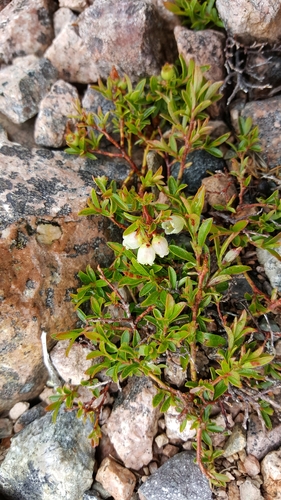
Vaccinium boreale
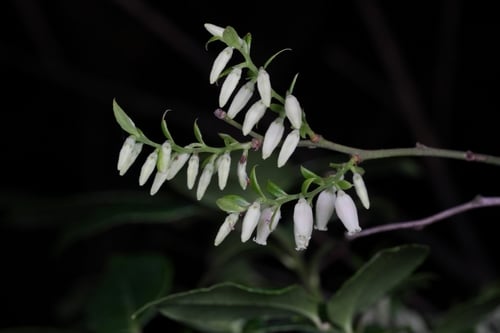
Vaccinium bracteatum
Sea bilberry, Black rice tree, Oriental blueberry
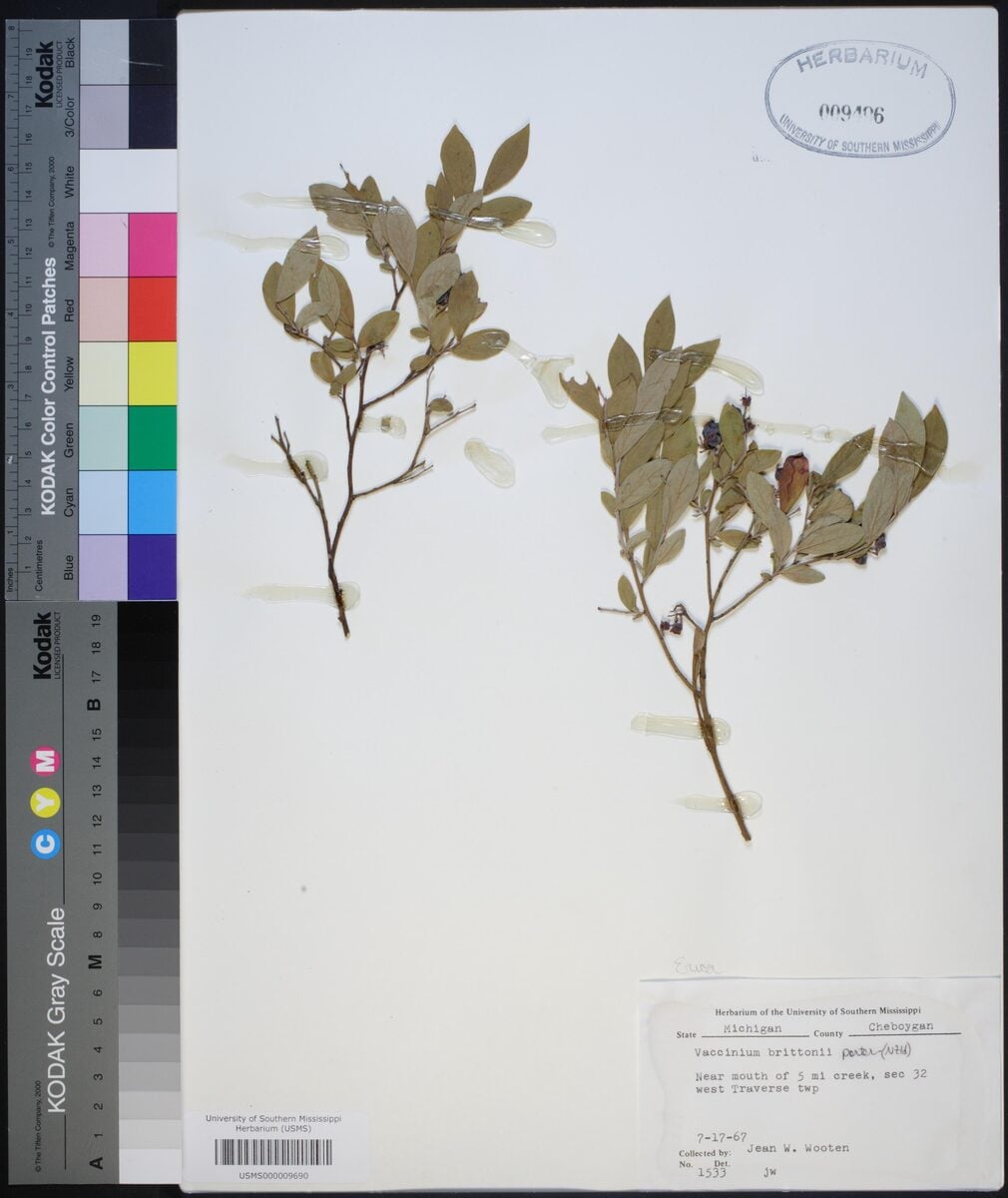
Vaccinium brittonii
Lowbush blueberry, American Blueberry
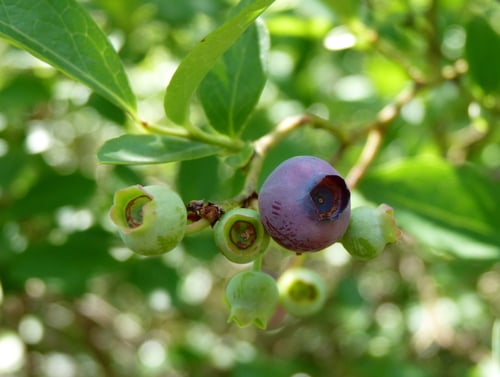
Vaccinium caesariense
New Jersey Blueberry
Vaccinium caespitosum
Dwarf Bilberry, Dwarf huckleberry
Vaccinium caespitosum var. paludicola
Dwarf blueberry