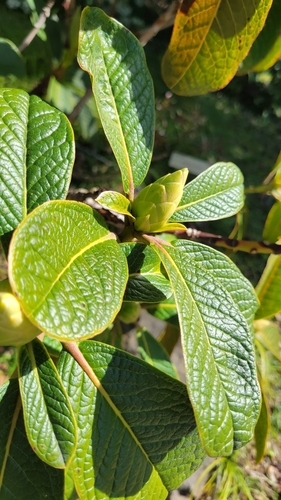
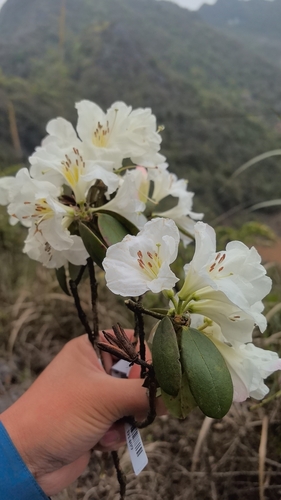
Vaccinium pallidum
Aiton
Hillside blueberry
iNaturalist· cc-by-sa
(c) Douglas Goldman, some rights reserved (CC BY-SA), uploaded by Douglas Goldman
iNaturalist· cc-by-nc
(c) Claire Ciafré, some rights reserved (CC BY-NC)
Summary
Source: WikipediaVaccinium pallidum is a species of flowering plant in the heath family known by the common names hillside blueberry, Blue Ridge blueberry, late lowbush blueberry, and early lowbush blueberry. It is native to central Canada and the central and eastern United States.
Description
A shrub. It loses its leaves. It grows 10-70 cm high. The stems are twiggy and angular. They can be green or yellow. The leaves are oval and 3-4 cm long by 1-2 cm wide. They can have teeth along the edge. The leaves can be pale green or dark blue-green. The flowers are greenish-white with pink stripes. The fruit are blue berries. They are edible.
Edible Uses
The wild fruits are food for many types of bird and other animals. Each individual fruit has approximately eight calories. For humans the taste is "sweet to bland" and the fruit can be eaten fresh, in pies, or as jelly. The fruit is harvested and sold commercially in some areas, such as northeastern Alabama and northwestern Georgia. The plant is also grown as an ornamental.
Distribution
It is a temperate plant. It is drought tolerant. It can grow in full sun or light shade.
Where It Grows
Canada, North America, USA,
Cultivation
It can be grown by seed of from cuttings.
Dangerous Lookalikes
This plant can be confused with the following toxic species. Always verify identification carefully before consuming any wild plant.
Deadly Nightshade
Atropa belladonna
Joan Simon from Barcelona, España
Hillside blueberry
Vaccinium pallidum
(c) Douglas Goldman, some rights reserved (CC BY-SA), uploaded by Douglas Goldman
Deadly Nightshade: Tall herbaceous plant (1-2m), single shiny black cherry-sized berries, star-shaped calyx, large oval leaves, sweet but dangerous taste.
Hillside blueberry: Low woody shrub, berries in clusters with crown/remnant calyx ring, sweet taste.
Synonyms
References (6)
- Facciola, S., 1998, Cornucopia 2: a Source Book of Edible Plants. Kampong Publications, p 97
- Glowinski, L., 1999, The Complete Book of Fruit Growing in Australia. Lothian. p 158
- Hort. kew. 2:10. 1789
- Kermath, B. M., et al, 2014, Food Plants in the Americas: A survey of the domesticated, cultivated and wild plants used for Human food in North, Central and South America and the Caribbean. On line draft. p 896
- Reis, S. V. and Lipp, F. L., 1982, New Plant Sources for Drugs and Foods from the New York Botanical Garden herbarium. Harvard. p 229
Show all 6 references Hide references
- Trehane, J., 2004, Blueberries, Cranberries and Other Vacciniums. Timber Press. p 238