Vaccinium oxycoccus
L.
Small Cranberry, Lingonberries
iNaturalist· cc-by-nc
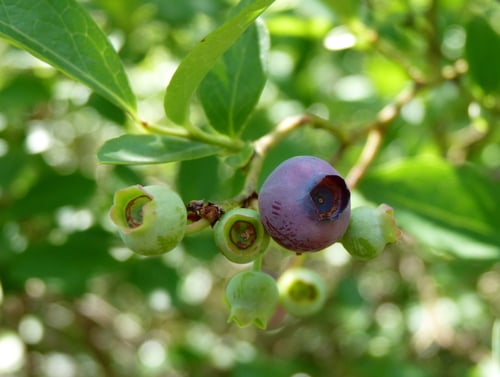
(c) Vladimir Yu. Arkhipov, some rights reserved (CC BY-NC)
iNaturalist· cc-by-nc
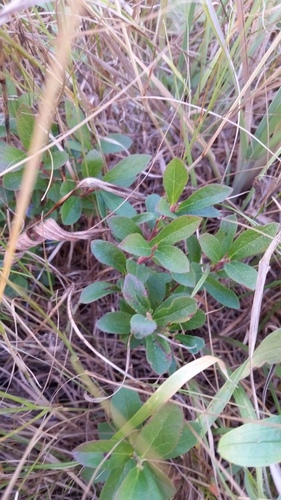
(c) Vladimir Yu. Arkhipov, some rights reserved (CC BY-NC)
iNaturalist· cc-by-nc
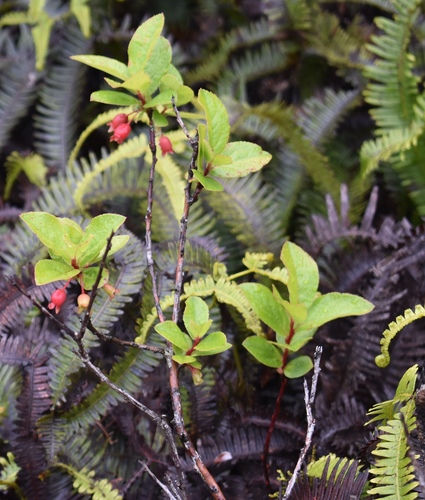
(c) Nikolay V Dorofeev, some rights reserved (CC BY-NC)
Description
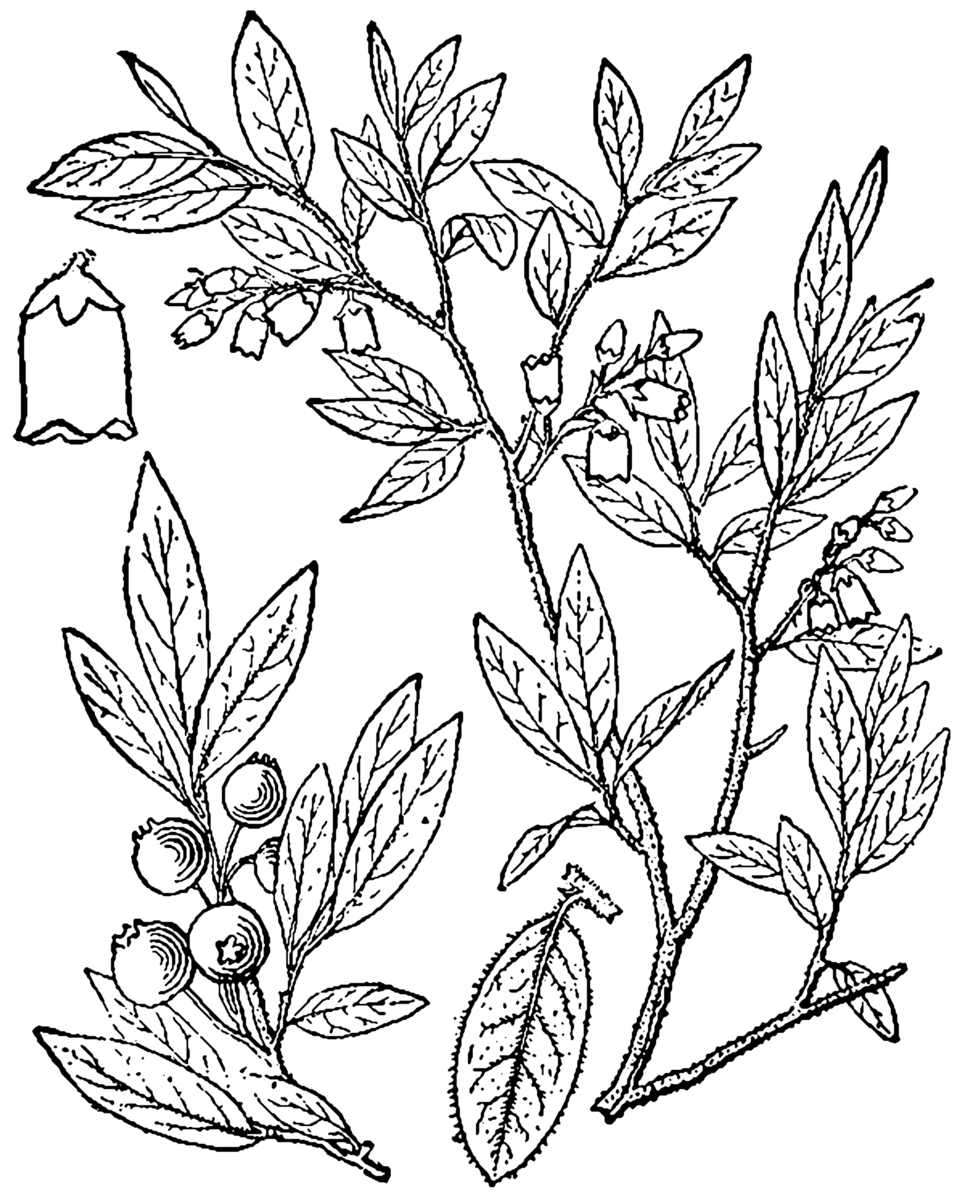
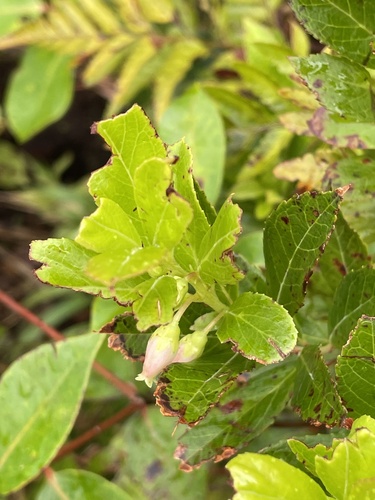
A creeping shrub. It keeps growing from year to year. It grows 10-40 cm long. It has fine woody stems. The leaves are alternate and simple. They are thick, oval and dark shiny green above. They are 5 mm long and the edges are rolled under. The flowers are pink and small. They are 5 mm across and occur as 1-4 together on nodding stalks. The fruit are red. They are 6-8 mm across.
Edible Uses
The fruit is used for jellies, sauces, drinks, pies, and preserves, and can be added to sauerkraut. The leaves are used as tea, and seeds are used for oil.
Traditional Uses
The fruit are used for jellies, sauces, drinks, pies and preserves. They are added to sauerkraut. The leaves are used as tea.
This uses section is brief — help expand it
Medicinal Uses
The fruit has health benefits.
Distribution
It grows in subarctic and alpine places. It grows on sphagnum moss and in bog forests. It does best in a soil with pH 2.9-3.8. It is more cold tolerant than Cranberry (Vaccinium macrocarpum).
Where It Grows
Alaska, Asia, Australia, Belarus, Britain, Canada, Caucasus, China, Czech Republic, Estonia, Europe, Finland, Georgia, Greenland, Ireland, Japan, Korea, Latvia, Lithuania, Luxembourg, Netherlands, North America, Norway, Poland, Russia, Scandinavia, Sweden, Ukraine, USA,
Cultivation
It can be grown from cuttings or rooted runners.
Notes
They have health benefits.
Dangerous Lookalikes
This plant can be confused with the following toxic species. Always verify identification carefully before consuming any wild plant.
Deadly Nightshade
Atropa belladonna
Joan Simon from Barcelona, España
Small Cranberry
Vaccinium oxycoccus
(c) Vladimir Yu. Arkhipov, some rights reserved (CC BY-NC)
Deadly Nightshade: Tall herbaceous plant (1-2m), single shiny black cherry-sized berries, star-shaped calyx, large oval leaves, sweet but dangerous taste.
Small Cranberry: Low woody shrub, berries in clusters with crown/remnant calyx ring, sweet taste.
Nutrition
| Part | Moisture | kJ | kcal | Protein | Vit A | Vit C | Iron | Zinc |
|---|---|---|---|---|---|---|---|---|
| Fruit | 146 | 35 | 0.4 | — | — | — | — | — |
Synonyms
Also Known As
Bog cranberry, Buckberry, European Cranberry, Dzervene, Garbalo, Karbala, Karpalo, Kliukva, Klukva, Kuremari, Moorberry, Mossberry, Spiceberry, Tranebaer, Veenbes, Zhuravina, Zuraviny
References (47)
- Bodkin, F., 1991, Encyclopedia Botanica. Cornstalk publishing, p 1003
- Bremness, L., 1994, Herbs. Collins Eyewitness Handbooks. Harper Collins. p 134
- Bowser, M., 2017, Handout on Edible Plants of the Kenai Peninsula. USFWS Kenai National Wildlife Refuge p 13
- Bussman, R. W., et al, 2016, A comparative ethnobotany of Khevsureti, Samtskhe-Javakheti, Tusheti, Svaneti, and Racha-Lechkhumi, Republic of Georgia (Sakartvelo), Caucasus. Journal of Ethnobiology and Ethnomedicine (2016) 12:4 (As Oxycoccus quadripetalus)
- Bussman, R. W., et al, 2021, Unity in diversity—food plants and fungi of Sakartvelo (Republic of Georgia), Caucasus. Journal of Ethnobiology and Ethnomedicine (2021) 17:72 p 9 (As Oxycoccus quadripetalus)
Show all 47 references Hide references
- Elias, T.S. & Dykeman P.A., 1990, Edible Wild Plants. A North American Field guide. Sterling, New York p 163
- Facciola, S., 1998, Cornucopia 2: a Source Book of Edible Plants. Kampong Publications, p 99
- Fisk, J. R. & Hoover, E., 2015, Wild Fruits of Minnesota. A Filed Guide. University of Minnesota p 13 (As Oxycoccus quadripetalus)
- Flowerdew, B., 2000, Complete Fruit Book. Kyle Cathie Ltd., London. p 68
- Girard, N. J., 2020, Sustainable Foraging of Wild Edible Plants in Norway. A Biocultural Approach. M. Sc. thesis Norwegian University. p 131 (As Oxycoccus palustris)
- Hakkinen, S. H., et al, 1999, Content of the Flavonols Quercetin, Myricetin, and Kaemferol in 25 Edible Berries. Journal of Agricultural and Food Chemistry. 47: 2274-2279
- Harris, C.S. et al, 2014, Investigating Wild Berries as a Dietary Approach to Reducing the Formation of Advanced Glycation Endproducts: Chemical Correlates of In Vitro Antiglycation Activity. Plant Foods Hum Nutr 69:71–77
- Heller, C. A., 1962, Wild Edible and Poisonous Plants of Alaska. Univ. of Alaska Extension Service. p 49
- Hu, Shiu-ying, 2005, Food Plants of China. The Chinese University Press. p 612
- Irving, M., 2009, The Forager Handbook, A Guide to the Edible Plants of Britain. Ebury Press p 198
- Jernigan, K. (Ed.), 2012, A Guide to the Ethnobotany of the Yukon-Kuskokwim Region. Draft. (As Oxycoccus microcarpus)
- Johansson, A., Laakso, P. and Kallio, H., 1997, Characterization of seed oils of wild, edible Finnish berries. Food Chemistry 204:300-307 (As Oxycoccus quadripetalus)
- John, L., & Stevenson, V., 1979, The Complete Book of Fruit. Angus & Robertson p 119
- Kalle, R. & Soukand, R., 2012, Historical ethnobotanical review of wild edible plants of Estonia (1770s-1960s) Acta Societatis Botanicorum Poloniae 81(4):271-281
- Kermath, B. M., et al, 2014, Food Plants in the Americas: A survey of the domesticated, cultivated and wild plants used for Human food in North, Central and South America and the Caribbean. On line draft. p 896
- Kiple, K.F. & Ornelas, K.C., (eds), 2000, The Cambridge World History of Food. CUP p 1764
- Kolosova, V., et al, 2020, Foraging in Boreal Forest: Wild Food Plants of the Republic of Karelia, NW Russia. Foods 2020, 9, 1015; p 9
- Kuhnlein, H. V., et al, 2009, Indigenous Peoples' food systems. FAO Rome
- Łukasz Łuczaj and Wojciech M Szymański, 2007, Wild vascular plants gathered for consumption in the Polish countryside: a review. J Ethnobiol Ethnomedicine. 3: 17
- Luczaj, L. et al, 2013, Wild edible plants of Belarus: from Rostakinski's questionnaire of 1883 to the present. Journal of Ethnobiology and Ethnomedicine 9:21
- Mabey, R., 1973, Food for Free. A Guide to the edible wild plants of Britain, Collins. p 182
- MacKinnon, A., et al, 2009, Edible & Medicinal Plants of Canada. Lone Pine. p 116 (As Oxycoccus oxycoccos)
- Moerman, D. F., 2010, Native American Ethnobotany. Timber Press. p 585
- Pieroni, A. & Soukand, R., 2018, Forest as Stronghold of Local Ecological Practice: Currently Used Wild Food Plants in Polesia, Northern Ukraine. Economic Botany, XX(X) pp. 1-21
- Plants for a Future database, The Field, Penpol, Lostwithiel, Cornwall, PL22 0NG, UK. http://www.scs.leeds.ac.uk/pfaf/
- Prakofjewa, J., et al, 2023, Boundaries Are Blurred: Wild Food Plant Knowledge Circulation across the Polish-Lithuanian-Belarusian Borderland. Biology 2023, 12, 571.
- Pruse, B., et al, 2021, Active Wild Food Practices among Culturally Diverse Groups in the 21st Century across Latgale, Latvia. Biology 2021, 10, 551.
- Simkova, K. et al, 2014, Ethnobotanical review of wild edible plants used in the Czech Republic. Journal of Applied Botany and Food Quality 88, 49-67
- Soukand, R., et al, 2017, Multi-functionality of the few: current and past uses of wild plants for food and healing in Liubań region, Belarus. Journal of Ethnobiology and Ethnomedicine (2017) 13:10
- Sp. pl. 1:351. 1753
- Stryamets, N., et al, 2015, From economic survival to recreation: contemporary uses of wild food and medicine in rural Sweden, Ukraine and NW Russia. Journal of Ethnobiology and Ethnomedicine 11:53
- Svanberg, I., 2012, The use of wild plants as food in pre-industrial Sweden. Acta Societatis Botanicorum Poloniae 81(4): 317-327
- Toupal, R. S. & Hollenback, K., 2009, An Ethnobotany of Indiana Dunes National Lakeshore: Plant Uses of the Ojibwa People. Bureau of Applied Research in Anthropology. University of Arizona
- Trehane, J., 2004, Blueberries, Cranberries and Other Vacciniums. Timber Press. p 72, 237
- Turner, N., 1995, Food Plants of Coastal First Peoples. Royal BC Museum Handbook p 86
- Turner, N., 1997, Food Plants of Interior First Peoples. Royal BC Museum Handbook p 121
- Ulian, T., et al, 2020, Unlocking plant resources to support food security and promote sustainable agriculture. Plants, People, Planet. 2020;2:421–445.
- USDA, ARS, National Genetic Resources Program. Germplasm Resources Information Network - (GRIN). [Online Database] National Germplasm Resources Laboratory, Beltsville, Maryland. Available: www.ars-grin.gov/cgi-bin/npgs/html/econ.pl (10 April 2000)
- van Wyk, B., 2005, Food Plants of the World. An illustrated guide. Timber press. p 374
- Wiersema, J. H. & Leon, B., 2013, World Economic Plants. A Standard Reference CRC Press. 2nd Ed. p 709
- Williams, D., 2017, Ainu Ethnobiology. Contributions in Ethnobiology. Society of Ethnobiology. p 145
- World Checklist of Useful Plant Species 2020. Royal Botanic Gardens, Kew