Glycosmis citrifolia
(Ridl.) Lindley
Orangeberry, Chinese glycosmis
iNaturalist· cc-by-nc
(c) beachybryan, some rights reserved (CC BY-NC)
iNaturalist· cc-by-nc
(c) beachybryan, some rights reserved (CC BY-NC)
iNaturalist· cc-by-nc
(c) beachybryan, some rights reserved (CC BY-NC)
Description
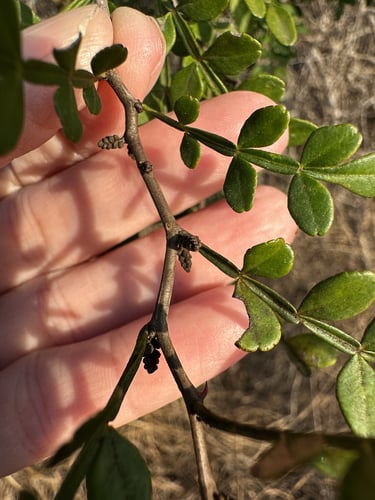
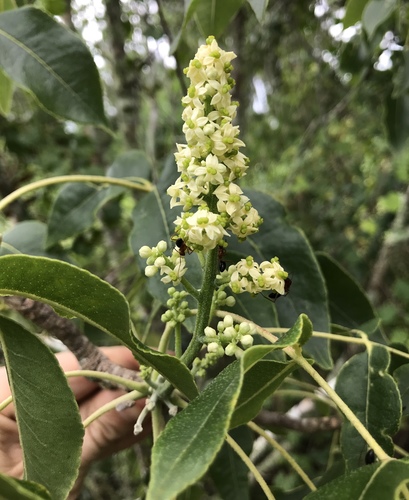
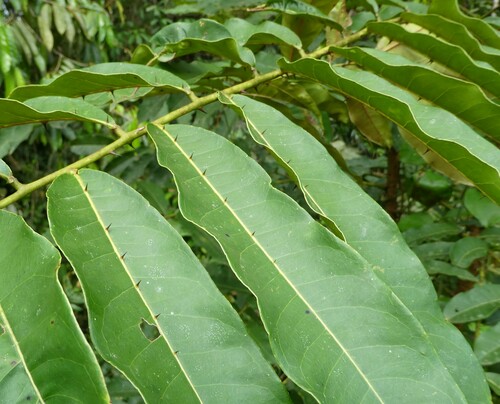
A large evergreen shrub. It does not have thorns. It grows 2-3 m tall. The leaves are dense. The new branches have rusty hairs. The leaves are simple and leathery. They are smooth and shiny. They are 6-9 cm long by 3-4 cm wide. The flowers are small and white. They have a slight scent. They are in small groups in the axils of leaves. The fruit is a small round berry. It is pale red. The pulp is juicy and lets light through. There is 1 seed.
Edible Uses
The fruit are eaten fresh, particularly by children.
Traditional Uses
The fruit are eaten fresh.
This uses section is brief — help expand it
Distribution
A tropical plant.
Where It Grows
Asia, Brazil, China*, Indochina, Laos, Malaysia, Pacific, Philippines, SE Asia, South America,
Cultivation
Plants are grown from seed.
Other Information
The fruit are eaten especially by children.
Notes
There are about 60 Glycosmis species.
Synonyms
Also Known As
Glicosme-chines, Shan Kit shue, Merapi
References (8)
- Altschul, S.V.R., 1973, Drugs and Foods from Little-known Plants. Notes in Harvard University Herbaria. Harvard Univ. Press. Massachusetts. no. 1926
- Burkill, I.H., 1966, A Dictionary of the Economic Products of the Malay Peninsula. Ministry of Agriculture and Cooperatives, Kuala Lumpur, Malaysia. Vol 1 (A-H) p 1104
- Hu, Shiu-ying, 2005, Food Plants of China. The Chinese University Press. p 501
- Lorenzi, H., Bacher, L., Lacerda, M. & Sartori, S., 2006, Brazilian Fruits & Cultivated Exotics. Sao Paulo, Instituto Plantarum de Estuados da Flora Ltda. p 600
- Martin, F. W., et al, 1987, Perennial Edible Fruits of the Tropics. USDA Handbook 642 p 74
Show all 8 references Hide references
- Reis, S. V. and Lipp, F. L., 1982, New Plant Sources for Drugs and Foods from the New York Botanical Garden herbarium. Harvard. p 144
- Trans. Hort. Soc. London 6:72. 1826
- World Checklist of Useful Plant Species 2020. Royal Botanic Gardens, Kew