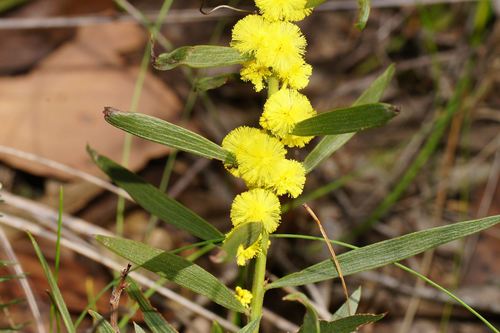
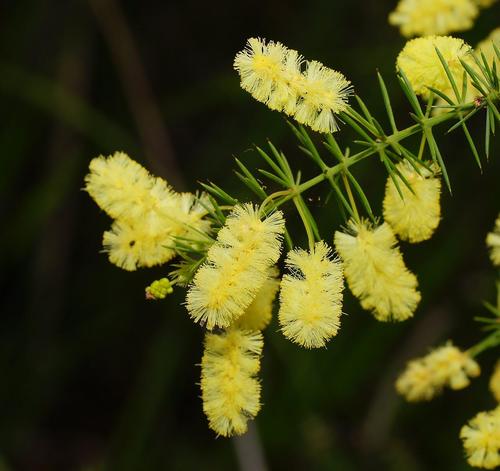
Cassia floribunda
Cavanilles
Smooth Cassia
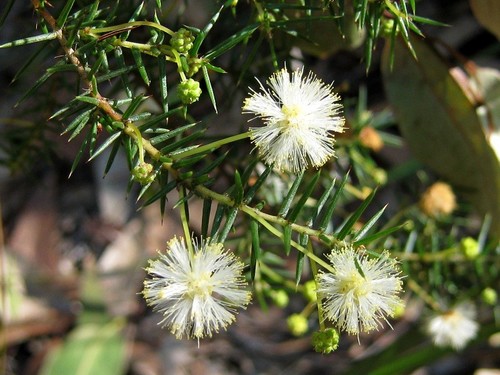
iNaturalist· cc-by-nc
(c) Dunya Yelesich, some rights reserved (CC BY-NC)
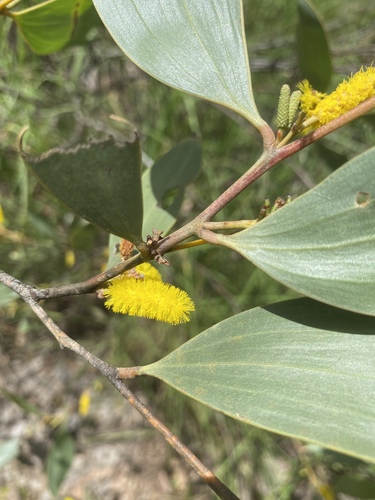
iNaturalist· cc-by-nc-sa
(c) Rob Palmer, some rights reserved (CC BY-NC-SA)
iNaturalist· cc-by-nc
(c) Troos van der Merwe, some rights reserved (CC BY-NC)
Description
A shrub. It grows to 3 m tall. The leaves have leaflets along the stalk. The leaflets are oval or sword shaped. They are 20 cm long. There are glands on the stalk between the leaflets. Flowers are yellow. The occur in groups in the axils of leaves. The fruit is a pod. It is like a cylinder.
Edible Uses
The tender fruits are cooked as a vegetable. Young shoots and leaves are steamed as a potherb or cooked in soups and stews. Unripe seeds are cooked or roasted and eaten with rice. Seeds are also used as a coffee substitute.
Traditional Uses
Seeds used for coffee. The tender fruits are cooked as a vegetable. The young shoots and leaves are steamed and used as a potherb. They are also cooked in soups and stews. The unripe seeds are cooked or roasted and eaten with rice.
Distribution
It grows in Nepal between 700-2200 m altitude. It is a subtropical plant. It needs well-composted, moist, well-drained soils. It is damaged by frost or drought.
Where It Grows
America, Asia, Australia, Central America, Guatemala, Himalayas, Indonesia, Nepal, Pacific, Pakistan, Philippines, SE Asia, South America*,
Cultivation
Plants are grown from seeds. The seeds need treatment to break the hard seed coat before planting.
Notes
There are 100 Cassia species. This group has been revised to a smaller more consistent group. Also as Caesalpinaceae.
Synonyms
Also Known As
Bankola, Bhatte, Chhinchhie, Smooth senna, Tajumas
References (13)
- Altschul, S.V.R., 1973, Drugs and Foods from Little-known Plants. Notes in Harvard University Herbaria. Harvard Univ. Press. Massachusetts. no. 1690
- Bodkin, F., 1991, Encyclopedia Botanica. Cornstalk publishing, p 221 (As Cassia laevigata)
- Burkill, I.H., 1966, A Dictionary of the Economic Products of the Malay Peninsula. Ministry of Agriculture and Cooperatives, Kuala Lumpur, Malaysia. Vol 1 (A-H) p 483 (As Cassia laevigata)
- Cronin, L., 1989, The Concise Australian Flora. Reed. p 96
- Descr. pl. 132. 1801
Show all 13 references Hide references
- Facciola, S., 1998, Cornucopia 2: a Source Book of Edible Plants. Kampong Publications, p 67
- Manandhar, N.P., 2002, Plants and People of Nepal. Timber Press. Portland, Oregon. p 140
- Heyne, K, 1927 ed, (As Cassia laevigata)
- Kumar, P. D., et al, 2015, Ethnobotanical Knowledge and Usage of Wild Plants in Theog Forest Division, Himachal Pradesh, North Western Himalaya. The Journal of Ethnobiology and Traditional Medicine. Photon 124(2015) 922-935
- Martin, F.W. & Ruberte, R.M., 1979, Edible Leaves of the Tropics. Antillian College Press, Mayaguez, Puerto Rico. p 198 (As Cassia laevigata)
- Ochse,
- Uphof,
- Williams, J.B., Harden, G.J., and McDonald, W.J.F., 1984, Trees and shrubs in rainforests of New South Wales and Southern Queensland. Univ. of New England, Armidale. p 40