Heterospathe elata
Scheff.
Sagisi palm
iNaturalist· cc-by-sa
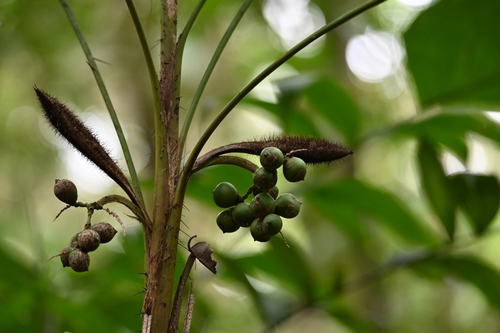
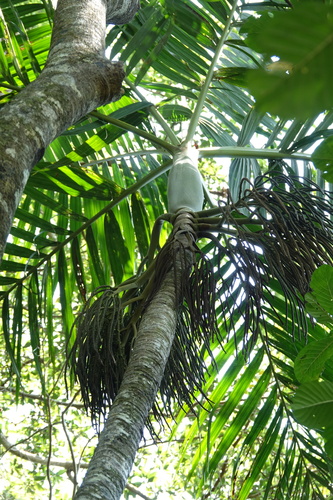
(c) Jake Gross, some rights reserved (CC BY-SA), uploaded by Jake Gross
iNaturalist· cc-by-nc
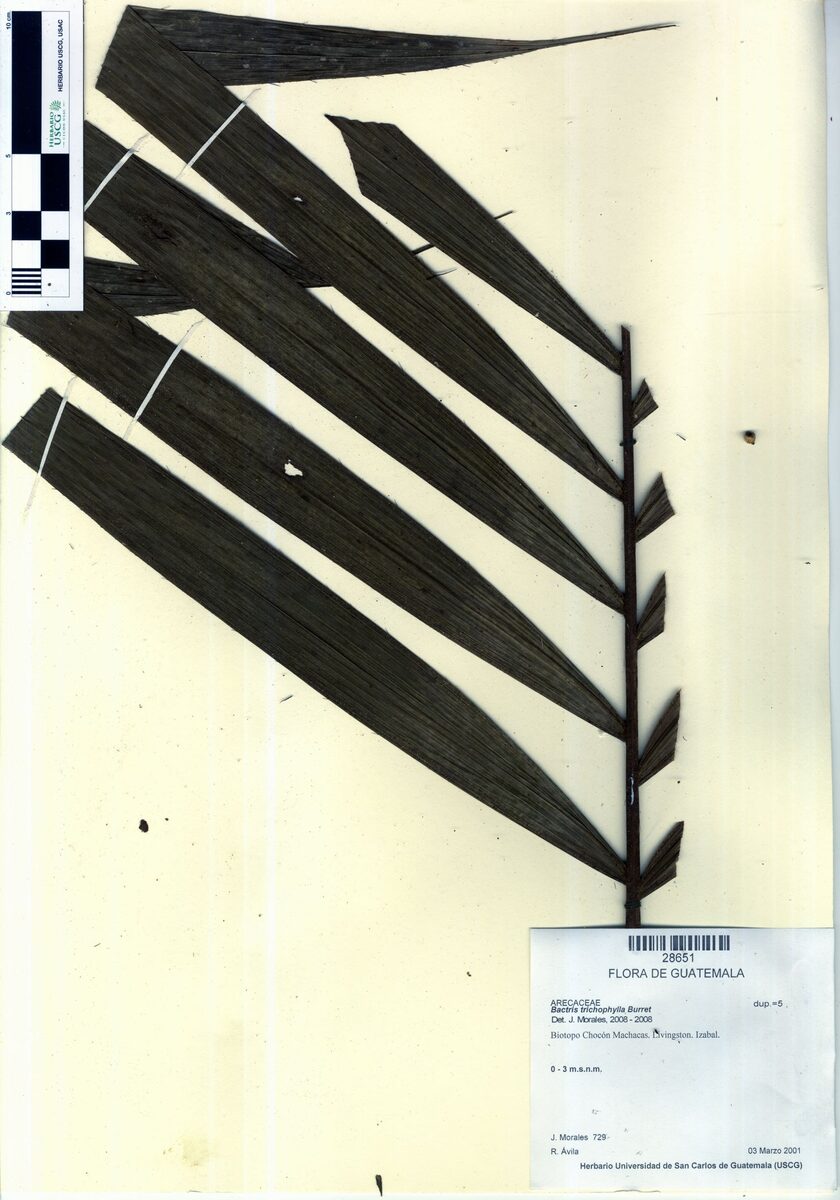
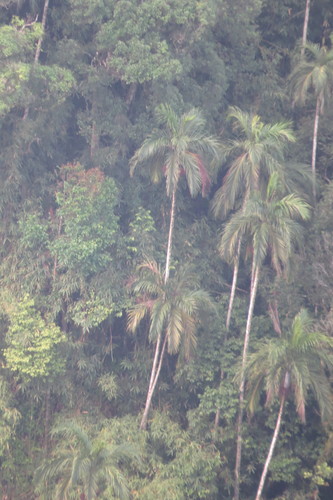
(c) NPS - pacific island vegetation monitoring, some rights reserved (CC BY-NC)
iNaturalist· cc-by-nc
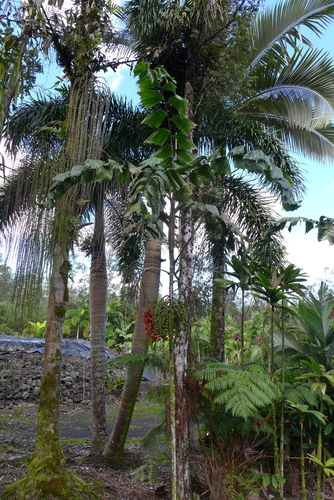
(c) NPS - pacific island vegetation monitoring, some rights reserved (CC BY-NC)
Description
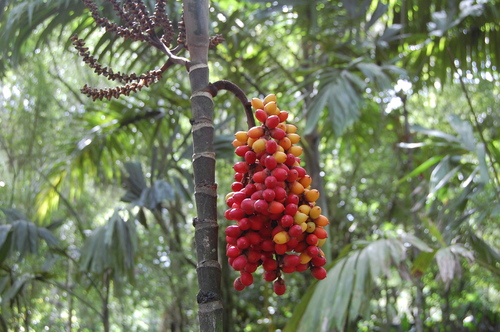
A tall and slender palm. It grows 16 m high. The trunk is 25 cm across. The trunk is smooth and grey with widely spaced rings of leaf base scars. The trunk has a swollen base. The leaf crown is 5 m wide and nearly round. The leaves are 3 to 4 m long and leaflets along each side of the stalk. The fronds curve over. They are dark green. The leaflets are long and tapering. They are 1 m long. The young fronds are pale pink. The leaflets grow in a flat plane but the leaf is twisted in its mid length. The fruiting stalk is 1.3 m long. Numerous small round fruit are borne on stalks. They are 1-2 cm across. The fruit are white. The clusters hang among the leaves.
Edible Uses
The bud is cooked and eaten. The nut is sometimes used as a betel substitute. The palm heart (cabbage) and nuts are edible portions.
Traditional Uses
The bud is cooked and eaten. The nut is sometimes used as a betel substitute.
This uses section is brief — help expand it
Distribution
A tropical plant. It is cold sensitive. It suits lowland tropical regions. They are widely distributed in the Philippines. It is also cultivated because it is ornamental. In Townsville palmetum.
Where It Grows
Asia, Australia, Guam, India, Indonesia, Pacific, Philippines, SE Asia,
Cultivation
Plants are grown from seed. Seed germinate in 2-3 months.
Other Uses
The leaflets are extensively used for making sun-hats. The leaflets are made into sun hats, known as Salokots. The leaflets are used to manufacture basketry. The petioles (leaf stalks)) are used as splints in the manufacture of baskets.
Production
It can grow quickly.
Notes
There are about 32-40 Heterospathe species. They occur naturally in the Asia Pacific region. There are about 19 in New Guinea.
Also Known As
Palem sagisi, Palma brava
References (12)
- Ambasta, S.P. (Ed.), 2000, The Useful Plants of India. CSIR India. p 265
- Ann. Jard. Bot. Buitenzorg 1:162. 1876
- Burkill, I.H., 1966, A Dictionary of the Economic Products of the Malay Peninsula. Ministry of Agriculture and Cooperatives, Kuala Lumpur, Malaysia. Vol 1 (A-H) p 1162
- Facciola, S., 1998, Cornucopia 2: a Source Book of Edible Plants. Kampong Publications, p 29
- Haynes, J., & McLaughlin, J., 2000, Edible palms and Their Uses. University of Florida Fact sheet MCDE-00-50-1 p 6
Show all 12 references Hide references
- Hibbert, M., 2002, The Aussie Plant Finder 2002, Florilegium. p 138
- Jones, D.L., 1994, Palms throughout the World. Smithtonian Institution, Washington. p 56, 57, 221
- Jones, D.L., 2000, Palms of Australia 3rd edition. Reed/New Holland. p 161
- Monsalud, M.R., Tongacan, A.L., Lopez, F.R., & Lagrimas, M.Q., 1966, Edible Wild Plants in Philippine Forests. Philippine Journal of Science. p 525
- Riffle, R.L. & Craft, P., 2003, An Encyclopedia of Cultivated Palms. Timber Press. p 347
- Sukarya, D. G., (Ed.) 2013, 3,500 Plant Species of the Botanic Gardens of Indonesia. LIPI p 779
- World Checklist of Useful Plant Species 2020. Royal Botanic Gardens, Kew