Hirtella americana
L.
American hirtella
iNaturalist· cc-by-nc
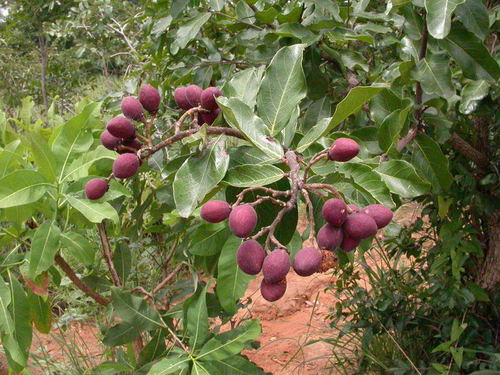
(c) Jan Meerman, some rights reserved (CC BY-NC), uploaded by Jan Meerman
iNaturalist· cc-by-nc
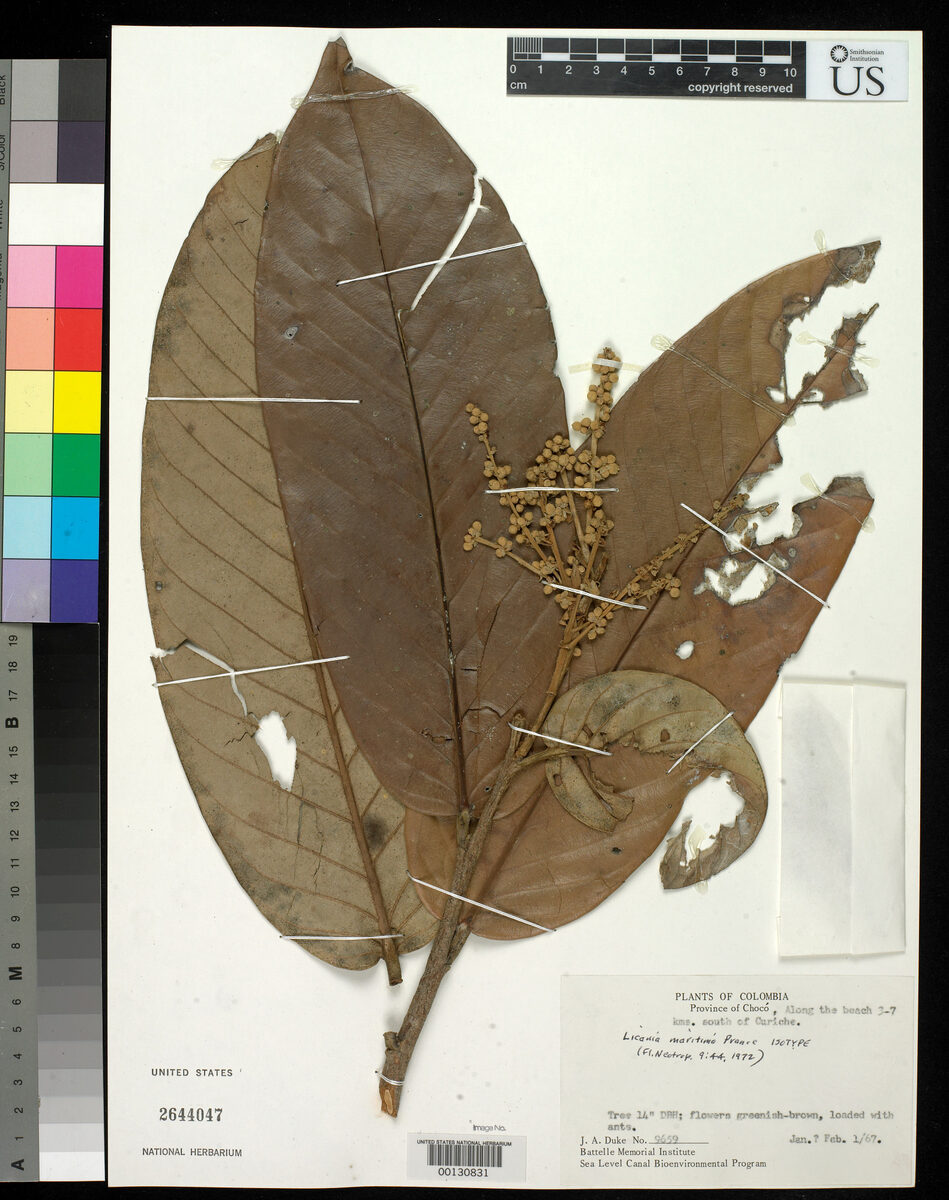
(c) Jeir Ortega Galvan, some rights reserved (CC BY-NC)
Description
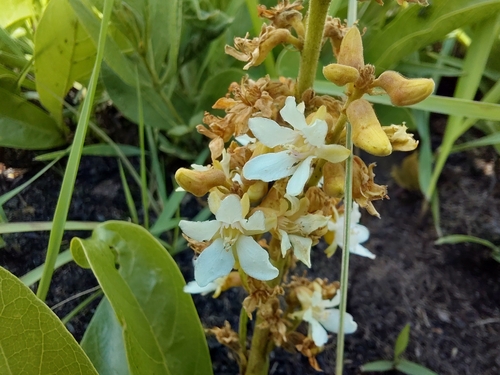
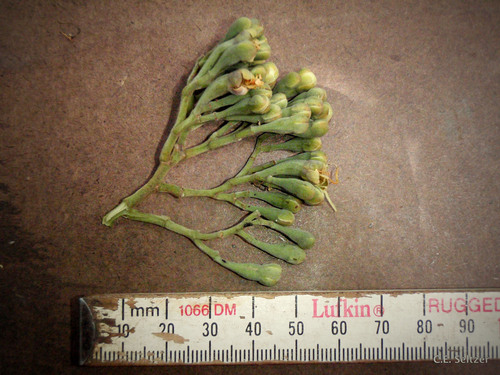
A medium sized tree. The twigs are covered with red hairs. The leaves are simple and alternate. They have soft red hairs underneath. The flowers are large and pink or white in long spikes. The fruit are the size of cherries.
Edible Uses
Fruit - raw. The pulp is eaten. Fruit ellipsoid; epicarp sparsely pubescent to glabrous; mesocarp thin, fleshy; endocarp thin, hard, bony, hirsute within. Seed.
Traditional Uses
The pulp of the fruit and the seeds are eaten.
This uses section is brief — help expand it
Distribution
A tropical plant.
Where It Grows
Amazon, Belize, Brazil, Central America, Colombia, Costa Rica, Cuba, Dominican Republic, Ecuador, El Salvador, Guatemala, Honduras, Mexico, Nicaragua, North America, Panama, Peru, South America, Venezuela, West Indies,
Notes
There are about 100 Hirtella species. They are almost all in tropical America.
Synonyms
Also Known As
Aceituni, Aceituno manco, Barazon, Camaroncillo, Carita de negro, Cenizo, Garrapato, Guaviluna, Icaco de aura, Icaco peludo, Pasito, Yaya
References (12)
- Altschul, S.V.R., 1973, Drugs and Foods from Little-known Plants. Notes in Harvard University Herbaria. Harvard Univ. Press. Massachusetts. no. 1488
- Condit, R., et al, 2011, Trees of Panama and Costa Rica. Princeton Field Guides. p 124
- Grandtner, M. M., 2008, World Dictionary of Trees. Wood and Forest Science Department. Laval University, Quebec, Qc Canada. (Internet database http://www.wdt.qc.ca)
- Grandtner, M. M. & Chevrette, J., 2013, Dictionary of Trees, Volume 2: South America: Nomenclature, Taxonomy and Ecology. Academic Press p 304
- Kermath, B. M., et al, 2014, Food Plants in the Americas: A survey of the domesticated, cultivated and wild plants used for Human food in North, Central and South America and the Caribbean. On line draft. p 420
Show all 12 references Hide references
- Kew Plants of the World On line
- Lopez-Diago, D. & Garcia, N., 2021, Wild edible fruits of Colombia. Biota ColomBiana 22 (2) p 35
- Martin, F. W., et al, 1987, Perennial Edible Fruits of the Tropics. USDA Handbook 642 p 92 (As Hirtelia)
- Reis, S. V. and Lipp, F. L., 1982, New Plant Sources for Drugs and Foods from the New York Botanical Garden herbarium. Harvard. p 108
- Roa, J. A. G. & Boada, D. S. G., 2018, Fundación para el Fortalecimiento de la Fruticultura y Plantas Alimenticias no Convencionales en Colombia.
- Sp. pl. 1:34. 1753
- Standley, P. C. & Record, S. J., 1936, The Forests and Flora of British Honduras. (Belize).