Afrolicania elaeosperma
Mildbr.
Mahogany nut
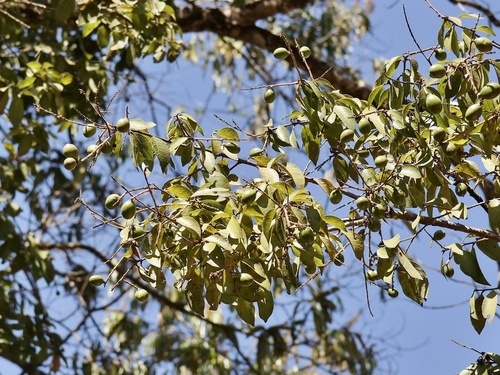
iNaturalist· cc-by-nc
(c) Carel Jongkind, some rights reserved (CC BY-NC), uploaded by Carel Jongkind
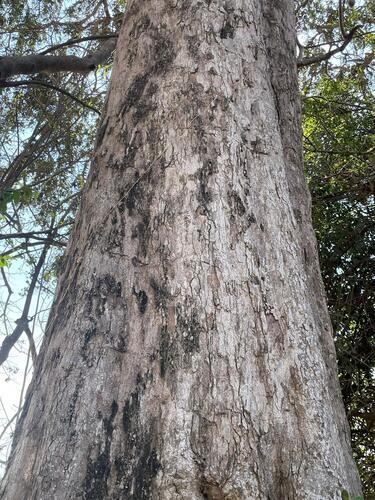
iNaturalist· cc-by-nc
(c) Carel Jongkind, some rights reserved (CC BY-NC), uploaded by Carel Jongkind
iNaturalist· cc-by-nc
(c) Carel Jongkind, some rights reserved (CC BY-NC), uploaded by Carel Jongkind
Description
A medium sized tree. The branches hang down. The leaves are narrowly oval and wedge shaped at the base. They taper to the tip and droop. The flowers are small and greenish-white. They are in groups at the ends of the branches. The fruit are oval and warty. It is thin shelled and has a tough layer. It contains a single seed.
Edible Uses
Oil is extracted from the seed.
Distribution
It is a tropical plant.
Where It Grows
Africa, West Africa,
Cultivation
Trees are slow to mature and 20 - 30-year old specimens are known that still do not bear fruit. There is some export of the oil, e.g. From Ghana, but amounts involved are not known.
Other Uses
The seeds contain 40 - 58% of a drying oil that solidifies rapidly into a varnish-like mass. The seed oil is used as a hair oil and body scent. It was formerly used as a substitute for linseed oil in paints and varnishes, and as a poor substitute for tung oil. The stone of the fruit is brittle and the oily kernel is easily removed from it.
Also Known As
Nikko, Po-yok
References (2)
- Bircher, A. G. & Bircher, W. H., 2000, Encyclopedia of Fruit Trees and Edible Flowering Plants in Egypt and the Subtropics. AUC Press. p 12
- World Checklist of Useful Plant Species 2020. Royal Botanic Gardens, Kew