Acacia podalyriifolia
A. Cunn. ex G. Don
Mount Morgan Wattle
iNaturalist· cc-by-nc
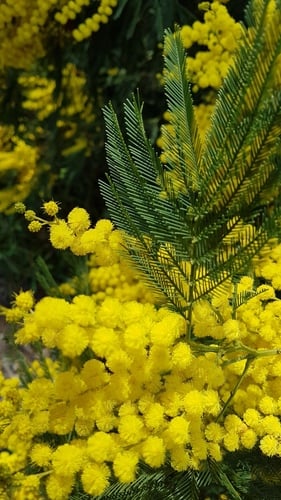
(c) James Bailey, some rights reserved (CC BY-NC), uploaded by James Bailey
iNaturalist· cc-by
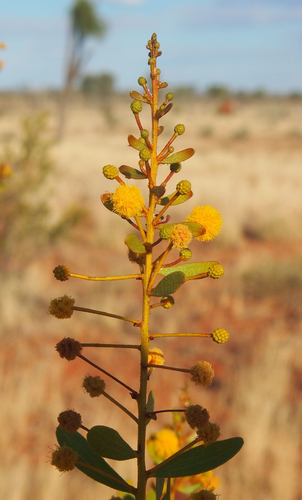
(c) Shaun Swanepoel, some rights reserved (CC BY), uploaded by Shaun Swanepoel
iNaturalist· cc-by-sa
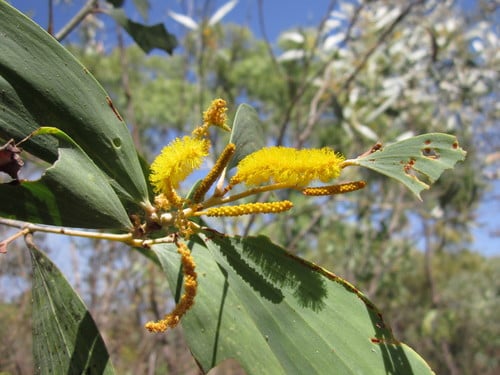
(c) Nicola van Berkel, some rights reserved (CC BY-SA), uploaded by Nicola van Berkel
Summary
Source: WikipediaAcacia podalyriifolia is a perennial tree which is fast-growing and widely cultivated. It is native to Australia but is also naturalised in Malaysia, Africa, India and South America. Its uses include environmental management and it is also used as an ornamental tree. It is very closely related to Acacia uncifera. It grows to about 5 m (16 feet) in height and about the same in total width. It blooms during winter. Common names for it are Mount Morgan wattle, Queensland silver wattle, Queensland wattle, pearl acacia, pearl wattle and silver wattle.
Description
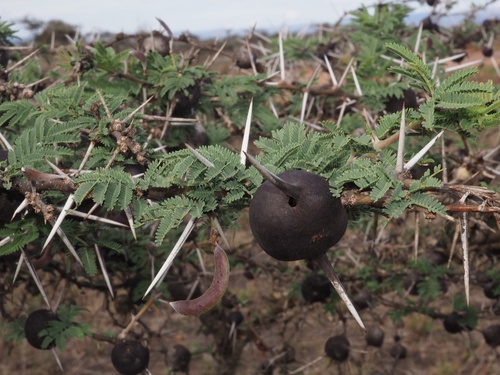
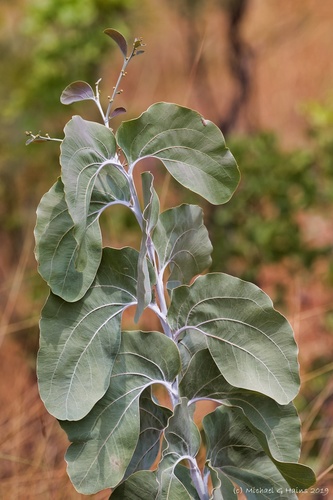
A shrub or small tree. It grows 5 m tall. There are prickles along the stem. The leaves are twice divided and there are 8-18 pairs of pinnae. There are up to 50 pairs of pinnules on each pinnae. The flowers are yellow. They are in large clusters at the ends of branches. The pods are flattened.
Edible Uses
Flowers are cooked and, being rich in pollen, are frequently used in fritters. They have a delicate, sweet perfume.
Traditional Uses
The flowers can be fried and eaten. They are mixed with a light batter and made into fritters. These can be served with sugar and whipped cream.
This uses section is brief — help expand it
Medicinal Uses
None known.
Distribution
It is a subtropical plant. It occurs naturally in New South Wales and Queensland in Australia. It prefers light to medium soils but will grow on almost any soil. It needs an open sunny position. It is a little drought and frost tolerant. It can be damaged by frost while young. It may need extra water in dry periods. It will grow from tropical to temperate climates. It needs good drainage. It needs a rainfall above 50 mm per year. It suits hardiness zones 9-11. Arboretum Tasmania.
Where It Grows
Africa, Argentina, Asia, Australia, Brazil, East Africa, Eswatini, Ethiopia, India, Indochina, Indonesia, Kenya, Malawi, Malaysia, Mauritius, Mozambique, Myanmar, New Zealand, Reunion, SE Asia, South Africa, Southern Africa, South America, Sri Lanka, Swaziland, Tanzania, Tasmania, Vietnam, Zimbabwe,
Cultivation
It is grown from seed. The seed need treatment to break the hard seed coat. Normally this is by putting the seeds in very hot water and letting the water cool down overnight then planting the seeds immediately. If the seed are grown in a nursery the seeds grow quickly but the plants suffer a set back when transplanted. It can be heavily pruned after flowering to maintain a bushy growth pattern. It develops sooty mould in humid areas.
Propagation
Seed is best sown as soon as it is ripe in a sunny position in a warm greenhouse. Stored seed should be scarified, pre-soaked for 12 hours in warm water, then sown in a warm greenhouse in March; germination takes 3–4 weeks at 25°C. Once seedlings are large enough to handle, prick them out into individual pots and grow on in a sunny greenhouse through their first winter. Plant out in late spring or early summer after the last expected frosts, with some cold protection recommended for the first winter outdoors. Cuttings of half-ripe wood with a heel can be taken in July or August, potted individually in a frame, overwintered in a greenhouse, and planted out in late spring or early summer. Success rate is fair.
Other Uses
A yellow dye is obtained from the flowers and a green dye from the seed pods. When planted on steep slopes or other fragile soil systems, the plant's extensive root system binds the soil and helps prevent erosion. This species is a nitrogen fixer and is noted for its scent.
Production
It grows quickly. Flowering is July to October in Australia and pods occur October to November. It only lives for 10-15 years.
Notes
There are about 1,350 Acacia species. Over 1,000 occur in Australia. Also as Mimosaceae.
Nutrition
| Part | Moisture | kJ | kcal | Protein | Vit A | Vit C | Iron | Zinc |
|---|---|---|---|---|---|---|---|---|
| Seed | 6.5 | 1536 | 367 | 20.8 | — | — | — | — |
| Flowers | — | — | — | — | — | — | — | — |
Synonyms
Also Known As
Pearl acacia, Queensland Silver Wattle
References (27)
- Barwick, M., 2004, Tropical and Subtropical Trees. A Worldwide Encyclopedic Guide. Thames and Hudson p 4
- Bodkin, F., 1991, Encyclopedia Botanica. Cornstalk publishing, p 29
- Bonney, N., 1997, Economic Native Trees and Shrubs for South Australia. Greening Australia (SA) inc. Campbelltown SA 5074 p 15
- Brickell, C. (Ed.), 1999, The Royal Horticultural Society A-Z Encyclopedia of Garden Plants. Convent Garden Books. p 61
- Cribb, A.B. & J.W., 1976, Wild Food in Australia, Fontana. p 162
Show all 27 references Hide references
- Cronin, L., 1989, The Concise Australian Flora. Reed. p 145
- Cundall, P., (ed.), 2004, Gardening Australia: flora: the gardener's bible. ABC Books. p 78
- Dharani, N., 2002, Field Guide to common Trees & Shrubs of East Africa. Struik. p 33
- Doran, J.C., & Turnbull, J.W. (Eds), 1997, Australian Trees and Shrubs: species for land rehabilitation and farm plantings in the tropics. ACIAR Monograph No 24. p 349
- Elliot, W.R., & Jones, D.L., 1982, Encyclopedia of Australian Plants suitable for cultivation. Vol 2. Lothian. p 98
- Etherington, K., & Imwold, D., (Eds), 2001, Botanica's Trees & Shrubs. The illustrated A-Z of over 8500 trees and shrubs. Random House, Australia. p 55
- Facciola, S., 1998, Cornucopia 2: a Source Book of Edible Plants. Kampong Publications, p 151
- Gen. hist. 2:405. 1832
- Greig, D., 1996, Flowering Natives for Home Gardens. Angus & Robertson. p 37
- Hall, N. et al, 1972, The Use of Trees and Shrubs in the Dry Country of Australia, AGPS, Canberra. p 349
- Hearne, D.A., & Rance, S.J., 1975, Trees for Darwin and Northern Australia. AGPS, Canberra p 11 Pl 1
- Hussey, B.M.J., Keighery, G.J., Cousens, R.D., Dodd, J., Lloyd, S.G., 1997, Western Weeds. A guide to the weeds of Western Australia. Plant Protection Society of Western Australia. p 180
- ILDIS Legumes of the World http:www;ildis.org/Legume/Web
- Lazarides, M. & Hince, B., 1993, Handbook of Economic Plants of Australia, CSIRO. p 6
- Lord, E.E., & Willis, J.H., 1999, Shrubs and Trees for Australian gardens. Lothian. p 40
- Melzer, R. & Plumb, J., 2011, Plants of Capricornia. Belgamba, Rockhampton. p 196
- Morley, B. & Everard, B., 1970, Wild Flowers of the World. Ebury press. Plate 130
- Paczkowska, G . & Chapman, A.R., 2000, The Western Australian Flora. A Descriptive Catalogue. Western Australian Herbarium. p 319
- Pham-Hoang Ho, 1999, An Illustrated Flora of Vietnam. Nha Xuat Ban Tre. p 822
- Townsend, K., 1994, Across the Top. Gardening with Australian Plants in the tropics. Society for Growing Australian Plants, Townsville Branch Inc. p 63
- Williams, K.A.W., 1999, Native Plants of Queensland Volume 4. Keith A.W. Williams North Ipswich, Australia. p 30
- Young, J., (Ed.), 2001, Botanica's Pocket Trees and Shrubs. Random House. p 49