Poulsenia armata
(Miq.) Standl.
Thorny poulsenia
iNaturalist· cc-by
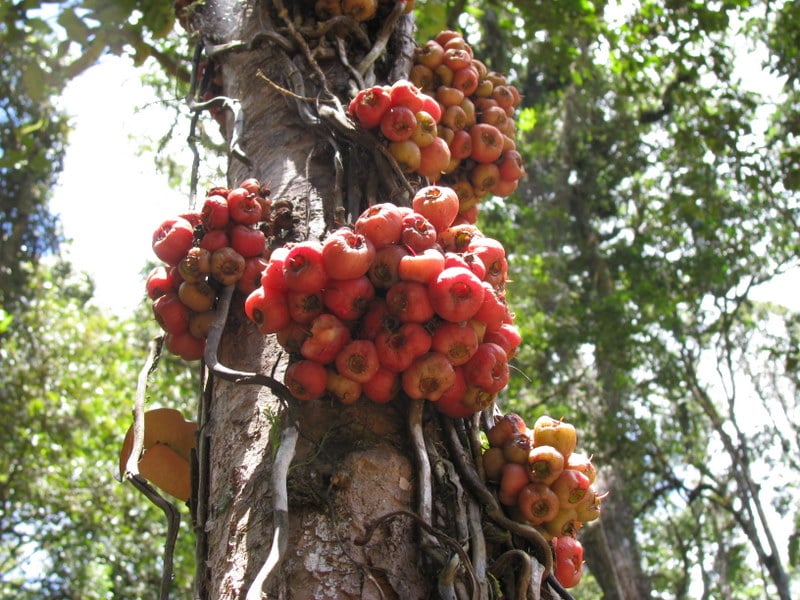
(c) Neptalí Ramírez Marcial, some rights reserved (CC BY), uploaded by Neptalí Ramírez Marcial
iNaturalist· cc-by-nc-sa
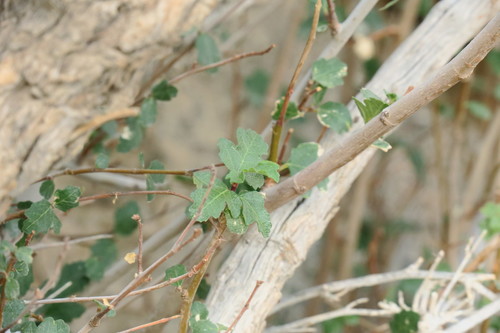
(c) MBG, some rights reserved (CC BY-NC-SA)
wikimedia· cc0
Wikimedia Commons - Henrik Franz Alexander von Eggers (1844–1903) del.
Description
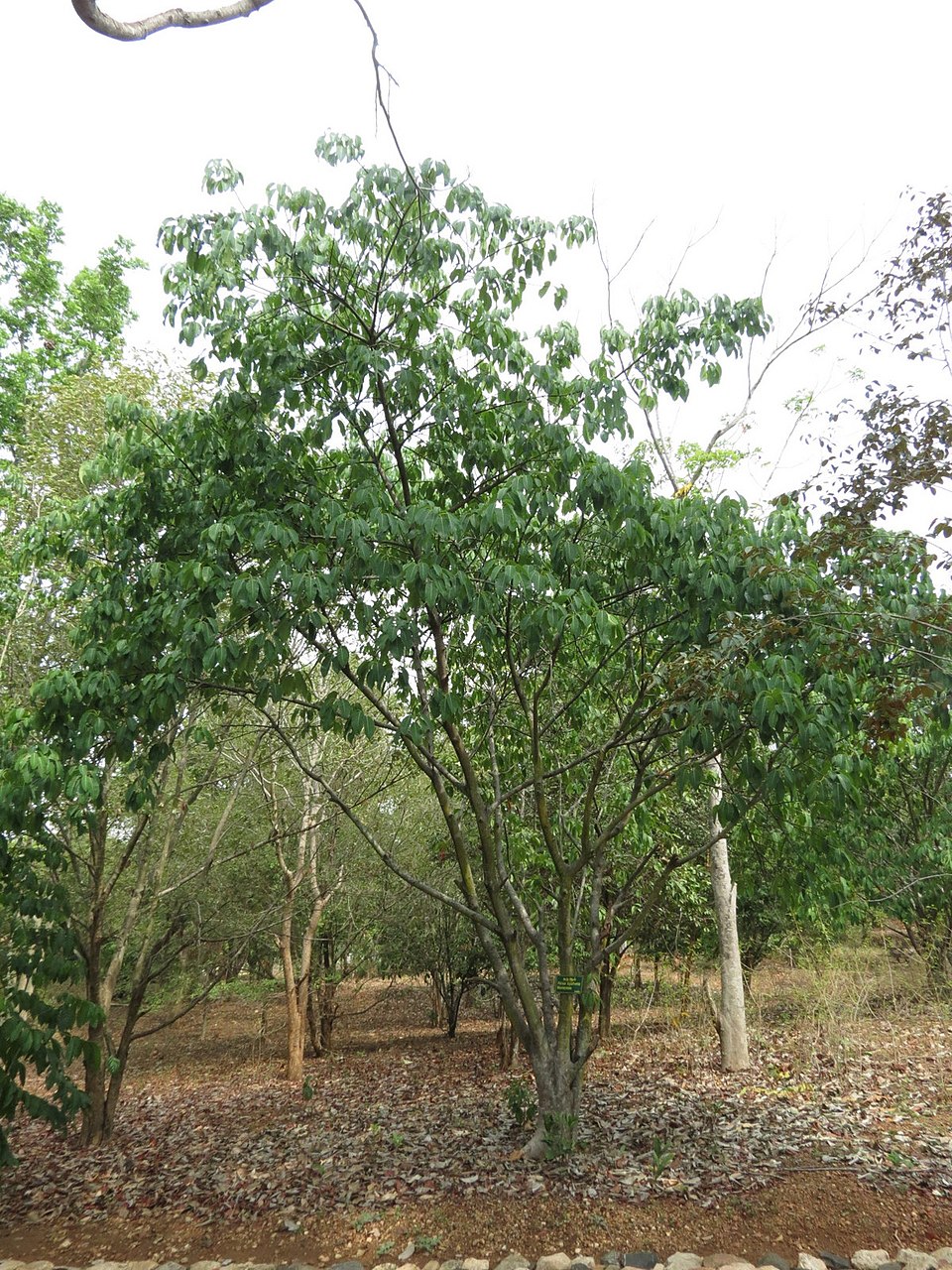
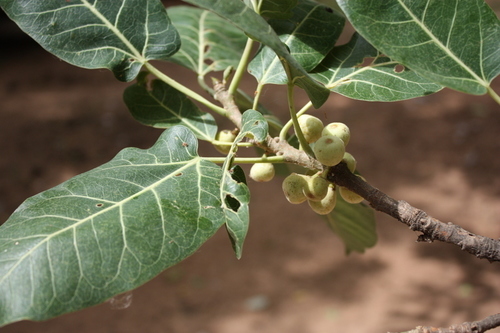
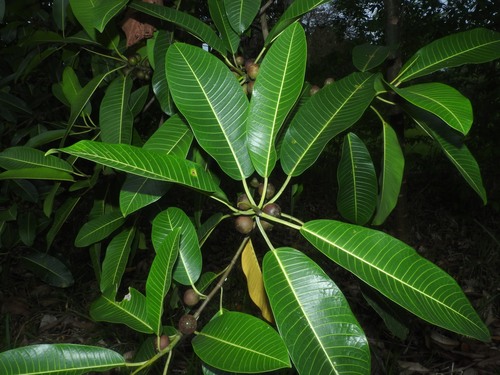
A tall tree. The bark is dark. Big trees have large buttresses. The trunk is large and branches are near the top. The leaves are large and rounded. They have small sharp spines along the veins underneath. Leaves on young trees are larger. Young trees also have sharp spines on the trunk. Broken parts produce white latex. The flowers are yellow and in small dense clusters. They develop small clusters of fruit.
Edible Uses
The fruit are eaten.
Distribution
It is a tropical plant. It grows in moist and wet forest.
Where It Grows
Amazon, Belize, Bolivia, Brazil, Central America, Colombia, Costa Rica, Ecuador, El Salvador, Guatemala, Honduras, Mexico, Nicaragua, North America, Panama, Peru, South America*, Venezuela,
Cultivation
A plant of the humid tropics.
Other Uses
A fibre is obtained from the bark. The inner bark is very thick and composed of numerous layers of strong crossed fibres - it is soaked in water and then beaten out into a coarse fabric that can be used for hammocks, blankets, women's clothes etc. Similar use of bark of Moraceae is made in many parts of the earth by primitive people, who sometimes, as in the Pacific islands, have made really handsome fabrics from it. It is quite probable that bark of some of the Guatemalan Moraceae may have been used in this manner by the Mayas or other Indians of northern Guatemala. The heartwood is absent, or not clearly distinguishable, from the yellowish-white sapwood which becomes brownish or oatmeal on exposure. The wood is not very durable. The lustre is rather high; the texture coarse; the grain straight to interlocked; the wood is without distinctive odour or taste. The wood saws woolly when green; it is difficult to plane smoothly if the grain is interlocked. It dulls tools rapidly because of the very high silica content of 7.32%. It is used for general interior construction work, crates and decorative veneer.
Synonyms
Also Known As
Abababite, Agabasgabi, Ancato, Bigta, Caatyeshichi, Carapacho, Carbon damagua, Carne de pescado, Carnero, Carnero blanco, Ccarapacha, Chanchama, Chi-chi-coste, Cocua, Corocho, Cucua, Chagane, Chichicaste, Chilamate espinoso, Damagua, Ecarapacha, Estopa, Guaimaro, Higueron, Huichilama, Ikor wala, Ila chama, Jabillo, Kaa tyashki chi, Kankoti, Lanchan, Llanchama, Lanchambam Majagua, Maja nei, Mastate, Matapolo, Namagua, Namaqua, Nonjapa, Omeganiko, Otobeyemo, Palo de majagua, Tachiore, Tamajawa, Tsaka wallis, Tumu, Tyashki chi jaki, Yanchama
References (11)
- Condit, R., et al, 2011, Trees of Panama and Costa Rica. Princeton Field Guides. p 322
- Grandtner, M. M., 2008, World Dictionary of Trees. Wood and Forest Science Department. Laval University, Quebec, Qc Canada. (Internet database http://www.wdt.qc.ca)
- Grandtner, M. M. & Chevrette, J., 2013, Dictionary of Trees, Volume 2: South America: Nomenclature, Taxonomy and Ecology. Academic Press p 520
- Ibarra-Manriquez, G., et al, 1997, Useful Plants of the Los Tuxtlas Rain Forest (Veracruz, Mexico): Considerations of their Market Potential. Economic Botany, Vol. 51, No. 4, pp. 362-376
- Kermath, B. M., et al, 2014, Food Plants in the Americas: A survey of the domesticated, cultivated and wild plants used for Human food in North, Central and South America and the Caribbean. On line draft. p 681
Show all 11 references Hide references
- Lopez-Diago, D. & Garcia, N., 2021, Wild edible fruits of Colombia. Biota ColomBiana 22 (2) p 43
- Mansfeld,
- Piedra-Malagón, E. M., et al, 2022, Edible native plants of the Gulf of Mexico Province. Biodiversity Data Journal 10: e80565 p 25
- Roa, J. A. G. & Boada, D. S. G., 2018, Fundación para el Fortalecimiento de la Fruticultura y Plantas Alimenticias no Convencionales en Colombia.
- Segura, S., et al, 2018, The edible fruit species in Mexico. Genet Resour Crop Evol (2018) 65:1767–1793
- Torre, de la, L., et al, 2008, Enciclopedia de las Plantas Útiles del Ecuador. Herbario QCA. Pontificia Universidad Católica del Ecuador. p 455