Streblus ilicifolius
(Vidal) Corner
Spiny serut tree
iNaturalist· cc-by
(c) Cheongweei Gan, some rights reserved (CC BY)
iNaturalist· cc-by
(c) Cheongweei Gan, some rights reserved (CC BY)
iNaturalist· cc-by
(c) Cheongweei Gan, some rights reserved (CC BY)
Description
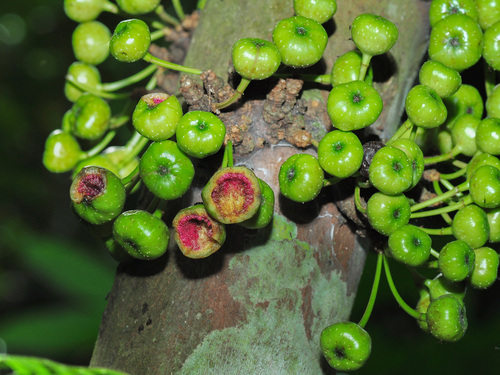
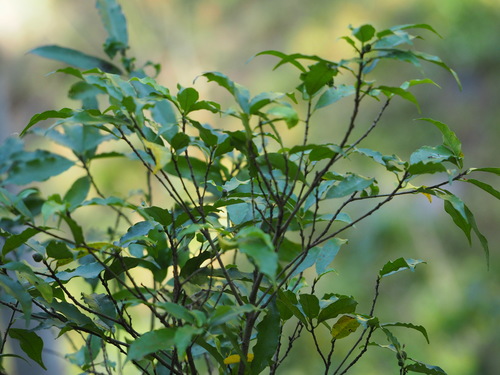
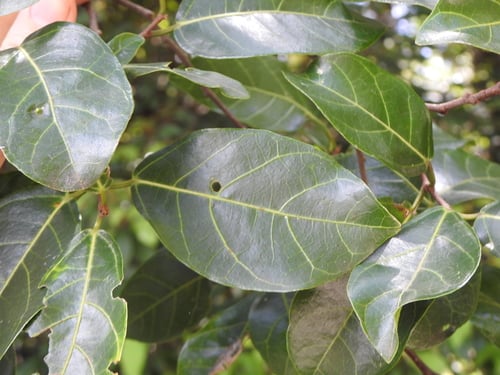
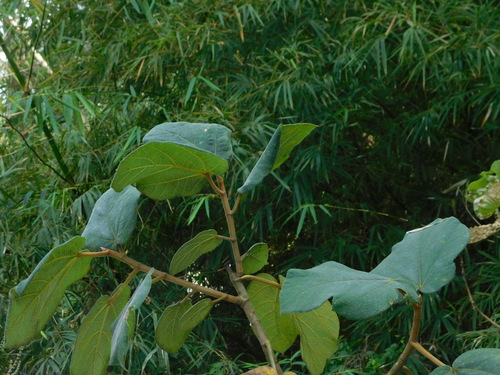
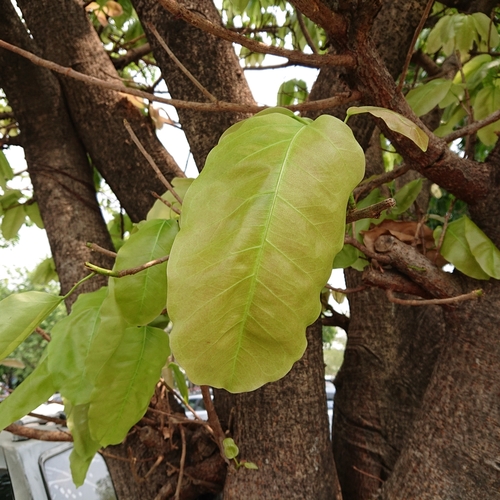
A small tree. It grows 10 m tall. The bark is greyish-white and smooth. The small branches are angular and have spines. These are 1-2 cm long. The leaves are oval and 1-5 cm long by up to 3 cm wide. The edges can curve back and have spiny teeth. The ripe fruit are black. They are 1 cm across.
Edible Uses
The flesh of the ripe fruit is eaten raw or cooked.
Traditional Uses
The flesh of the ripe fruit are eaten raw or cooked.
This uses section is brief — help expand it
Distribution
A tropical plant. It grows in limestone areas. It grows between 100-500 m above sea level in southern China.
Where It Grows
Asia, Bangladesh, China, India, Indochina, Indonesia, Laos, Malaysia, Myanmar, Philippines, SE Asia, Thailand, Vietnam,
Cultivation
Plants can be grown from seeds and stem cuttings.
Synonyms
Also Known As
Ki ret, Lelimau, Limau hutan, Limau lelang antan, Limau-limau, Limau nyanik, Pohon serut duri, Pokok renjis, Pokok temin, Sebantun, Semantan
References (7)
- Altschul, S.V.R., 1973, Drugs and Foods from Little-known Plants. Notes in Harvard University Herbaria. Harvard Univ. Press. Massachusetts. no. 679 (As Taxotrophis ilicifolia)
- Burkill, I.H., 1966, A Dictionary of the Economic Products of the Malay Peninsula. Ministry of Agriculture and Cooperatives, Kuala Lumpur, Malaysia. Vol 2 (I-Z) p 2165 (As Taxotrophis ilicifolia)
- Flora of China @ efloras.org Volume 5
- Milow, P., et al, 2013, Malaysian species of plants with edible fruits or seeds and their evaluation. International Journal of Fruit Science. 14:1, 1-27
- Ong, H., et al, 2012, Traditional knowledge and usage of edible plants among the Semai community of Kampung Batu 16, Tapah, Perak, Malaysia. Scientific Research and Essays Vol. 7(4), pp. 441-445, 30 January, 2012
Show all 7 references Hide references
- Sukarya, D. G., (Ed.) 2013, 3,500 Plant Species of the Botanic Gardens of Indonesia. LIPI p 528
- World Checklist of Useful Plant Species 2020. Royal Botanic Gardens, Kew