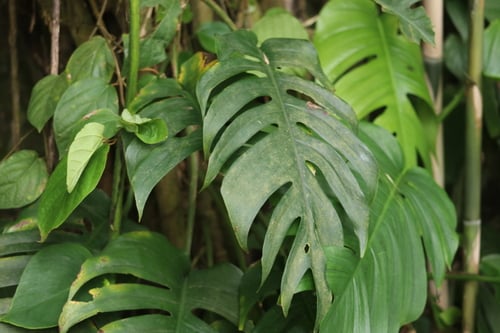
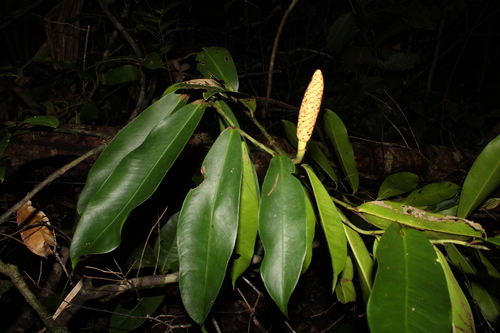
Syngonium podophyllum
Schott
Arrowhead vine
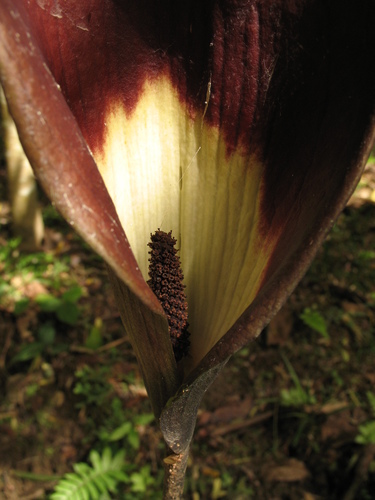
iNaturalist· cc-by-nc
(c) SunGW, some rights reserved (CC BY-NC)
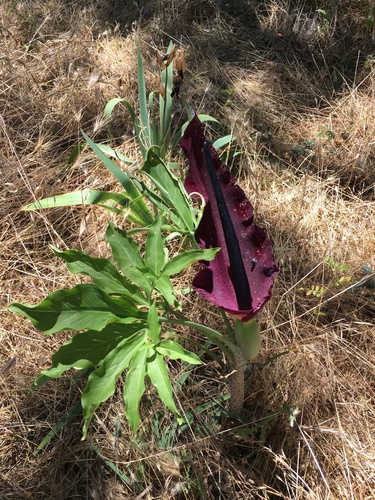
iNaturalist· cc-by-nc
(c) SunGW, some rights reserved (CC BY-NC)
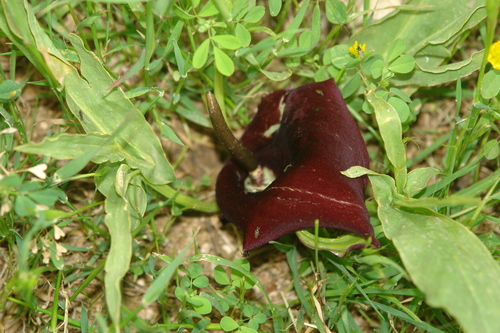
iNaturalist· cc-by-nc
(c) Martin Reith, some rights reserved (CC BY-NC)
Summary
Source: WikipediaSyngonium podophyllum is a species of aroid that is a popular houseplant. Common names include: arrowhead plant, arrowhead vine, arrowhead philodendron, goosefoot, nephthytis, African evergreen, and American evergreen. The species is native to a wide region of Latin America from Mexico through Bolivia, and naturalized in the West Indies, Florida, Texas, Hawaii, and other places.
Description
An evergreen climbing vine. It has roots that attach, to help it climb. It can be 10 m long. The young leaves are simple and green or with white patterns. They are 7-14 cm long. The leaf stalk is 15-60 cm long. The older leaves are divided to the leaf stalk and with 3 parts to the side lobes. The flowers are in a spike in the axils of leaves. The flowers are cream or white. The spike is 1-2 cm long. It has a yellow or white spathe around the flower spike. The fruit is a multiple fruit. It is 3-7 cm long and can be yellow, orange or red. The seeds are brown or black.
Edible Uses
The fruit can be eaten, though caution is advised.
Traditional Uses
Most Araceae can contain calcium oxalate that burns the lips and throat.
This uses section is brief — help expand it
Medicinal Uses
A decoction of the crushed and boiled leaf is used as a wash to treat stomachache. The milky-white sap from a broken stem is applied topically as a remedy for the bite of Paraponera ants. The sap is swabbed into the cavity of an aching tooth in order to relieve the pain. The roots and bark are antibacterial and antiinflammatory. They are used in the treatment of superficial and deep wound, and various skin disorders. Extracts of the leaves and bark have been shown to have a dose-dependent effect upon treating oedema, showing they they are potential sources of principles with high anti-inflammatory activity.
Known Hazards
All parts of Syngonium podophyllum are poisonous and cause severe mouth pain if eaten. It is not unusual to find these growing in Sub-tropical Florida landscapes, where homeowners and Gardeners need to be aware of the severe skin burning sensations caused by the plants sap containing oxalic acid and the eye damage potential from raphides.
Distribution
A tropical plant. It suits hardiness zones 9-12. It needs an even moisture. It needs a reasonably fertile and well drained soil. It can grow in part shade. In tropical Australia it grows from sea level to 10 m altitude. In Central America it grows from 100 - 550 m altitude.
Where It Grows
Asia, Australia, Belize, Bolivia, Brazil, Central America, Colombia, El Salvador, Guatemala, Guiana, Guianas, Guyana, Hawaii, Marquesas, Mexico*, Myanmar, North America, Pacific, Panama, Peru, Puerto Rico, SE Asia, Singapore, Slovenia, South Africa, Southern Africa, South America, Suriname, Tuvalu, USA, Venezuela, West Indies,
Cultivation
It can be grown from broken pieces of the stem.
Propagation
Seed - Stem cuttings root very easily - they form roots wherever they touch the ground and can also just be placed in a jar of water.
Other Uses
This is one of the species studied in a trial and found effective in helping to remove indoor air pollutants. A climbing plant, if left to scramble over the ground it can form a green mat of foliage around 15cm high, creating an excellent ground cover. It can become weedy, much the same as English ivy (Hedera spp) does, and will require regular trimming along the edges of the bed. It can also grow up into shrubs and trees so, unless you want this to happen, it is best located in front of a shrub area, or out by itself in the landscape.
Notes
There are 36 Syngonium species. It can become a problem plant to control in some locations. It can be invasive.
Synonyms
Also Known As
American evergreen, Aninga de cinco, Goosefoot plant, Sitton-sein, Singonio, Trilistni singonij, White butterfly, Xoochil
References (18)
- Altschul, S.V.R., 1973, Drugs and Foods from Little-known Plants. Notes in Harvard University Herbaria. Harvard Univ. Press. Massachusetts. no. 143
- Bot. Zeitung (Berlin) 9:85. 1851 (Syn. Aroid. 68. 1856)
- Burkill, I.H., 1966, A Dictionary of the Economic Products of the Malay Peninsula. Ministry of Agriculture and Cooperatives, Kuala Lumpur, Malaysia. Vol 2 (I-Z) p 2155
- Cooper, W. and Cooper, W., 2004, Fruits of the Australian Tropical Rainforest. Nokomis Editions, Victoria, Australia. p 62
- Daly, D. C., An Index of Common Names of Plants in Acre, Brazil. New York Botanical Garden Universidade Federal do Acre.
Show all 18 references Hide references
- Hibbert, M., 2002, The Aussie Plant Finder 2002, Florilegium. p 295
- http://www.b-and-t-world-seeds.com/Aroideth.htm
- http://www.botanic-gardens-ljubljana.com/en/plants
- Kermath, B. M., et al, 2014, Food Plants in the Americas: A survey of the domesticated, cultivated and wild plants used for Human food in North, Central and South America and the Caribbean. On line draft. p 846
- Llamas, K.A., 2003, Tropical Flowering Plants. Timber Press. p 87
- Marinelli, J. (Ed), 2004, Plant. DK. p 469
- NYBG herbarium 'edible"
- Piedra-Malagón, E. M. et al, 2022, Edible native plants of the Gulf of Mexico Province. Biodiversity Data Journal 10: e80565 p 11
- Recher, P, 2001, Fruit Spirit Botanical Gardens Plant Index. www.nrg.com.au/~recher/ seedlist.html p 7
- Roa, J. A. G. & Boada, D. S. G., 2018, Fundación para el Fortalecimiento de la Fruticultura y Plantas Alimenticias no Convencionales en Colombia.
- Segura, S. et al, 2018, The edible fruit species in Mexico. Genet Resour Crop Evol (2018) 65:1767–1793
- Staples, G.W. and Herbst, D.R., 2005, A tropical Garden Flora. Bishop Museum Press, Honolulu, Hawaii. p 612 (Drawing)
- Thaman, R. R, 2016, The flora of Tuvalu. Atoll Research Bulletin No. 611. Smithsonian Institute p 40