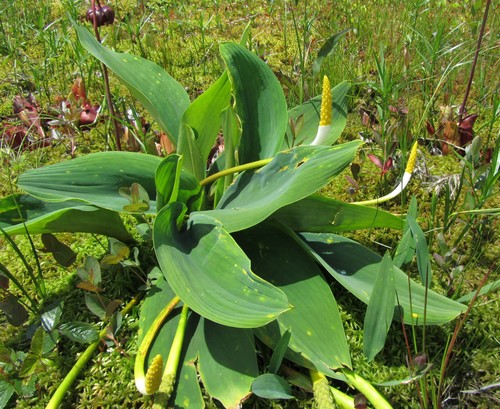
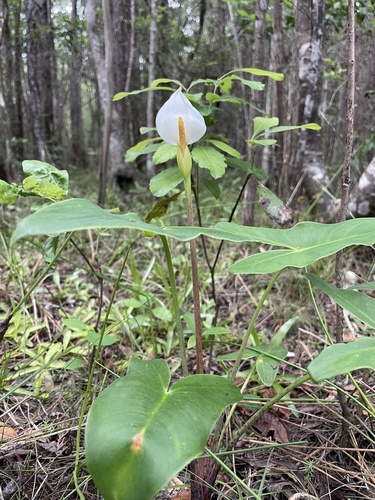
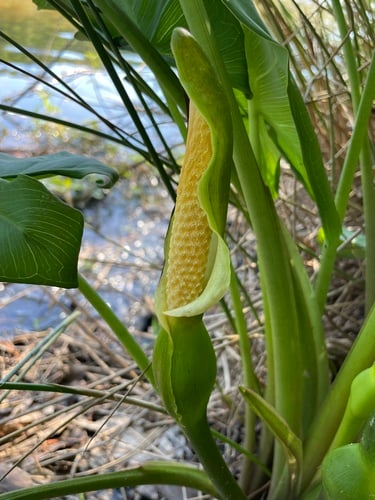
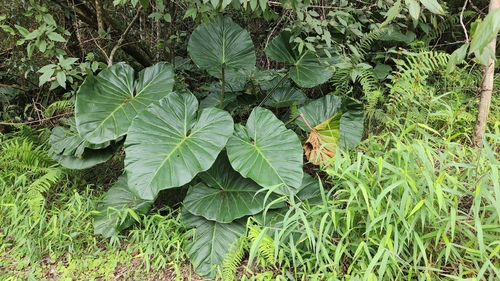
Symplocarpus renifolius
Schott.
iNaturalist· cc-by-nc
(c) V.S. Volkotrub, some rights reserved (CC BY-NC), uploaded by V.S. Volkotrub
iNaturalist· cc-by-nc
(c) sergey_stefanov, some rights reserved (CC BY-NC)
iNaturalist· cc-by-nc
(c) V.S. Volkotrub, some rights reserved (CC BY-NC), uploaded by V.S. Volkotrub
Summary
Source: WikipediaA perennial growing 0.5m tall, hardy to UK zone 4. Flowers February to April with seed ripening August to September. Hermaphroditic and insect-pollinated. Tolerates light sandy, medium loamy, and heavy clay soils, including very acidic soils, with preference for mildly acidic to neutral pH. Grows in semi-shade to full sun and prefers moist to wet soil.
Description
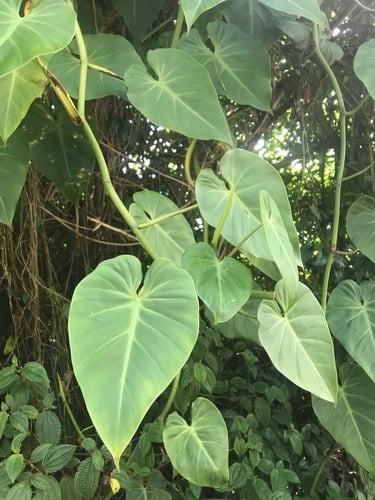
A herb. It keeps growing from year to year. It has rhizomes 7 cm across. The leaves are in a ring. The leaf stalk is 40 cm long by 1 cm across. The leaves are round or heart shaped and 30-40 cm long and wide. The flowers appear before the leaves.
Edible Uses
Young leaves are edible when cooked.
Medicinal Uses
None known
Known Hazards
Since its roots are antispasmodic, diaphoretic, diuretic, emetic, expectorant, and slightly narcotic, it is not recommended to consume the raw plant directly. While high quantities of the root can produce nausea and vomiting, headaches, and dizziness, handling the fresh leaves can burn skin. Other symptoms of poisoning include swelling of the lip, throat, and tongue. This is due to calcium oxalate crystals, which are moderately harmful to humans. It is possible to eliminate the toxicity with care, such as changing the water frequently when boiling the leaves, or thoroughly drying the plant.
Distribution
It is a temperate plant. It grows in wet places and swamp forests below 300 m above sea level in north China.
Where It Grows
Asia, China, Japan, Korea, Russia,
Cultivation
We have very little information on this species and do not know if it will be hardy in Britain, though judging by its native range, it should succeed outdoors in many parts of this country. The following notes are based on the general needs of the genus. Succeeds in sun or shade in deep, moist, wet, lime-free soil that is rich in organic matter. Grows well in a bog garden or along the wet banks of streams and ponds. All parts of the pant, but especially the flowers, have a strong unpleasant aroma. The plant can raise the temperature of its inflorescence by 15 - 35°c above the ambient air temperature, thus protecting itself from frost and helping to attract pollinating insects.
Propagation
Sow seed as soon as it is ripe in a cold frame for best results. If not sown immediately, store seed in water. Stored seed can be sown in late winter or early spring. Stand the pot in 2cm of water to keep the compost consistently wet. Seedlings should germinate in spring; prick out into individual pots once large enough to handle and grow on in wet soil in light shade in the greenhouse for at least the first winter. Plant out in late spring once large enough. Division can be done with great care while the plant is dormant.
Other Uses
None known Special Uses Scented Plants
Notes
There are 3 Symplocarpus species.
References (1)
- Plants for a Future database, The Field, Penpol, Lostwithiel, Cornwall, PL22 0NG, UK. http://www.scs.leeds.ac.uk/pfaf/