Spirodela polyrrhiza - (L.)Schleid.
(L.)Schleid.
Great Duckweed, Common duckmeat
gbif· cc-by-nc
Ajay Malik.
gbif· cc-by-nc
Ajay Malik.
gbif· cc-by-nc
Ajay Malik.
Description
Spirodela polyrrhiza is a PERENNIAL at a fast rate. See above for USDA hardiness. It is hardy to UK zone 5. It is in flower in July. The species is monoecious (individual flowers are either male or female, but both sexes can be found on the same plant). Suitable for: light (sandy), medium (loamy) and heavy (clay) soils. Suitable pH: mildly acid, neutral and basic (mildly alkaline) soils. It cannot grow in the shade. It can grow in water.
Edible Uses
The plant is sometimes used as a food. No more details are given.
Medicinal Uses
Antipruritic Antipyretic Cardiotonic Carminative Diaphoretic Diuretic. The whole plant is antipruritic, antipyretic, cardiotonic, carminative, diaphoretic, diuretic. It stimulates the appearance of measles rash. It is used in the treatment of colds, measles, oedema and difficulty in urination.
Distribution
Europe, including Britain, south and east from Scandanavia to N. Africa and Asia. America, Australia
Where It Grows
Coming Soon
Cultivation
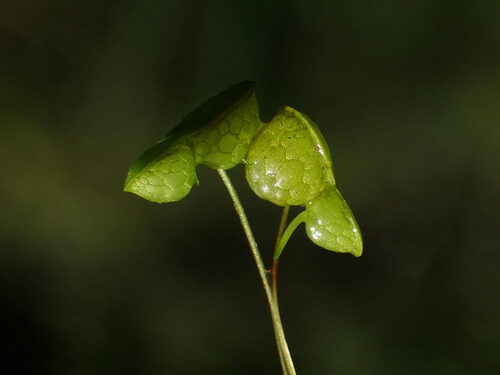
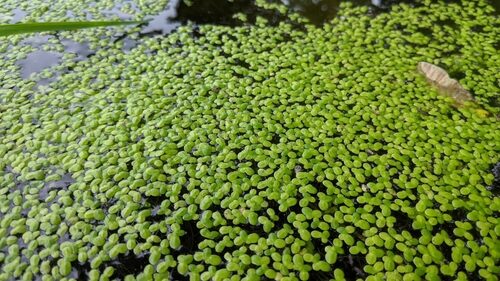
Requires a sunny position in still water that is rich in nitrates and lime. A very small plant without differentiation into various parts such as leaf, stem etc (they are called Thalli), it is 8mm in diameter and often forming a mat on the water surface and perennating by means of buds (turions) that sink in autumn and rise to the surface in spring. The so-called rootcap (really only an apical swelling), has a higher specific gravity than any other part of the plant, righting capsized individuals. The plant rarely flowers, spreading mainly by vegetative means.
Propagation
The plant divides freely in the growing season and does not need help.