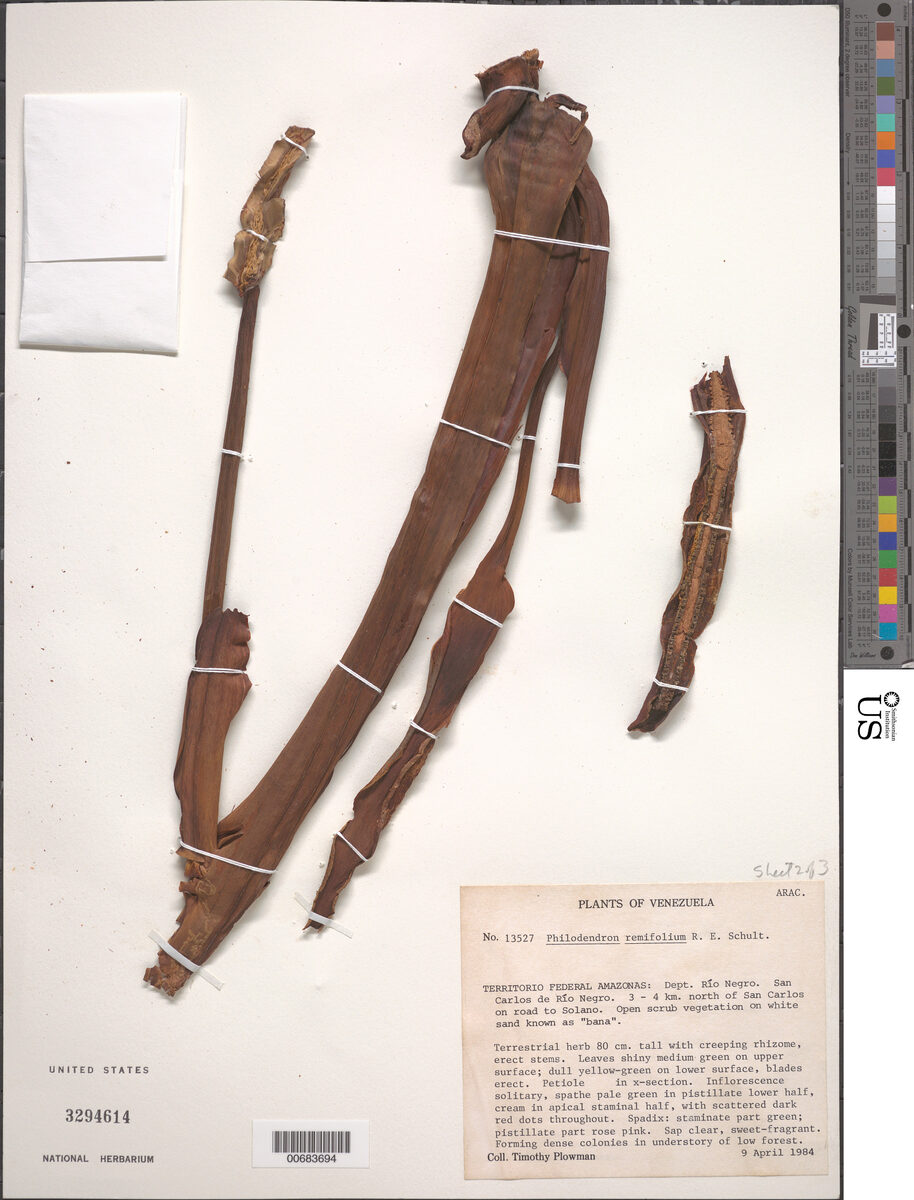
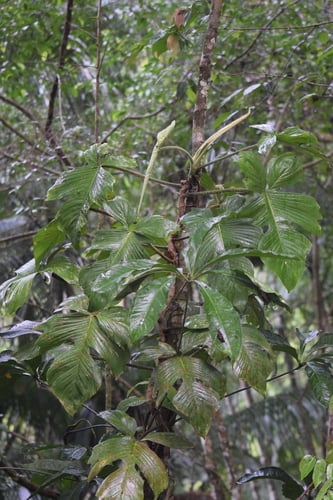
Symplocarpus foetidus
(Linnaeus) Salisbury ex W. P. C. Barton
Skunk cabbage, Swamp cabbage, Stinking poke
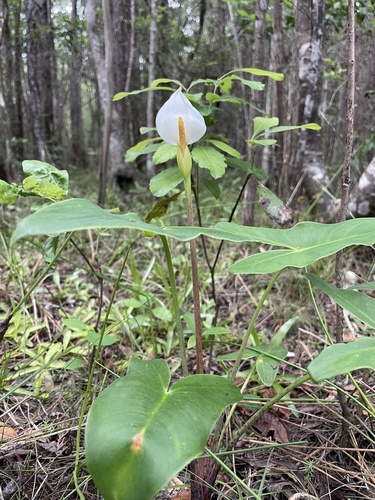
iNaturalist· cc-by-nc
(c) Clare Dellwo Cole, some rights reserved (CC BY-NC), uploaded by Clare Dellwo Cole
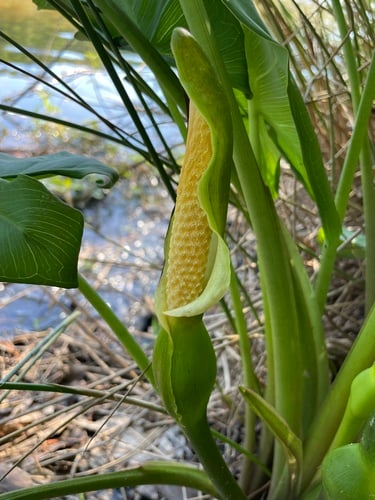
iNaturalist· cc-by-sa
(c) Douglas Goldman, some rights reserved (CC BY-SA), uploaded by Douglas Goldman
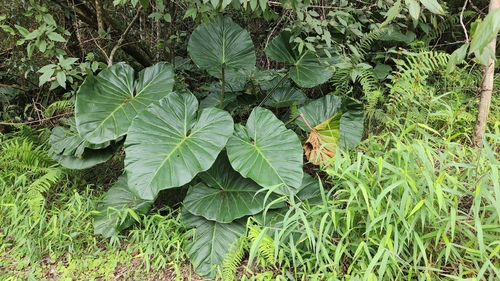
iNaturalist· cc-by-nc-sa
(c) A. R., some rights reserved (CC BY-NC-SA), uploaded by A. R.
Summary
Source: WikipediaSymplocarpus foetidus, commonly known as skunk cabbage or eastern skunk cabbage (also swamp cabbage, clumpfoot cabbage, or meadow cabbage, foetid pothos or polecat weed), is a low-growing plant that grows in wetlands and moist hill slopes of eastern North America. Bruised leaves present an odor reminiscent of skunk. Symplocarpus combines the Greek word symploce, meaning "connection" and carpos, meaning "fruit", to indicate that the plant has a compound fruit. Linnaeus gave the plant its species name of foetidus, Latin for "bad-smelling". The plant produces a strong odor, which is repulsive to many but sometimes described as smelling like "fresh cabbage with a slight suggestion of mustard". The odor increases in intensity over time, as the plant matures, likely due to increased ripeness in the plant's stamens.
Description
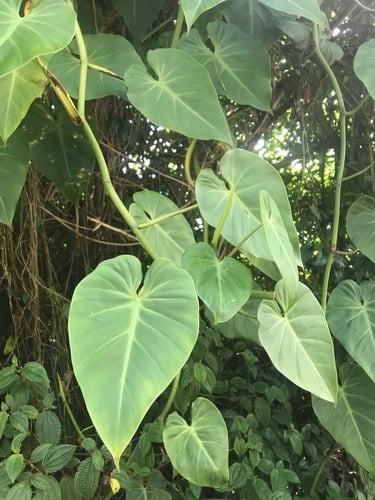
A herb that grows in swamps. It keeps growing from year to year. It grows 30-60 cm tall. The leaves are pale green and 30-40 cm wide and up to 1.2 m long. The flowers are greenish purple. They have a greenish yellow spadix 5-10 cm long. They have a purple spathe around them. The flower can give off an unpleasant smell.
Edible Uses
Both the root and young leaves are edible but must be thoroughly prepared before eating. The root must be either dried for at least 5 weeks or boiled for 3 days before consumption. Young leaves are cooked and have a peppery flavour; the cooking water should be changed at least once during the process. The leaves must be thoroughly cooked.
Traditional Uses
The rhizomes or underground stems are used to make a peppery bread. It is dried and made into flour. Root used as an emergency food after drying or baking. The young leaves are cooked and eaten as a vegetable Caution: Plants in this family usually have oxalate crystals and need special preparation.
Medicinal Uses
Skunk cabbage was widely used by native North American peoples, primarily for its expectorant and antispasmodic properties in treating bronchitis and asthmatic conditions — a use that continues in modern herbalism, though the plant should be used with caution and preferably under professional supervision. Handling fresh leaves can cause the skin to blister, and excessive doses of the root can cause nausea, vomiting, headaches, and dizziness. The root is antispasmodic, diaphoretic, diuretic, emetic, expectorant, and slightly narcotic. The rootstock is harvested in late autumn or early spring and dried for later use; it should not be stored for long as it loses medicinal potency. Internally, it has been used for respiratory and nervous disorders including asthma, whooping cough, catarrh, bronchitis, and hay fever, and occasionally for epilepsy, headaches, vertigo, and rheumatic problems. Externally, it has been applied as a poultice to draw out splinters and thorns, heal wounds, and treat headaches. Root hairs or rootlets have been placed in dental cavities to relieve toothache, and a tea made from root hairs has been used externally to stop bleeding. Crushed leaves have been inhaled to treat headaches, and leaf bases applied as a wet dressing to bruises.
Known Hazards
Since its roots are antispasmodic, diaphoretic, diuretic, emetic, expectorant, and slightly narcotic, it is not recommended to consume the raw plant directly. While high quantities of the root can produce nausea and vomiting, headaches, and dizziness, handling the fresh leaves can burn skin. Other symptoms of poisoning include swelling of the lip, throat, and tongue. This is due to calcium oxalate crystals, which are moderately harmful to humans. It is possible to eliminate the toxicity with care, such as changing the water frequently when boiling the leaves, or thoroughly drying the plant.
Distribution
A temperate plant. It grows in wet and seasonally flooded places.
Where It Grows
Britain, Canada, China, Europe, France, Germany, Italy, Japan, Mediterranean, Netherlands, North America, Russia, USA,
Cultivation
Plants can be grown from fresh seed sown into mud.
Propagation
Sow seed as soon as it is ripe in a cold frame for best results. If not sown immediately, store seed in water. Stored seed can be sown in late winter or early spring. Stand the pot in 2cm of water to keep the compost consistently wet. Seedlings should germinate in spring; prick out into individual pots once large enough to handle and grow on in wet soil in light shade in the greenhouse for at least the first winter. Plant out in late spring once large enough. Division can be done with great care while the plant is dormant.
Other Uses
An infusion of the powdered root has been used as a wash to eliminate strong body odour from under the arms.
Notes
It is used in medicine. There are 3 Symplocarpus species. It contains 5-hyrdoxy-tryptamine that can effect Serotonine absorption.
Synonyms
References (19)
- Beckstrom-Sternberg, Stephen M., and James A. Duke. "The Foodplant Database." http://probe.nalusda.gov:8300/cgi-bin/browse/foodplantdb.(ACEDB version 4.0 - data version July 1994) (As Spathyema foetida)
- Brown, D., 2000, Aroids. Plants of the Arum family. Timber Press. (Second edition) p 270
- HARRIS, (As Spathyema foetida)
- http://www.b-and-t-world-seeds.com/Aroideth.htm
- KEPHART, (As Spathyema foetida)
Show all 19 references Hide references
- Kermath, B. M., et al, 2014, Food Plants in the Americas: A survey of the domesticated, cultivated and wild plants used for Human food in North, Central and South America and the Caribbean. On line draft. p 845
- Kiple, K.F. & Ornelas, K.C., (eds), 2000, The Cambridge World History of Food. CUP p 1852
- Kuhnlein, H. V. and Turner, N. J., 1991, Traditional Plant Foods of Canadian Indigenous Peoples. Food and Nutrition in History and Anthropology Volume 8. Gordon and Breach. p 41
- Lim, T. K., 2015, Edible Medicinal and Non Medicinal Plants. Volume 9, Modified Stems, Roots, Bulbs. Springer p 79
- MacKinnon, A., et al, 2009, Edible & Medicinal Plants of Canada. Lone Pine. p 165
- Moerman, D. F., 2010, Native American Ethnobotany. Timber Press. p 548
- PARKER, (As Spathyema foetida)
- Plants for a Future database, The Field, Penpol, Lostwithiel, Cornwall, PL22 0NG, UK. http://www.scs.leeds.ac.uk/pfaf/
- Romanowski, N., 2007, Edible Water Gardens. Hyland House. p 116
- RUSBY, (As Spathyema foetida)
- Toupal, R. S. & Hollenback, K., 2009, An Ethnobotany of Indiana Dunes National Lakeshore: Plant Uses of the Ojibwa People. Bureau of Applied Research in Anthropology. University of Arizona
- Veg. mater. med. U.S. 1:123. 1817
- WAUGH, (As Spathyema foetida)
- Yanovsky, E., 1936, Food Plants of the North American Indians. United States Department of Agriculture Miscellaneous Publication No 237. Washington, D.C. (As Spathyema foetida)