Blyxa echinosperma
(C.B. Clarke) Hook.f.
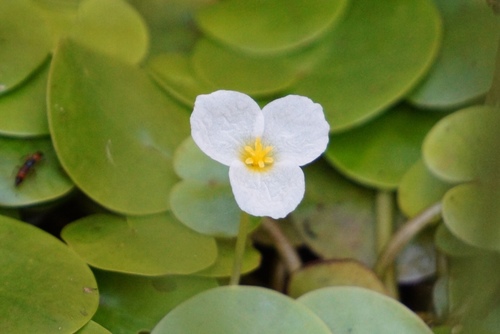
iNaturalist· cc0
no rights reserved, uploaded by S.MORE
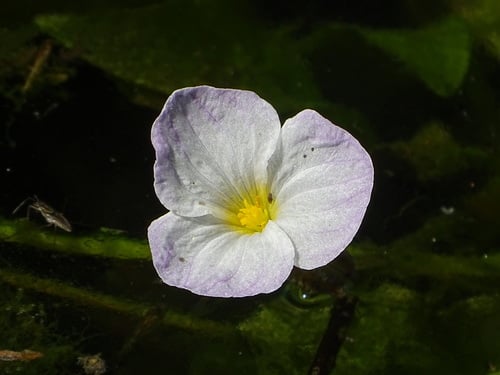
iNaturalist· cc-by
(c) chiuluan, some rights reserved (CC BY)
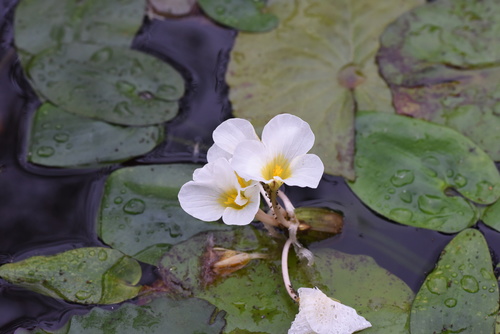
iNaturalist· cc-by
(c) chiuluan, some rights reserved (CC BY)
Description
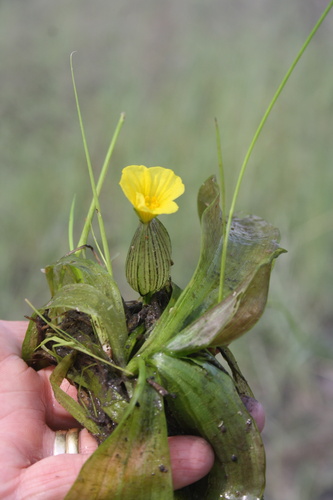
An annual underwater plant. It has runners or stolons. The leaves are like ribbons. They narrow at the end and have an easy to see midrib and veins which run along the leaf. Leaves are 2.5-60 cm long and 0.2-1.2 cm wide. The bract around the flowers is 2-12 cm long and forms a cylinder. There is one or two flowers like stalks. They form tubes. The fruit is 2-8 cm long and 0.5 cm wide. There are many seeds inside. These are 1-2 mm long.
Edible Uses
The young crisp leaves are served with fermented fish and are sold in markets.
Traditional Uses
The young leaves are crisp and served with fermented fish.
This uses section is brief — help expand it
Distribution
A tropical plant. It grows in still or slow moving fresh water. It grows in paddy fields and channels. In Sichuan.
Where It Grows
Asia, Australia, Bangladesh, China, Himalayas, India, Indochina, Indonesia, Japan, Korea, Malaysia, Myanmar, Nepal, Papua New Guinea, PNG, Philippines, SE Asia, Sri Lanka, Taiwan, Thailand, Vietnam,
Other Information
They are sold in markets.
Notes
There are 10 Blyxa species. They grow in the tropics. The Hydrocharitaceae grow in water.
Also Known As
Santawaa bai khaao
References (3)
- Jacquat, C., 1990, Plants from the Markets of Thailand. D.K. Book House p 100
- Paczkowska, G. & Chapman, A.R., 2000, The Western Australian Flora. A Descriptive Catalogue. Western Australian Herbarium. p 68
- Slocum, P.D. & Robinson, P., 1999, Water Gardening. Water Lilies and Lotuses. Timber Press. p 74