Vallisneria nana
R.Br.
Cat Weed, Ribbonweed
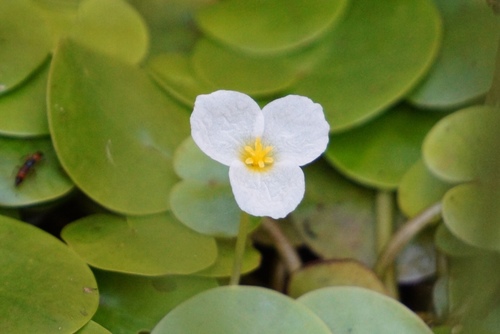
iNaturalist· cc-by-nc
(c) Penny Wang, some rights reserved (CC BY-NC), uploaded by Penny Wang
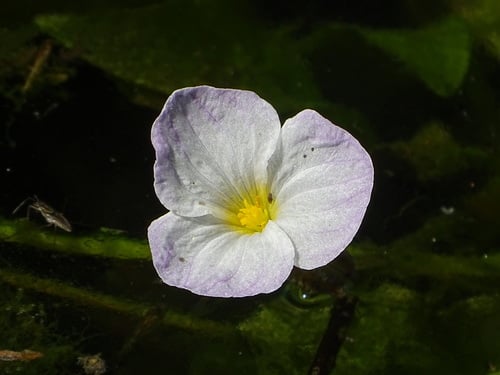
iNaturalist· cc-by-sa
(c) Greg Tasney, some rights reserved (CC BY-SA)
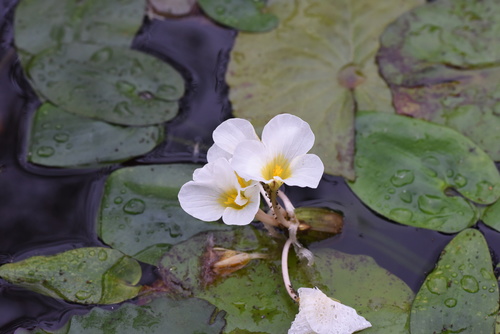
iNaturalist· cc-by-sa
(c) Greg Tasney, some rights reserved (CC BY-SA)
Description
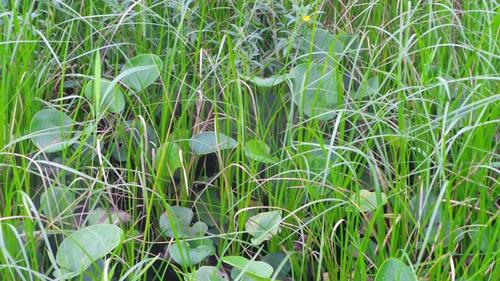
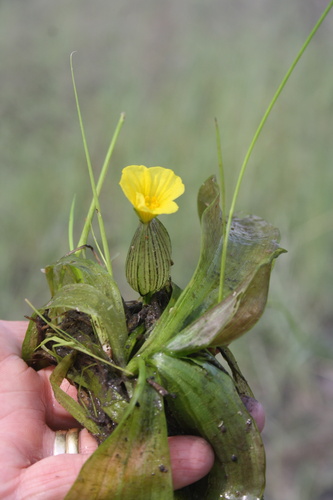
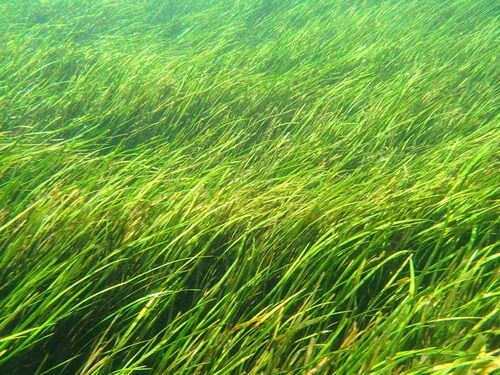
A herb which grows in fresh water. It forms tufts. It has stolons or runners. These are light brown or white. It has long ribbon like leaves. These form roots and new tufts of leaves at intervals. The leaves form at the base. The length of the leaves varies with the depth of the water. They can be 3 m long. They are thin and 1 cm or less wide. There are 5-9 parallel veins. The leaves are bright green but get covered with brown slime in dirty water. The flowers float. The flowers are of one sex. They form in the axils of leaves. There are many male flowers less than 1 mm across. They are on a central axis and enclosed in a spathe 1-2 cm long. This opens allowing the male flowers to float freely on the water surface. The female flowers occur singly. They are 1.5-2.5 cm long on a stalk 1 m long.
Edible Uses
The young leaves are cooked and eaten as a vegetable, and the tubers and roots are also edible.
Traditional Uses
The young leaves are cooked and eaten as a vegetable.
This uses section is brief — help expand it
Distribution
A tropical plant. Common and widely distributed throughout the Islands of the Philippines in shallow lakes and slowly running streams. Maximum growth occurs about 25°C. It can grow in slightly salty water. Tasmania Herbarium.
Where It Grows
Asia*, Australia*, Cambodia, Indochina, Pacific, Philippines, SE Asia, Tasmania,
Cultivation
Plants can be grown by cuttings, by division of the roots and also by seed.
Notes
Now a form of Vallisneria americana.
Synonyms
Also Known As
Eelweed, Sabutan-Buaia, Sintas-sintasan
References (11)
- Ambasta, S.P. (Ed.), 2000, The Useful Plants of India. CSIR India. p 667
- Bodkin, F., 1991, Encyclopedia Botanica. Cornstalk publishing, p 1005
- Brown, W.H., 1920, Wild Food Plants of the Philippines. Bureau of Forestry Bulletin No. 21 Manila. p 26
- Burkill, I.H., 1966, A Dictionary of the Economic Products of the Malay Peninsula. Ministry of Agriculture and Cooperatives, Kuala Lumpur, Malaysia. Vol 1 (A-H) p 343
- den Hartog, C., 1957, Hydrocharitaceae in Flora Malesiana 5(4) p 387
Show all 11 references Hide references
- Lazarides, M. & Hince, B., 1993, Handbook of Economic Plants of Australia, CSIRO. p 244
- Martin, F.W. & Ruberte, R.M., 1979, Edible Leaves of the Tropics. Antillian College Press, Mayaguez, Puerto Rico. p 195
- Monsalud, M.R., Tongacan, A.L., Lopez, F.R., & Lagrimas, M.Q., 1966, Edible Wild Plants in Philippine Forests. Philippine Journal of Science. p 483
- Sainty, G.R. & Jacobs, S.W.L., 1981, Waterplants of New South Wales. Water Resources Commission. NSW p 249
- Terra, G.J.A., 1973, Tropical Vegetables. Communication 54e Royal Tropical Institute, Amsterdam, p 80
- World Checklist of Useful Plant Species 2020. Royal Botanic Gardens, Kew