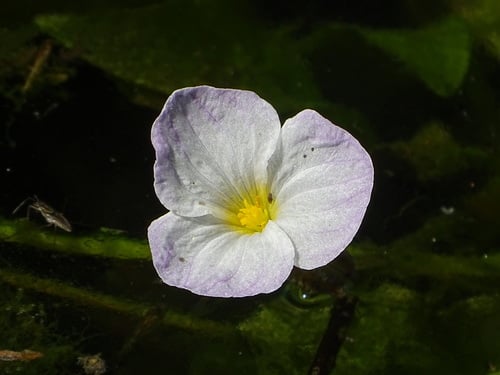
Vallisneria spiralis
Linnaeus
Eel grass, Tape-grass, Wild celery
iNaturalist· cc-by-nc
(c) Andrey Efremov, some rights reserved (CC BY-NC), uploaded by Andrey Efremov
iNaturalist· cc-by
(c) Samuel A Schmid, PhD, PWS, some rights reserved (CC BY)
iNaturalist· cc-by
(c) Samuel A Schmid, PhD, PWS, some rights reserved (CC BY)
Summary
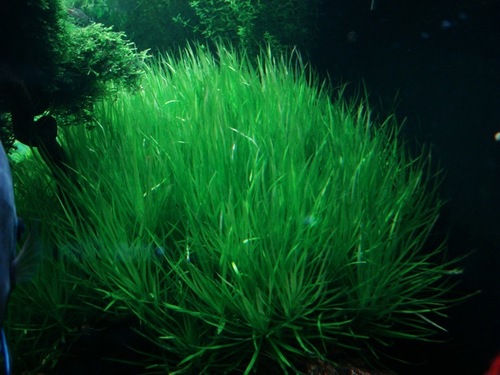
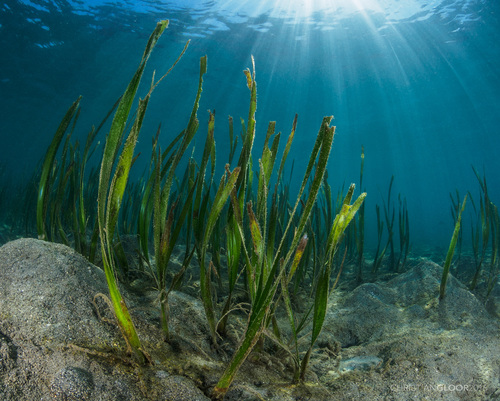
Source: WikipediaVallisneria spiralis, also known as straight vallisneria, tape grass, or eel grass is a common aquarium plant that prefers good light and a nutrient rich substrate. In the wild, it can be found in tropical and sub-tropical regions worldwide.
Description
A plant which grows under water. The leaves are like ribbons. They grow in rings. They are 20-80 cm long by 0.5-1.3 cm wide. The leaf veins run parallel along the leaf. There are small dents near the leaf tip. Male and female plants are separate. The flower stalk forms spirals. The male flowers break off and swim to the surface to release their pollen. The spiral flower stalk contracts and the seeds ripen below water level. It has many different growth forms.
Edible Uses
Young leaves are eaten raw. The dried leaves are nutritionally notable, containing 14.1% ash, 1154mg calcium, 3205mg phosphorus, and 141mg iron per 100g dry weight.
Traditional Uses
The young leaves are eaten in salads.
This uses section is brief — help expand it
Medicinal Uses
The plant is aperitif, demulcent, refrigerant, and stomachic, and is used in the treatment of women's complaints. It is used specifically for leucorrhoea and is made into a tea combined with sesame (Sesamum indicum) to improve the appetite.
Distribution
It is a tropical plant. It will grow in the subtropics. It is grown in aquaria. It grows in still and flowing water.
Where It Grows
Africa, Asia, Australia, Bangladesh, Botswana, Britain, China, Europe, India, Indochina, Japan, Luxembourg, Myanmar, North Africa, Pakistan, SE Asia,
Cultivation
A water plant for a large aquarium or for deep water outdoors, it prefers slightly acid conditions in a sunny position. This species is not very hardy in Britain, though it should succeed outdoors in the mildest areas of the country. A valuable water oxygenator. The leaves can be up to 1 metre long. Dioecious, male and female plants must be grown if seed is required. Male flowers are produced below the surface of the water and females are produced on the surface. Fertilization takes place when male flowers break off the plant, float to the surface and fall into a slight depression formed by the female flowers on the surface of the water.
Propagation
No specific information is available for this species, but sowing seed in a warm greenhouse as soon as it is ripe is suggested. Lay seed on the surface of a pot of soil and immerse it in water. Once seedlings are large enough to handle, prick them out into individual pots and grow on in water in the greenhouse through their first winter. Plant out into permanent positions in late spring or early summer, after the last expected frosts. The plant can also be propagated by division of rooted runners during the growing season.
Other Uses
None known.
Also Known As
Hasururibbongida, Jal sarpolian, Jallil, Kudare-baladagida, Nga-shint-myet, Panchadub, Pata sheeola, Phiti-chesaivale, Punatsu, Sawala, Syala, Ye-nhyi
References (13)
- Ambasta, S.P. (Ed.), 2000, The Useful Plants of India. CSIR India. p 667
- BARC, 2016, State of Biodiversity for Food and Agriculture in Bangladesh. Bangladesh Agricultural Research Council.
- Burkill, I.H., 1966, A Dictionary of the Economic Products of the Malay Peninsula. Ministry of Agriculture and Cooperatives, Kuala Lumpur, Malaysia. Vol 1 (A-H) p 343
- Grubben, G. J. H. and Denton, O. A. (eds), 2004, Plant Resources of Tropical Africa 2. Vegetables. PROTA, Wageningen, Netherlands. p 565
- Heywood, V.H., Brummitt, R.K., Culham, A., and Seberg, O., 2007, Flowering Plant Families of the World. Royal Botanical Gardens, Kew. p 3723
Show all 13 references Hide references
- Hibbert, M., 2002, The Aussie Plant Finder 2002, Florilegium. p 305
- Morley, B.D., & Toelken, H.R., (Eds), 1983, Flowering Plants in Australia. Rigby. p 316
- Plants for a Future database, The Field, Penpol, Lostwithiel, Cornwall, PL22 0NG, UK. http://www.scs.leeds.ac.uk/pfaf/
- Slocum, P.D. & Robinson, P., 1999, Water Gardening. Water Lilies and Lotuses. Timber Press. p 87
- Sp. pl. 2:1015. 1753
- Staples, G.W. and Herbst, D.R., 2005, A tropical Garden Flora. Bishop Museum Press, Honolulu, Hawaii. p 668
- Swapna, M. M. et al, 2011, A review on the medicinal and edible aspects of aquatic and wetland plants of India. J. Med. Plants Res. 5 (33) pp. 7163-7176
- World Checklist of Useful Plant Species 2020. Royal Botanic Gardens, Kew