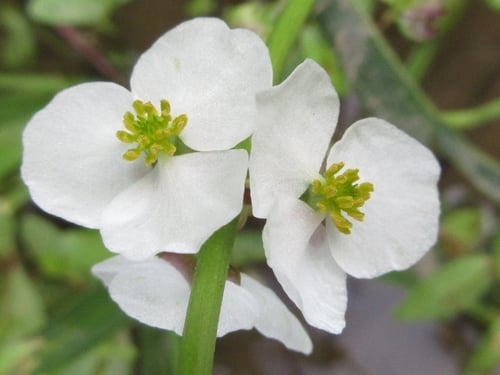
Butomopsis latifolia
(D. Don) Kunth
Phak pai, Pinoy
iNaturalist· cc-by-nc
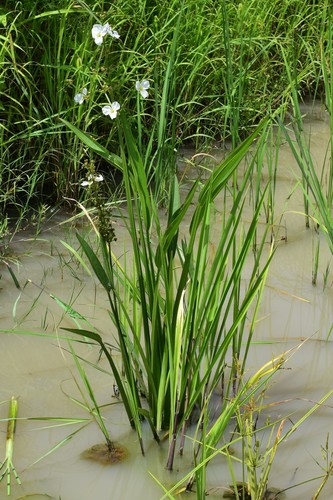
(c) Sylvain Piry, some rights reserved (CC BY-NC), uploaded by Sylvain Piry
iNaturalist· cc-by-nc
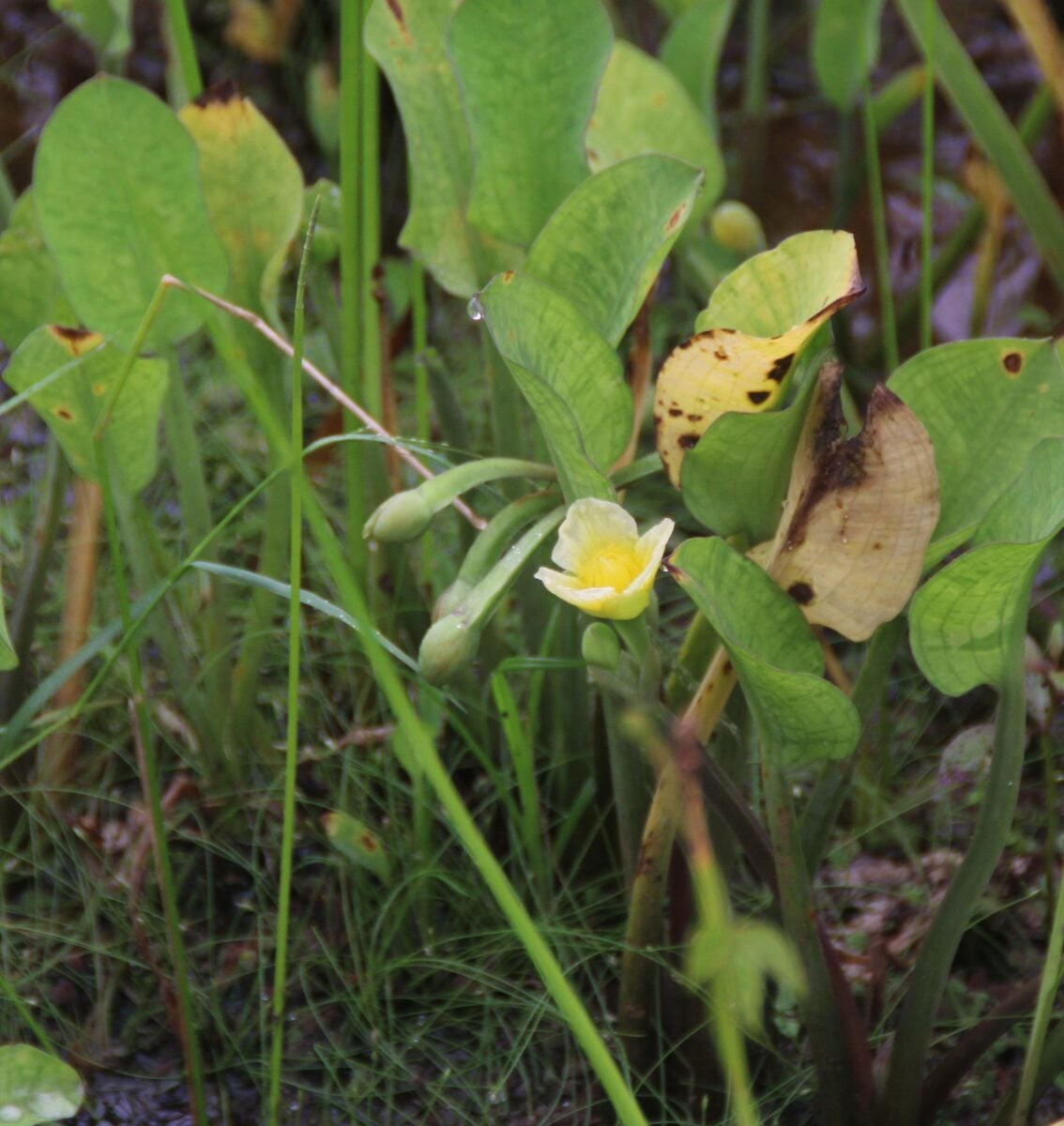
(c) Umar Musa, some rights reserved (CC BY-NC)
Description
A herb. The leaf stalks are 5-20 cm long. The leaves are 5-15 cm long by 1-5 cm wide. There are 3-15 flowers in a group.
This description is brief — help expand it
Edible Uses
The leaves are boiled, squeezed, and then cooked as a potherb.
Traditional Uses
The leaves are boiled and squeezed and then cooked as a potherb.
This uses section is brief — help expand it
Distribution
A tropical plant. It grows in marshes and rice paddy fields. In Yunnan.
Where It Grows
Africa, Asia, Australia, Bangladesh, Botswana, Burkina Faso, China, Himalayas, India, Indochina, Indonesia, Laos, Myanmar, Nepal, North Africa, SE Asia, Thailand, Vietnam, West Africa,
Notes
Also put in the family Limnocharitaceae. There is one Butomopsis species.
Synonyms
Also Known As
Chanti, Karchhul saag, Ludi ara, Lundi ara, Pinoy
References (6)
- Dey, A. & Mukhererjee, A., 2015, Living and Survival Amidst Hunger: Wild Edible Botanicals as a Prime Forest Productivity in the Rural Purulia District, West Bengal, India from Colonial to Present. Research Journal of Forestry 9(3): 71-86
- Ekka, N. S. & Ekka, A., 2016, Wild Edible plants Used by Tribals of North-east Chhattisgarh (Part-I), India. Research Journal of Recent Sciences. Vol. 5(ISC-2015), 127-131 (2016)
- Jacquat, C., 1990, Plants from the Markets of Thailand. D.K. Book House p 100
- Singh, G. & Kumar, J., 2014, Studies on Indigenous Traditional Knowledge of some Aquatic and Marshy Wild Edible Plants used by the Munda Tribe of District Khunti, Jharkhand, India. International Journal of Bioassays. 3(2), 1738-1743
- Somnasang, P., Moreno, G and Chusil K., 1998, Indigenous knowledge of wild hunting and gathering in north-east Thailand. Food and Nutrition Bulletin 19(4) p 359f
Show all 6 references Hide references
- Somnasang, P., et al, 2000, Knowing gathering and eating: Knowledge and attitudes about wild food in an Isan Village in north eastern Thailand. Journal of Ethnobiology 20(2):197-216