Dolichandrone serrulata
(Wall. ex Seem.) Seem.
Khae khaao
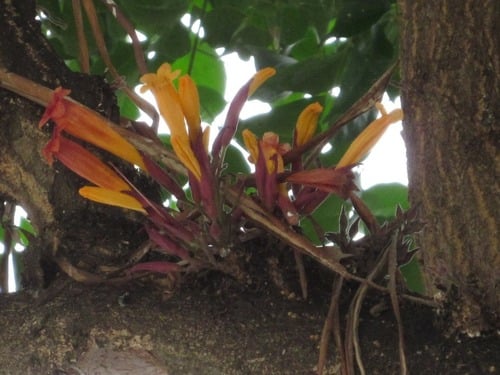
iNaturalist· cc-by-nc
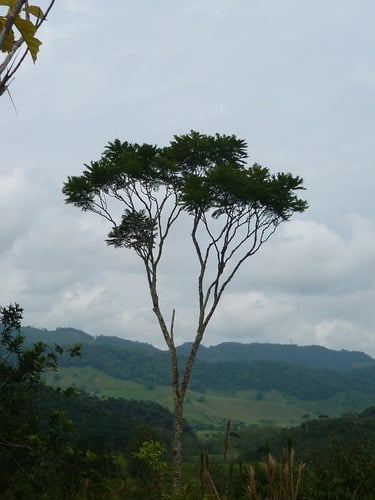
(c) hansjovergaard, some rights reserved (CC BY-NC)
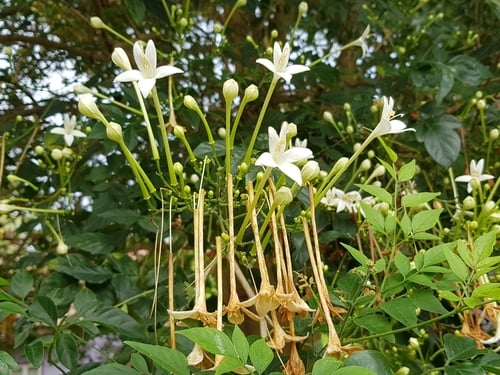
iNaturalist· cc-by-nc
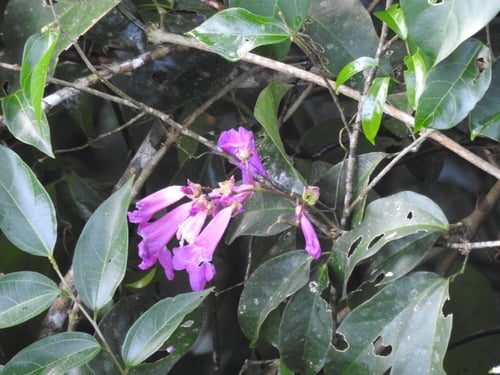
(c) Sam Hambly, some rights reserved (CC BY-NC)
iNaturalist· cc-by-nc
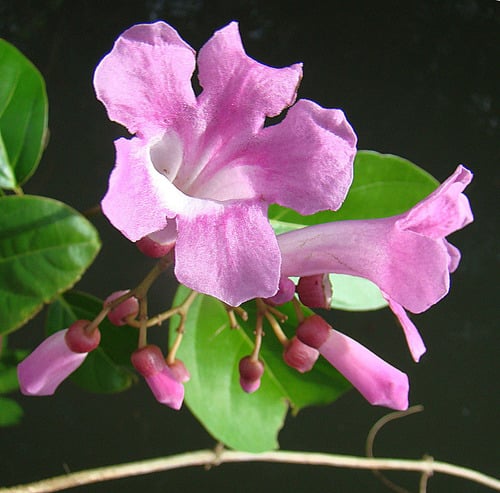
(c) pskhun, some rights reserved (CC BY-NC)
Summary
Source: WikipediaDolichandrone serrulata (Thai: แคนา khae na or แคทราย khae sai) is a species of plant in the Bignoniaceae family. It is found in Burma, Thailand, Laos and Vietnam. The flower is edible and is part of Thai cuisine.
Description
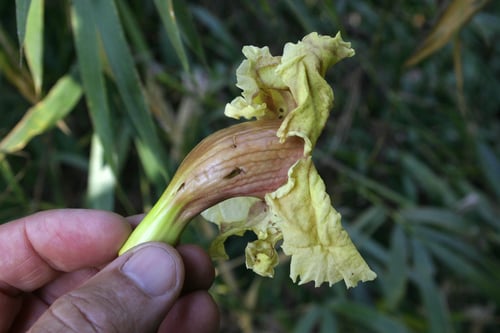
A deciduous tree. It grows 7-25 m high. The leaves have leaflets along the stalk. The leaves are 12-35 cm long. The leaflets are oval and 5-10 cm long and 3-5 cm wide. The flowers are 21 cm long. There are 3-7 flowers together. They are funnel shaped. They are held in short clusters. The fruit is a capsule 85 cm long and 1.2-1.8 cm wide. It is often twisted in a spiral. The seed are rectangular, thin and winged. They are 2.2-2.8 cm long by 5-8 mm wide.
Edible Uses
The flowers are blanched and eaten.
Traditional Uses
The flowers are blanched and eaten.
This uses section is brief — help expand it
Distribution
A tropical plant. It grows in open mixed deciduous forest. It is common in rice fields.
Where It Grows
Asia, Indochina, Laos, Myanmar, SE Asia, Thailand,
Notes
There are 3 Dolichandrone species. The grow in tropical locations.
Synonyms
Also Known As
Kee paa, Khae na, Tha-khut
References (6)
- Barwick, M., 2004, Tropical and Subtropical Trees. A Worldwide Encyclopedic Guide. Thames and Hudson p 153
- Cruz-Garcia, G. S., & Price, L. L., 2011, Ethnobotanical investigation of 'wild' food plants used by rice farmers in Kalasin, Northeast Thailand. Journal of Ethnobiology and Ethnomedicine 7:33
- Jacquat, C., 1990, Plants from the Markets of Thailand. D.K. Book House p 96
- Khumgratok, S., Edible Plants in Cultural Forests of Northeastern Thailand. Mahasarakham University Thailand.
- Phatlamphu, N., et al, 2021, Ethnobotany of edible plants in Muang District, Kalasin Province, Thailand, Biodiversitas Vol. 22, No. 12 pp 5432-5444
Show all 6 references Hide references
- Thitiprasert, W., et al, 2007, Country report on the State of Plant Genetic Resources for Food and Agriculture in Thailand (1997-2004). FAO p 95