Tabebuia rosea
(Bertol.) A. DC.
Pink trumpet tree
iNaturalist· cc-by-nc
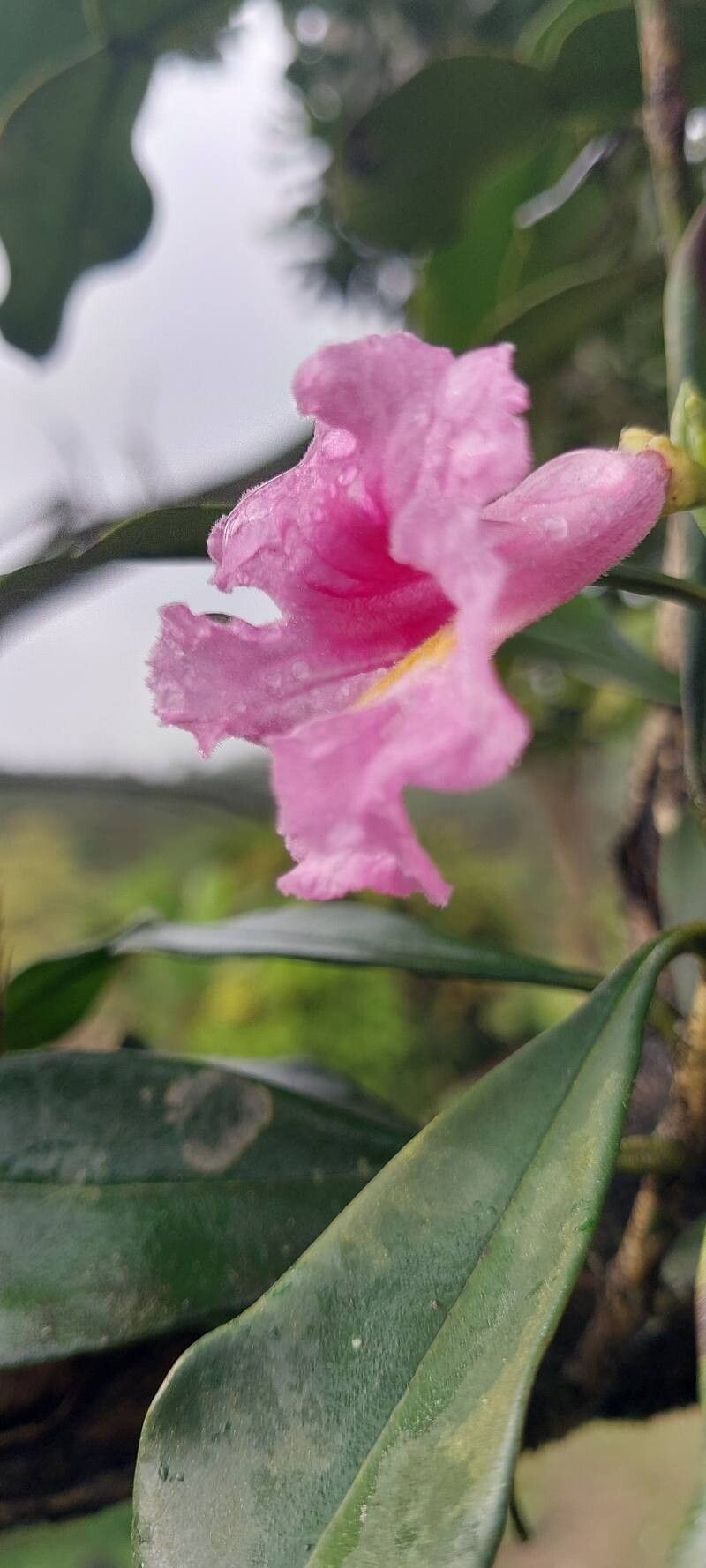
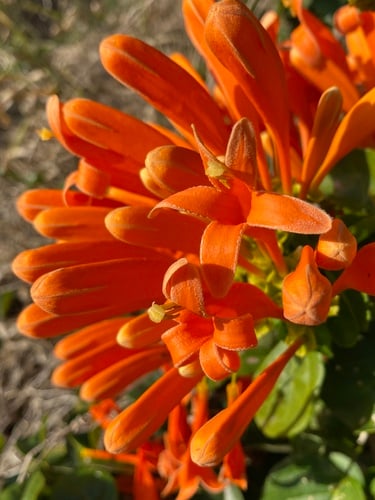
(c) Jan Meerman, some rights reserved (CC BY-NC), uploaded by Jan Meerman
iNaturalist· cc-by-nc
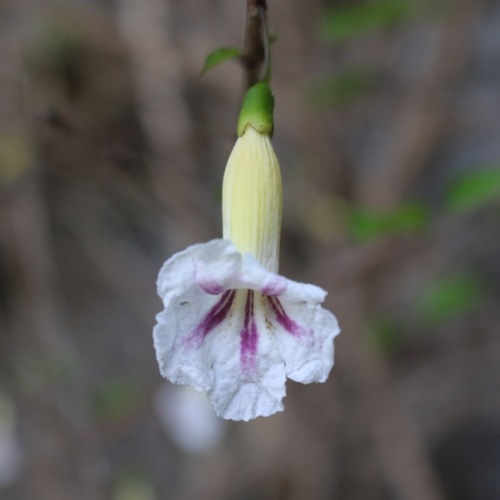
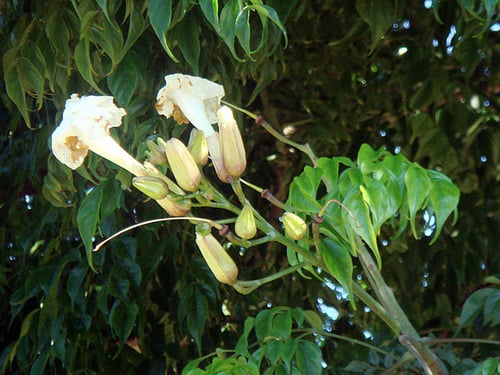
(c) Carlos Víctor Salazar González, some rights reserved (CC BY-NC)
iNaturalist· cc-by-nc
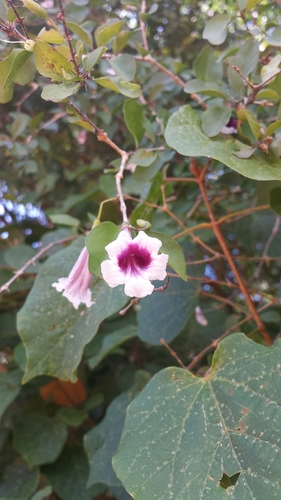
(c) Karla Varinia Sagastume Pinto, some rights reserved (CC BY-NC)
Summary
Source: WikipediaTabebuia rosea, also called pink poui, Sakura Malaysia and rosy trumpet tree, is a neotropical tree that grows up to 30 m (98 ft) and can reach a diameter at breast height of up to 100 cm (3 ft). The Spanish name roble de sabana, meaning "savannah oak", is widely used in Costa Rica, probably because it often remains in heavily deforested areas and because of the resemblance of its wood to that of oak trees. It is the national tree of El Salvador, where it is called maquilíshuat. Even though Tecoma trees are not originally native to Malaysia, they have adapted extremely well to the Southeast Asian climate, especially in Malaysia. Over time, they have become a familiar and iconic seasonal sight in many Malaysian towns and cities. Because of their stunning pink blooms that resemble cherry blossoms, they are locally known as “Malaysia Sakura.”
Description
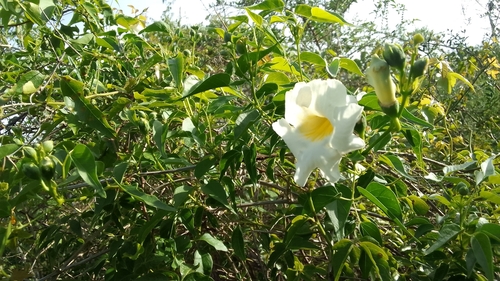
A large tree. The bark is grey and has furrows. The leaves are compound with leaflets spread like fingers on hand. There are 5 leaflets. The flowers are pink. They are produced before the leaves.
Edible Uses
None known
Medicinal Uses
The bark is used to eliminate intestinal parasites, malaria and uterine cancer. A decoction of the bark is recommended for anaemia and constipation. A decoction of the flowers, leaves and roots has been used to reduce fevers and pain, induce sweating, treat tonsil inflammation and various other disorders. Active phytochemicals in the tree include lapachol, a natural organic compound also isolated from various other Tabebuia species. Chemically, lapachol is a derivative of naphthoquinone and is related to vitamin K.
Distribution
It is a tropical plant. It grows in wet, moist and dry forests. It grows from sea level to 1,200 m above sea level. It grows in areas with a temperature range between 20°-30° C. It grows in areas with a rainfall above 500 mm.
Where It Grows
Asia, Belize, Brazil, Central America, Colombia, Costa Rica, Cuba, Dominican Republic, East Africa, Ecuador, El Salvador, French Guiana, Gambia, Guatemala, Guyana, Haiti, Hawaii, Honduras, India, Jamaica, Maldives, Mexico, Mozambique, Myanmar, Nicaragua, North America, Pacific, Panama, Puerto Rico, SE Asia, Singapore, South America, Sri Lanka, Trinidad-Tobago, Venezuela, West Indies,
Cultivation
A plant of the moist tropics, where it is found at elevations from 100 - 1,200 metres. It grows best in areas where annual daytime temperatures are within the range 22 - 30°c, but can tolerate 17 - 34°c. It prefers a mean annual rainfall in the range 1,500 - 2,000mm, but tolerates 1,250 - 2,500mm. Grows best in a sunny position. Succeeds in most soils that are fertile. Prefers a pH in the range 5.5 - 7, tolerating 4.5 - 8.5. Requires a somewhat sheltered position because branches are easily broken by strong winds. This species can sometimes be invasive. Trees can commence flowering when only 3 years old from seed. Annual wood production potential is 10 - 20 metric tonnes per hectare.
Propagation
Seed is best sown as soon as it is ripe, with germination typically occurring within 3–4 days. Cuttings of half-ripe wood and air layering are also suitable propagation methods.
Other Uses
The tree is used to provide shade in coffee and cocoa plantations. The wood is a rather dull greyish brown with fine striping of deep brown, often forming a conspicuous pattern on the tangential surface, and is without distinctive odour or taste. The grain is usually straight but sometimes roey or wavy, with a medium texture. The wood is moderately light and soft to rather hard and heavy, and fairly durable. It is easy to work, finishes smoothly and seasons without difficulty. Wood cut green and stacked to dry acquires a dark colour while retaining its striping, giving it a different appearance from wood dried by conventional methods. It is an excellent timber used for heavy construction, furniture and cabinetwork, interior finishing, boat building, carts and many other purposes; a large proportion of the cheaper chairs made in Central America use this wood.
Notes
It has been used in medicine.
Synonyms
Also Known As
Kunahangaali, Ta-bay-bu-ah
References (5)
- Condit, R., et al, 2011, Trees of Panama and Costa Rica. Princeton Field Guides. p 94
- Grandtner, M. M., 2008, World Dictionary of Trees. Wood and Forest Science Department. Laval University, Quebec, Qc Canada. (Internet database http://www.wdt.qc.ca)
- Grandtner, M. M. & Chevrette, J., 2013, Dictionary of Trees, Volume 2: South America: Nomenclature, Taxonomy and Ecology. Academic Press p 647
- Kew Plants of the World Online
- Sujanapal, P., & Sankaran, K. V., 2016, Common Plants of Maldives. FAO & Kerala FRI, p 263