Marrubium vulgare
L.
Horehound, White horehound
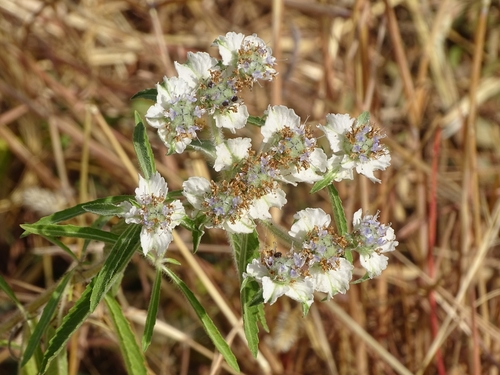
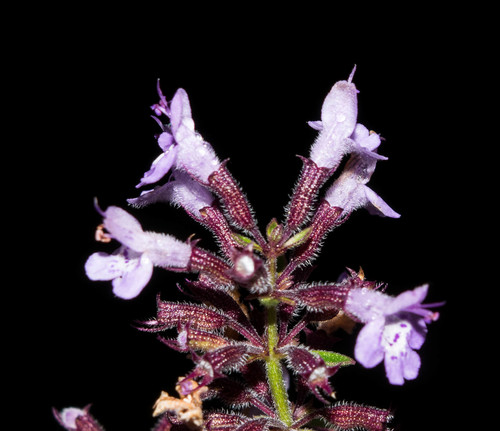
iNaturalist· cc-by-nc
(c) astark2307, some rights reserved (CC BY-NC)
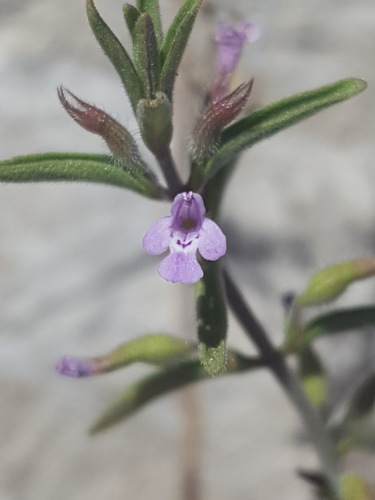
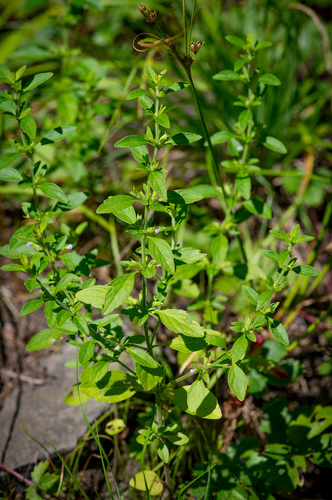
iNaturalist· cc-by-nc
(c) James Bailey, some rights reserved (CC BY-NC)
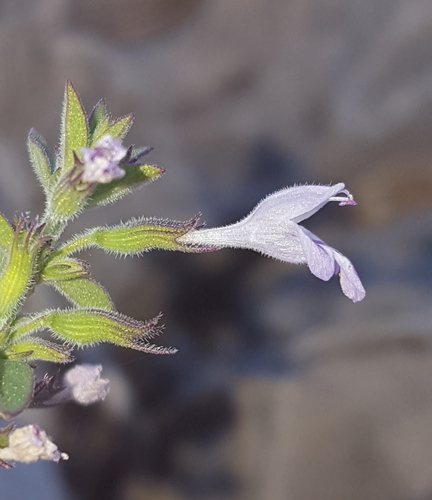
iNaturalist· cc-by-nc
(c) osoandino, some rights reserved (CC BY-NC)
Summary
Source: WikipediaMarrubium vulgare (white horehound or common horehound) is a flowering plant in the mint family (Lamiaceae), native to Europe, northern Africa, and southwestern and central Asia. Specifically, it emerged in the region between the Mediterranean Sea and Central Asia and now inhabits all continents. It is also widely naturalized in many places, including most of North and South America. It is a grey-leaved herbaceous perennial plant, and grows to 25–45 centimetres (10–18 in) tall. The leaves are 2–5 cm (0.8–2.0 in) long with a densely crinkled surface, and are covered in downy hairs. The flowers are white, borne in clusters on the upper part of the main stem.
Description
A herb. The plant which keeps growing from year to year. The taproot is stout and branched. The stems are erect and white and woolly. They are square. It grows 80 cm high. The leaves are soft and wrinkled. They are oval to round and 1.5-3.5 cm across. They are pale grey-green. They have distinct net veins underneath. The leaves have blunt teeth around the edge. The flowers are white. They have lips and are tubular. They occur in round clusters up the stem. The nutlets are oblong and have 3 angles. They are 2 mm long.
Edible Uses
The leaves are used as a seasoning condiment — bitter and pungent, they are sometimes added to flavour herb beer or liqueurs, and horehound ale is a fairly well-known drink made from them. A mildly pleasant tea can also be brewed from the fresh or dried leaves, and is a popular home remedy for coughs.
Traditional Uses
The fresh and dried leaves are added to hot water to make a tea. The bitter extract is used in candies and cordials. They are also used as a flavouring for liqueurs. The crushed leaves can be added to honey and eaten. Caution. It should not be eaten in large amounts.
Medicinal Uses
White horehound is a well-established herbal remedy commonly used for coughs, colds, and wheeziness. It appears to promote the secretion of a more fluid mucus that is more easily cleared by coughing. The leaves and young flowering stems are antiseptic, antispasmodic, cholagogue, diaphoretic, digestive, diuretic, emmenagogue, strongly expectorant, hepatic, stimulant, and tonic. Considered a valuable pectoral, expectorant, and tonic, it is safe for use by both children and adults, and is often prepared as a syrup or candy to mask its very bitter flavour, though it can also be taken as a tea. As a bitter tonic it stimulates appetite and supports stomach function, and can also help normalise heart rhythm. The plant is harvested as it comes into flower and may be used fresh or dried. The root is used as a remedy for rattlesnake bite, combined in equal portions with Plantago lanceolata or P. major. The German Commission E Monographs approve this plant for dyspepsia and loss of appetite.
Known Hazards
Heart rhythm, blood pressure, and blood glucose levels affected by large doses. Avoid during pregnancy and breast feeding. Diabetes mellitus patients on allopathic medication to lower blood sugar should avoid.
Distribution
It is a temperate plant. It grows in dry areas in degraded pasture. It will grow in most soils and in most positions. It can grow on chalk or limestone and on sand. It is resistant to frost and drought. In Argentina it grows from sea level to 4,000 m above sea level. It suits plant hardiness zones 3-8. Tasmania Herbarium. In Hobart Botanical gardens.
Where It Grows
Afghanistan, Africa, Argentina, Asia, Australia, Balkans, Bolivia, Bosnia, Brazil, Britain, Canada, Central Asia, Chile, China, Easter Island, Europe*, France, Greece, India, Italy, Kazakhstan, Kyrgyzstan, Lithuania, Luxembourg, Macedonia, Mediterranean, Morocco, New Zealand, Norfolk Island, North Africa, North America, Norway, Pakistan, Portugal, Russia, Saudi Arabia, Scandinavia, Sicily, South Africa, Southern Africa, Spain, Switzerland, Tajikistan, Tasmania, Turkey, Türkiye, Turkmenistan, Uruguay, USA, Uzbekistan,
Cultivation
White horehound is an easily grown plant that succeeds in most well-drained soils, though it flourishes best in a poor dry soil. Another report says that the plant flourishes best where there is plenty of nitrogen in the soil. It prefers neutral to alkaline soil conditions and requires a warm sunny position if it is to do well. Often grown in the herb garden and sometimes cultivated commercially as a medicinal herb. If the plant is cut back after flowering it will normally produce a second crop of leaves. The fresh leaves have a pronounced musky smell, though this is lost once the plant is dried. A good bee plant. White horehound is a good companion plant for growing near tomatoes. The tomatoes crop for a longer period and also produce a heavier crop. In garden design, as well as the above-ground architecture of a plant, root structure considerations help in choosing plants that work together for their optimal soil requirements including nutrients and water.
Propagation
Sow seed in April/May or August/September in a cold frame; germination can be slow and erratic. Prick out seedlings into individual pots when large enough to handle and plant out the following spring. Basal cuttings can be taken in late spring — harvest shoots with plenty of underground stem when they are about 8–10cm above ground, pot individually, and keep in light shade in a cold frame or greenhouse until rooting well, then plant out in summer. Divide plants in spring; larger clumps can go directly into permanent positions, while smaller clumps are best potted up and grown on in a cold frame until well rooted before planting out in spring.
Other Uses
An essential oil obtained from the plant is used as a flavouring in liqueurs. The plant has been used as a cure for cankerworm in trees — likely applied as a strong infusion of the flowering shoots or as the essential oil itself. The growing plant is also reported to repel flies.
Other Information
It is cultivated.
Notes
It was used for coughs. It is a bitter herb and has been used for the Jewish Passover Feast. There are about 30-40 Marrubium species.
Synonyms
Also Known As
Farasiym, Frkizoud, Karaderme, Khwrashka, Malva del congo, Malvarrubia, Marrubio, Marvel, Mrouta, Paharigandana, Toronjil cutano, Yerba cuyana
References (43)
- Abbet, C., et al, 2014, Ethnobotanical survey on wild alpine food plants in Lower and Central Valais (Switzerland). Journal of Ethnopharmacology 151 (2014) 624–634
- Al-Sodany, Y. M., et al, 2013, Medicinal Plants in Saudi Arabia: I. Sarrwat Mountains at Taif, KSA. Academic Journal of Plant Sciences 6 (4): 134-145
- Ambasta, S.P. (Ed.), 2000, The Useful Plants of India. CSIR India. p 357
- Blamey, M and Grey-Wilson, C., 2005, Wild flowers of the Mediterranean. A & C Black London. p 391
- Blanco-Salas, J., et al, 2019, Wild Plants Potentially Used in Human Food in the Protected Area “Sierra Grande de Hornachos” of Extremadura (Spain). Sustainability 2019, 11, 456
Show all 43 references Hide references
- Bodkin, F., 1991, Encyclopedia Botanica. Cornstalk publishing, p 676
- Bremness, L., 1994, Herbs. Collins Eyewitness Handbooks. Harper Collins. p 188
- Burnie, G & Fenton-Smith, J., 1999, A Grower's Guide to Herbs. Murdoch Books. p 39ƒ
- Cundall, P., (ed.), 2004, Gardening Australia: flora: the gardener's bible. ABC Books. p 876
- Curtis, W.M., 1993, The Student's Flora of Tasmania. Part 3 St David's Park Publishing, Tasmania, p 550
- Dashorst, G.R.M., and Jessop, J.P., 1998, Plants of the Adelaide Plains & Hills. Botanic Gardens of Adelaide and State Herbarium. p 124
- Ertug, F, Yenen Bitkiler. Resimli Türkiye Florası -I- Flora of Turkey - Ethnobotany supplement
- Facciola, S., 1998, Cornucopia 2: a Source Book of Edible Plants. Kampong Publications, p 127
- Flora of Australia Volume 49, Oceanic Islands 1, Australian Government Publishing Service, Canberra. (1994) p 321
- Flora of Pakistan. www.eFloras.org
- Ghanimi, R., et al, 2022, Ethnobotanical study on wild edible plants traditionally used by Messiwa people, Morocco. Journal of Ethnobiology and Ethnomedicine. 18:16
- Gouldstone, S., 1983, Growing your own Food-bearing Plants in Australia. Macmillan p 189
- Harris, S., Buchanan, A., Connolly, A., 2001, One Hundred Islands: The Flora of the Outer Furneaux. Tas Govt. p 187
- Hedrick, U.P., 1919, (Ed.), Sturtevant's edible plants of the world. p 404
- Hibbert, M., 2002, The Aussie Plant Finder 2002, Florilegium. p 193
- http://nordicfood lab/org/blog/2102/9/wild-edible-plants-an-overview
- https://www.fireflyforest.com/flowers/category/edible-plants/ Edible Plants – Southeastern Arizona Wildflowers and Plants
- Hussey, B.M.J., Keighery, G.J., Cousens, R.D., Dodd, J., Lloyd, S.G., 1997, Western Weeds. A guide to the weeds of Western Australia. Plant Protection Society of Western Australia. p 170
- Hyde-Wyatt, B.H. & Morris D.I., 1975, Tasmanian Weed Handbook. Dept of Ag Tasmania. p 84
- Kermath, B. M., et al, 2014, Food Plants in the Americas: A survey of the domesticated, cultivated and wild plants used for Human food in North, Central and South America and the Caribbean. On line draft. p 525
- Khalid, N., et al, 2023, Wild food plants gathered by four cultural groups in North Waziristan, Pakistan. Genet Resour Crop Evol. 70:1243–1276
- Kiple, K.F. & Ornelas, K.C., (eds), 2000, The Cambridge World History of Food. CUP p 433, 1786
- Lamp, C & Collet F., 1989, Field Guide to Weeds in Australia. Inkata Press. p 166
- Lawton, B.P., 2002, Mints. A Family of Herbs and Ornamentals. Timber Press, Portland, Oregon. p 145
- Licata, M., et al, 2016, A survey of wild plant species for food use in Sicily (Italy) – results of a 3-year study in four Regional Parks. Journal of Ethnobiology and Ethnomedicine 12:12
- MacKinnon, A., et al, 2009, Edible & Medicinal Plants of Canada. Lone Pine. p 274
- Malezas Comestibles del Cono Sur, INTA, 2009, Buernos Aires
- Moerman, D. F., 2010, Native American Ethnobotany. Timber Press. p 336
- Paczkowska, G. & Chapman, A.R., 2000, The Western Australian Flora. A Descriptive Catalogue. Western Australian Herbarium. p 274
- Redzic, S. J., 2006, Wild Edible Plants and their Traditional Use in the Human Nutrition in Bosnia-Herzegovina. Ecology of Food and Nutrition, 45:189-232
- Sp. pl. 2:583. 1753
- Stern, G., 1986, Australian Weeds. A Source of Food and Medicine. Harper & Row. p 112
- Tasmanian Herbarium Vascular Plants list p 36
- Welcome, A. K. & Van Wyk, B.-E., 2019, An inventory and analysis of the food plants of southern Africa. South African Journal of Botany 122 (2019) 136–179
- Wiersema, J. H. & Leon, B., 2013, World Economic Plants. A Standard Reference CRC Press. 2nd Ed. p 434
- World Checklist of Useful Plant Species 2020. Royal Botanic Gardens, Kew
- www.ediblewildfood.com
- Zizka, G., 1991, Flowering Plants of Easter Island. Palmarum Hortus Francofurtensis