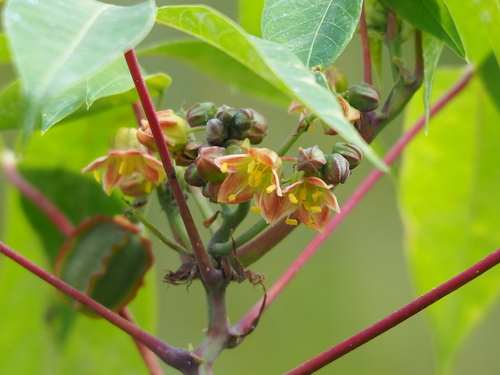
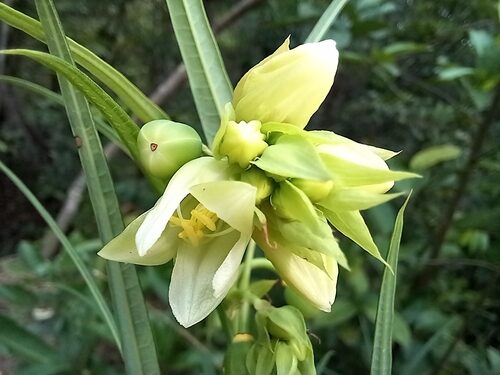
Euphorbia tetragona
Haw.
Naboom
iNaturalist· cc-by-nc
(c) Errol Douwes, some rights reserved (CC BY-NC), uploaded by Errol Douwes
iNaturalist· cc-by-nc
(c) Craig Peter, some rights reserved (CC BY-NC), uploaded by Craig Peter
Description
Euphorbia tetragona is an evergreen Tree growing to 10 m (32ft 10in). See above for USDA hardiness. It is hardy to UK zone 7 and is not frost tender. The species is hermaphrodite (has both male and female organs). Suitable for: light (sandy), medium (loamy) and heavy (clay) soils. Suitable pH: mildly acid, neutral and basic (mildly alkaline) soils. It can grow in semi-shade (light woodland) or no shade. It prefers dry or moist soil.
Edible Uses
The flowers are rich in nectar and this is sometimes used in confectionery.
Medicinal Uses
Miscellany. One report says that this species also supplies the drug, though it fails to say what the drug is or its medicinal actions.
Known Hazards
The sap contains a latex which is toxic on ingestion and highly irritant externally, causing photosensitive skin reactions and severe inflammation, especially on contact with eyes or open cuts. The toxicity can remain high even in dried plant material. Prolonged and regular contact with the sap is inadvisable because of its carcinogenic nature.
Distribution
S. Africa - Cape Province
Where It Grows
AFRICA: Ethiopia, South Africa
Cultivation
Prefers a light well-drained moderately rich loam in an open position. Succeeds in dry soils. According to this species is hardy to climatic zone 7 (tolerating temperatures down to about -10°c). This statement must be viewed with some scepticism, the plant is unlikely to be at all frost-tolerant. Hybridizes with other members of this genus. The ripe seed is released explosively from the seed capsules. Members of this genus are rarely if ever troubled by browsing deer or rabbits. This genus has been singled out as a potential source of latex (for making rubber) for the temperate zone, although no individual species has been singled out.
Propagation
Seed - sow spring in a shaded position in a greenhouse. When they are large enough to handle, prick the seedlings out into individual pots and grow them on in the greenhouse for at least their first winter. Plant them out into their permanent positions in late spring or early summer, after the last expected frosts.
Other Uses
Miscellany. Wildlife - The flowers are rich in nectar. Dynamic accumulator.