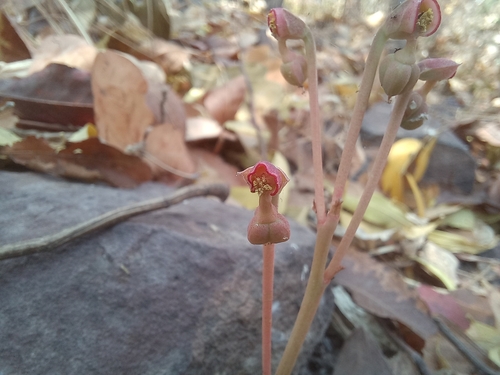
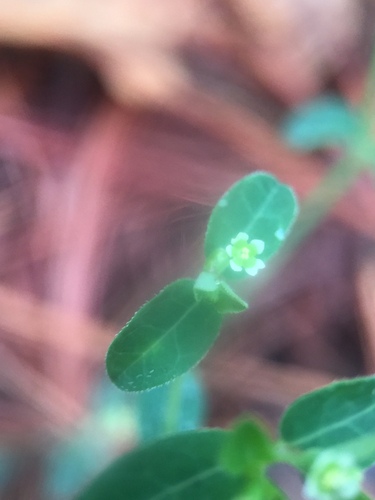
Excoecaria indica
(Willd.) Muell. Arg.
Mock willow
iNaturalist· cc-by-nc
(c) Tithira Lakkana, some rights reserved (CC BY-NC)
iNaturalist· cc-by
(c) renjus box, some rights reserved (CC BY)
iNaturalist· cc-by
(c) renjus box, some rights reserved (CC BY)
Description
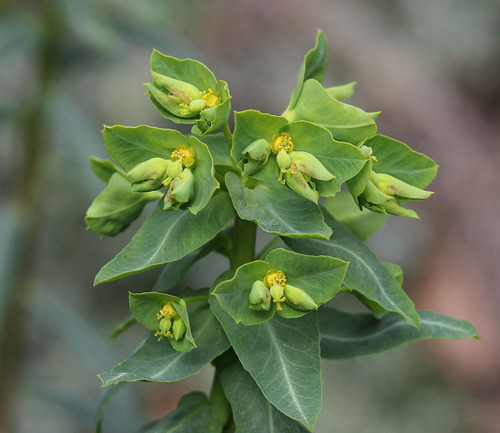
A tree. It grows 18-27 m tall. The trunk has thorns. The leaves are narrowly sword shaped and 5-12 cm long by 2-4 cm wide. There are 2 small glands at the base. The leaves taper to the tip. There can be rounded teeth along the edge. The flowers are in spikes near the ends of branches. They are 5 cm long. There are many male flowers and 1-2 female flowers at the base. The fruit is a round woody capsule. It is 3 cm across.
Edible Uses
The ripe seeds are eaten.
Traditional Uses
CAUTION: These normally have very poisonous latex. The ripe seeds are eaten.
This uses section is brief — help expand it
Known Hazards
The plant normally contains very poisonous latex.
Distribution
A tropical plant. It grows in swampy places up to 250 m above sea level.
Where It Grows
Asia, India, Indochina, Indonesia, Laos, Malaysia, Pacific, Papua New Guinea, PNG, SE Asia, Solomon Islands, Thailand, Vietnam,
Notes
There are about 40 Exocaecaria species. They grow in the tropics. The name may change to Shirakiopsis indica (Willd.) Esser.
Synonyms
Also Known As
Ai tui, Apid-apid, Gurah, Krahut, Ku-ra, Ludai, Samo thale, Tagewa
References (5)
- Linnaea 32:123. 1863
- Milow, P., et al, 2013, Malaysian species of plants with edible fruits or seeds and their evaluation. International Journal of Fruit Science. 14:1, 1-27
- PROSEA handbook Volume 13 Spices. p 276 and 12(2): Medicinal and poisonous.
- Schatz, G.E., 2001, Generic Tree Flora of Madagascar. Royal Botanical Gardens, Kew and Missouri Botanical Garden. p 155 (Genus)
- Sosef, M. S. M., Hong, L. T., & Prawirohatmodjo, S., (Eds.), 1998, Timber tree: Lesser-known timbers. Plant Resources of South-East Asia, 5(3), p 229