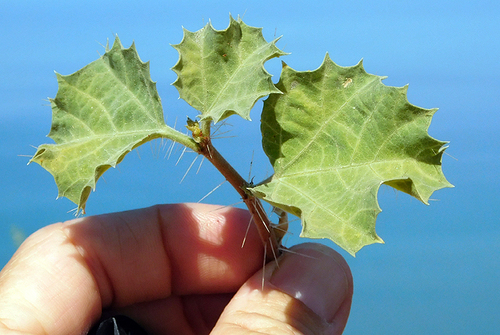
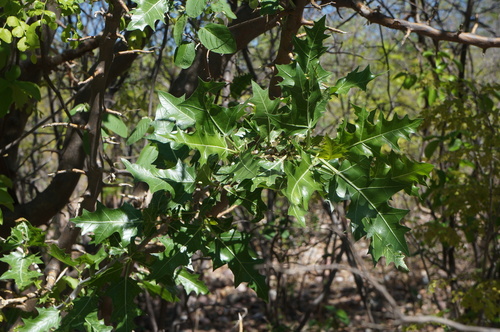
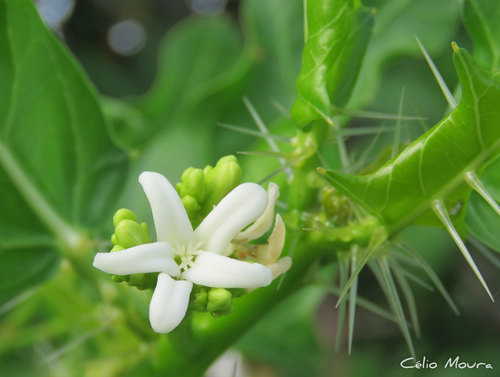
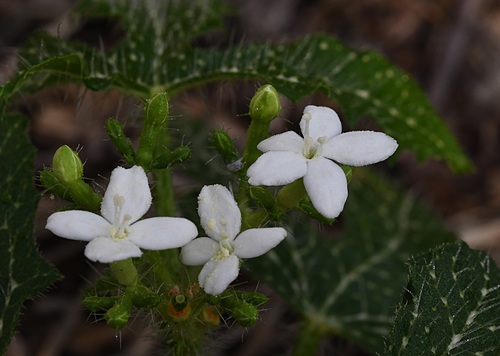
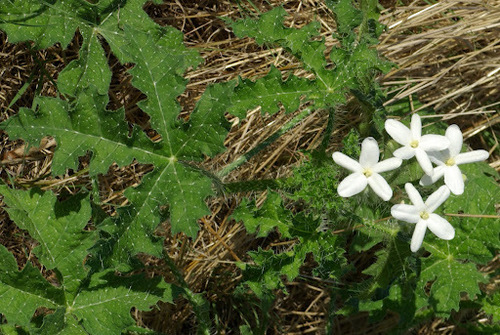
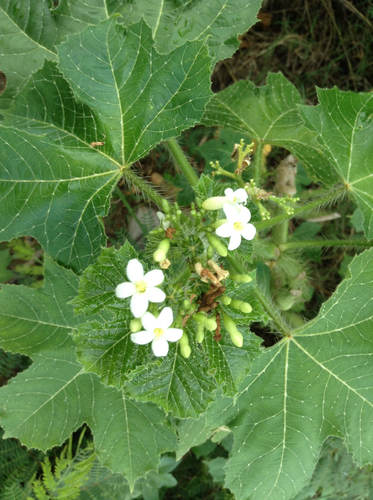
Jatropha stimulosa
Michx.
iNaturalist· cc0
no rights reserved
iNaturalist· cc0
no rights reserved
iNaturalist· cc0
no rights reserved
Description
A subtropical shrub in the Euphorbiaceae family.
This description is brief — help expand it
Edible Uses
The stems of haat (Jatropha cuneata) are used for basketmaking by the Seri people in Sonora, Mexico. The stems are roasted, split and soaked through an elaborate process. The reddish dye that is often used is made from the root of another plant species, Krameria grayi. Spicy jatropha (J. integerrima) is cultivated as an ornamental in the tropics for its continuously blooming crimson flowers. Buddha belly plant (J. podagrica) was used to tan leather and produce a red dye in Mexico and the southwestern United States. It is also used as a house plant. The oil from Jatropha curcas is mainly converted into biodiesel for use in diesel engines. The cake resulting from oil extraction, a protein-rich product, can be used for fish or animal feed (if detoxified). It is also a biomass feedstock to power electricity plants or to produce biogas, and a high-quality organic fertilizer. In 2007, Goldman Sachs cited Jatropha curcas as one of the best candidates for future biodiesel production. It is resistant to drought and pests, and produces seeds containing 27-40% oil, averaging 34.4%. The remaining press cake of jatropha seeds after oil extraction could also be considered for energy production. However, despite their abundance and use as oil and reclamation plants, none of the Jatropha species have been properly domesticated and, as a result, their productivity is variable, and the long-term impact of their large-scale use on soil quality and the environment is unknown. 2009 research found that Jatropha biodiesel production requires significantly more water than other common biofuel crops, and that initial yield estimates were high. Earlier, higher estimates from Worldwatch Institute had suggested that 1 acre of cultivation could yield 202 gallons (4.8 barrels) of biodiesel. Jatropha curcas is also being studied for use as a carbon sequestration plant in arid regions.
Known Hazards
Much like other members of the family Euphorbiaceae, members of the genus Jatropha contain several toxic compounds. The seeds of Jatropha curcas contain toxic lectin dimers and carcinogenic phorbol esters. Despite this, the seeds are occasionally eaten after roasting, which reduces some of the toxicity. Its sap is a skin irritant, and ingesting as few as three untreated seeds can be fatal to humans. In 2005, Western Australia banned Jatropha gossypiifolia as invasive and highly toxic to people and animals. It continues to be used as a medicine in certain geographic regions; however one study found the dried leaf to have no anti-fungal activity.
Distribution
It is a subtropical plant.
Where It Grows
North America, USA,
Notes
There are 100 Jatropha species in tropical America.
References (1)
- Fl. bor.-amer. 2:216. 1803